Energy prices in Poland were frozen in October 2022 as part of the so-called Solidarity Shield. It was the reaction of the PiS government to the sudden increase in prices of energy raw materials caused by the war in Ukraine and the high cost of purchasing carbon dioxide emission allowances.
In the following years, it was decided to extend the validity period of this support. However, it has been said for a long time that a return to normality is needed. In September this year, the Sejm passed a government bill freezing prices only until the end of 2025. However, it was decided to extend other support. The heating voucher will be valid until 2026.
Read also: How to choose an energy tariff and pay less for electricity?
The fact that there will be no more price freezes in 2026 was confirmed by the Minister of Energy, Miłosz Motyka, in a recent interview.
— Freezing, i.e. subsidizing energy prices, means fewer resources, among others. for health care. Energy companies are contracted for another year, we see no room for price increases [cen energii — red.] – emphasized Miłosz Motyka on TVN24.
In return, he said, the ministry will promote dynamic tariffs.
The rest of the article is below the video
Read also: No more freezing energy prices. The minister has a different proposal for Poles
Dynamic, or what?
Dynamic tariffs appeared for the first time in the offers of the largest energy sellers on August 24, 2024. The Energy Regulatory Office emphasizes that the offer with dynamic pricing is addressed primarily to customers who know the principles of the energy market and are able to manage their own electricity consumption. Why?
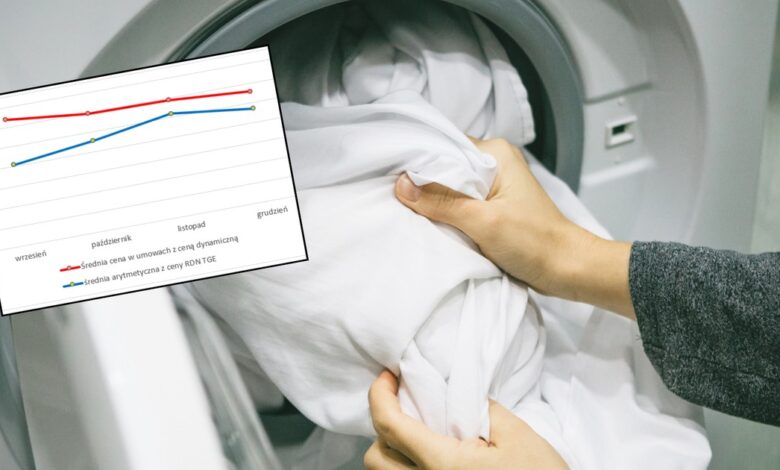
People taking advantage of such offers need to be a bit more flexible. It is necessary to shift the highest energy consumption to the time of day when it is the cheapest, and limit the consumption from the grid at times when it is the most expensive (e.g. between 6-9 p.m.). Lack of appropriate behavior in the use of electricity, e.g. turning on the washing machine, dishwasher, vacuuming, cooking at times when energy is most expensive, may result in higher bills in the case of such tariffs. At the same time, however, using energy at times when it is cheapest (e.g. at night) can mean large savings.
Unlike offers with a fixed amount, in dynamic ones the price changes every 60 minutes. You can check electricity prices for each hour the day before and plan your consumption to use electricity at times when it is cheaper.
According to the Energy Regulatory Office's data, from August 2024 to the end of the same year, 135 customers used energy sales contracts with dynamic prices, and the weighted average dynamic prices for all customers in each of the four months covered by the report exceeded PLN 0.5/kWh, i.e. the level of the maximum price for energy in the second half of 2024 and 2025. Contracts with dynamic prices were not covered by the customer protection mechanism in the form of a maximum price.
One of the conditions for using a contract with a dynamic price is to have an intelligent measurement and settlement system enabling automatic collection, transmission and settlement of measurement data.
Distribution system operators are obliged to install remote reading meters (VOC) by December 31, 2028.
As of December 31, 2024, out of 19,299,212 energy consumption points in Poland, 7,383,824 had remote reading meters, which is 38.26%. points equipped with VOCs.
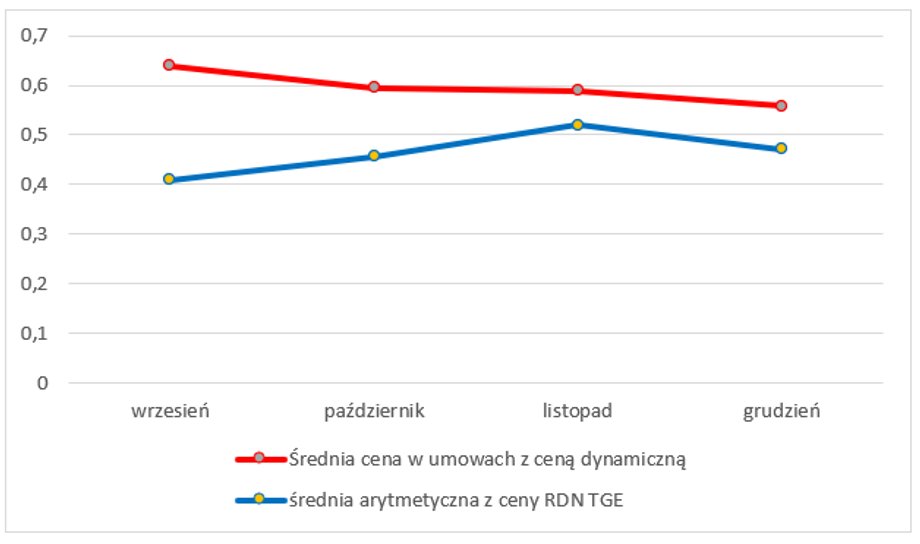
Average monthly prices obtained by consumers in households using dynamic price contracts (PLN/kWh)
|
ERO
Read also: Energy is getting cheaper on the market. Effects for recipients? “Limited and delayed”
Real savings and a step towards a modern market
Anna Kucharz, an energy expert, emphasizes that dynamic electricity tariffs can become an opportunity for real savings for households that benefit from the statutory price of PLN 0.6212/kWh gross until December 31, 2025. However, their attractiveness depends on how sellers' offers are structured and whether consumers are aware of the benefits of flexible energy billing.
— This solution may prove particularly profitable for households in periods of stable or falling energy prices on the wholesale market. However, not only the recipients benefit – the state budget also benefits, as it does not have to bear the costs of maintaining regulatory mechanisms, and the energy industry itself, which can operate based on market principles. Importantly, with the dynamic development of renewable energy sources, there are more and more frequent hours during the year when energy prices are extremely low or even negative – notes Anna Kucharz.
However, he says, the problem remains the low level of consumer confidence in the proposed solutions. – Changing the seller or tariff still raises concerns, which is why even favorable offers are not yet very popular – he notes.
In her opinion, the introduction of dynamic tariffs is a step towards a modern, flexible energy market. — Electricity prices increasingly reflect the current network load and the level of production from renewable energy sources. Thanks to this, consumers can actually reduce their bills by shifting consumption to cheaper hours. However, it is crucial that the first offers for individual customers are simple, transparent and risk-free – only then will they gain trust and encourage people to change their habits – says Anna Kucharz.
The greater the consumption, the greater the savings
Fryderyk Karp from the Instrat Foundation notes that the profitability of switching to a contract with a dynamic tariff depends primarily on the electricity consumption profile. — It is difficult to expect any clear benefits in households with low and inflexible consumption, but the higher the consumption and the greater the possibility of shifting electricity consumption to hours with lower prices, the more a dynamic tariff may be profitable – he says.
He claims that the users of heat pumps, energy storage systems and electric cars can especially benefit – by charging them at night or during periods of peak generation from renewable energy sources, they are able to reduce their bills by up to several dozen percent, but only on condition that these devices work intelligently and benefit from low hourly prices.
— However, it is not worth assessing profitability based on one year, because electricity prices are variable. For example, in 2024, dynamic tariffs were extremely attractive thanks to low market prices and tariff freezes, but the situation may reverse in the following years. Whether a user will benefit from a dynamic tariff does not depend on his ability to predict prices, but on his ability to adjust his own consumption profile so as to consume the most electricity when it is cheapest – says the expert.