The Polish housing market is entering a decade of profound structural changes. According to the “Living 2040” report, prepared by Open Format in cooperation with Skanska Residential and the Nieruchomosci-online.pl portal, Within a dozen or so years, almost every third resident of Poland will be at least 65 years old. The aging of society is no longer just a challenge for the pension or health care systems. It is increasingly becoming one of the key factors shaping the real estate market.
Read also: The premium real estate market in Poland is growing. Luxury is becoming the new norm
The change in the age structure affects both the demand and the way apartments are used. The authors of the report point out that “good apartment” is no longer a symbol of social status. In its place appears the need for safety, predictable costs and solutions that can easily adapt to changing life and health needs. For many households today, housing is becoming an element of a long-term strategy, rather than a one-time decision made for life.
The report also indicates that The future of housing will not be based on one dominant model. Ownership, renting and new, more flexible forms of living will operate in parallel, responding to different life stages, income levels and working styles.
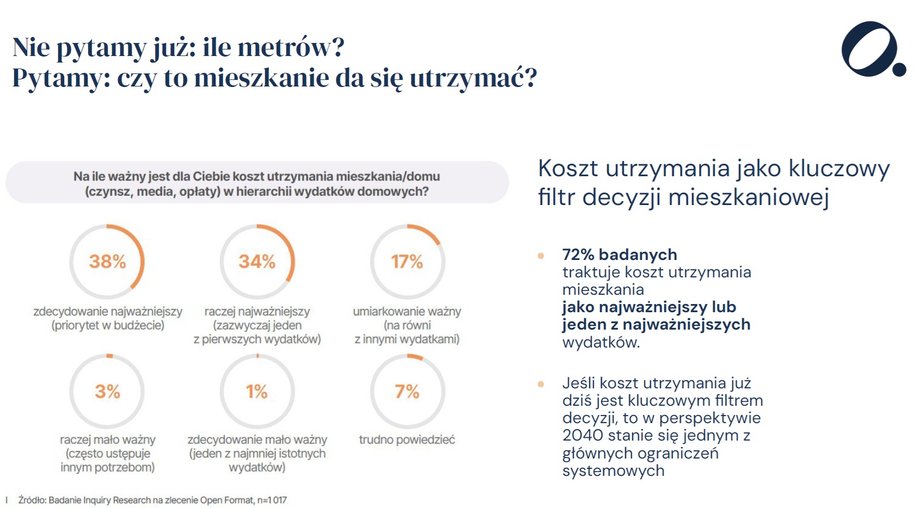
Maintenance
|
Open Format
See also: Settlement of delegations after the introduction of KSeF. Employees and companies in trouble
Housing needs of Poles under cost pressure
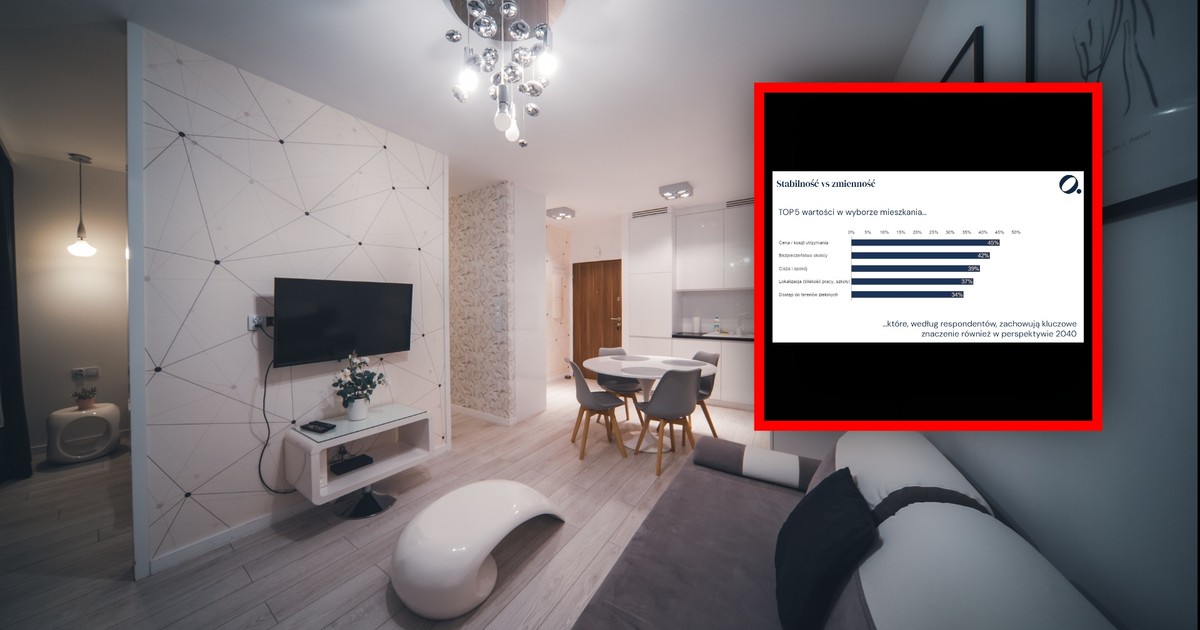
Consumer research conducted for the report shows a clear shift in priorities. For 45 percent respondents, the key criteria for choosing an apartment are price and maintenance costs. The next places were the safety of the area (42%) and peace and quiet (39%).. The prestige of the location was indicated by only 11 percent. respondents, which confirms that the market is less and less driven by image aspirations and more and more by everyday usability.
Importantly, a significant number of Poles do not perceive their current housing situation as optimal. In the perspective of a dozen or so years many respondents declare their readiness to change their form of residence – both in terms of size, location or model (ownership vs. rental). This means that residential mobility, so far limited mainly to younger age groups, will also increase among middle-aged and older people.
The quality of the apartment
|
Open Format
Read: The CJEU opens the way to disputes over WIBOR. The ESIS form will be crucial
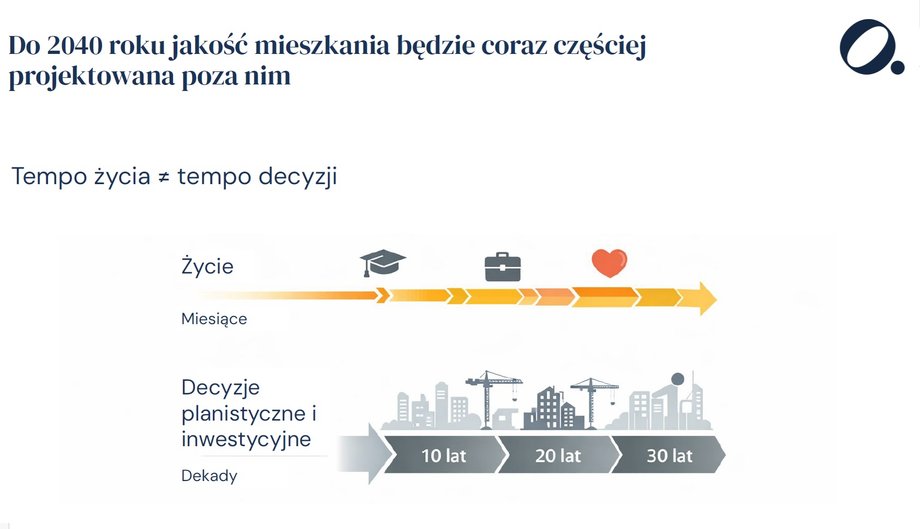
The report also shows that More and more often, the attractiveness of an apartment is determined by its surroundings. The location close to work or school (37%), access to green areas (34%) and services (32%) are ahead of the standard of the premises itself, which was indicated by 30%. respondents. This is a signal that the market is entering a phase in which the quality of everyday life is important, not only the technical parameters of the apartment or its area in square meters.
Risk
|
Open Format
Worth reading: Revolut, Saxo and co. Is this a safe place for a crisis?
Developers design living environments
According to Skanska Residential experts the housing market is at a turning point. Demographic and social changes force a new approach to investment design. Increasingly, it is no longer about selling individual premises, but about creating comprehensive living environments.
— Today, we no longer design only apartments, but entire living environments. The future of the market will be based on flexibility, security and long-term thinking, responding to various needs and stages of residents' lives – emphasizes Aleksandra Goller, sales and marketing director at Skanska Residential.
In practice this means this greater emphasis on functional apartment layouts, architectural accessibility, service infrastructure within walking distance and predictable operating costs. Environmental certificates, solutions favorable to seniors and care for common spaces are no longer an addition, but are becoming a standard expected by an increasing group of customers.
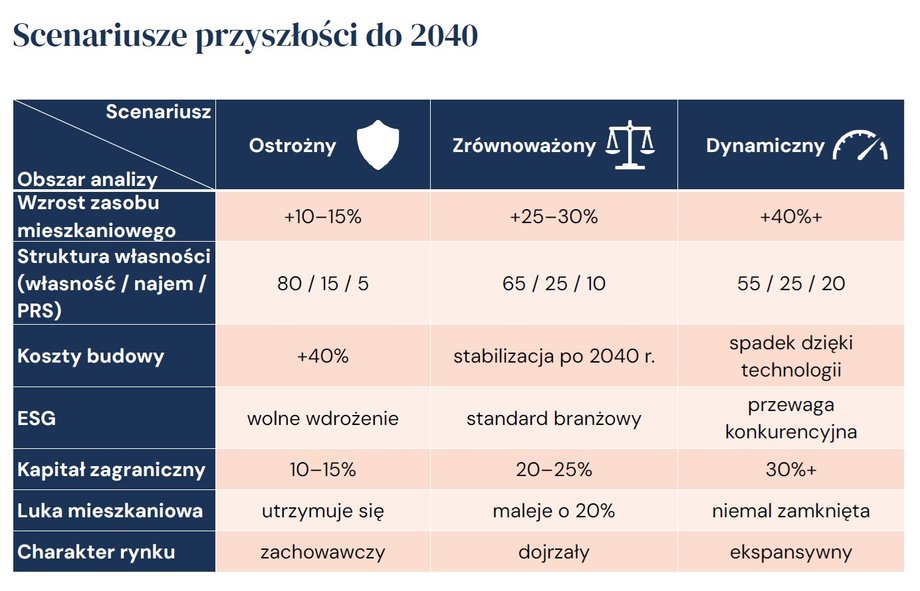
Future scenarios
|
Open Format
See also: The end of Polish cryptocurrency exchanges? Karol Nawrocki's veto and the government's stubbornness deepen the crisis
Market data confirms the change in behavior
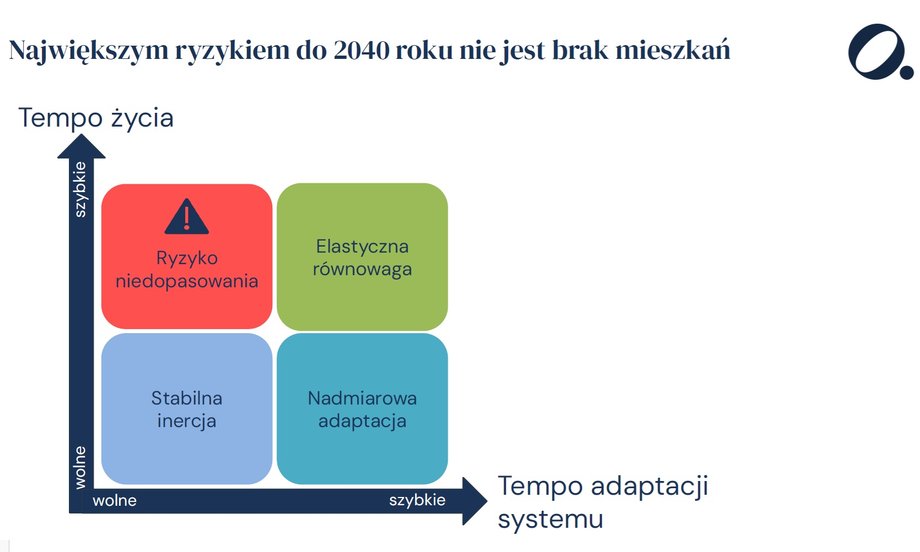
The conclusions of the “Living 2040” report are confirmed by the data of the Nieruchomosci-online.pl portal. User behavior analyzes show that Apartment is less and less treated as a “once and for all” decision. Buyers and tenants compare different scenarios – purchase, lease, change of location or square footage – analyzing them in terms of costs, safety and availability of services.
As the data shows, 32 percent respondents do not live in their own apartment or house. In this group 15 percent are renters, and 17 percent living with family or friends without formal fees. At the same time, alternative models, such as co-living or housing subscriptions, remain niche for now and cover only approximately 1%. respondents.
— From a data perspective, we see that Users increasingly treat housing as a solution tailored to a specific stage of life. This is a change that will have an impact on the entire market in the long run – comments Anna Zachara-Widła, Customer Voice Expert at Nieruchomosci-online.pl.
Regulations and institutions key to the housing market
The “Living 2040” report also takes into account: institutional and legal perspective. Among those involved in its preparation were: PFR Nieruchomości and Dentons law firm, analyzing regulatory barriers to the development of the housing market, including the rental and PRS sectors. Experts emphasize that without cooperation between the private, institutional and public sectors, it will be difficult to respond to the growing housing needs of an aging society.
Finally, the authors of the report present: three possible scenarios for the development of the housing market until 2040 – cautious, sustainable and dynamic. However, there is one common denominator for all of them: living in Poland will be less and less a symbol of prestige, and more and more often a tool ensuring security and stability in life.