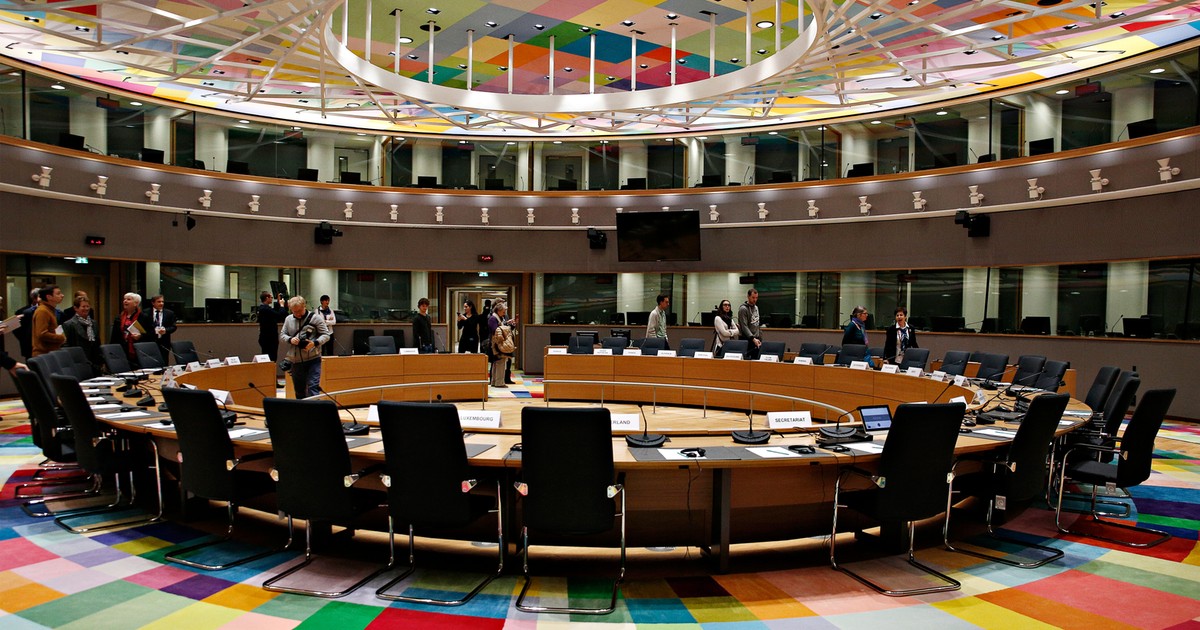
There is a tug-of-war in the European Union regarding ETS2, i.e. the climate tax on heating homes and combustion cars. Last week, the European Council opened the door to changes in the ETS2 system. Poland, together with 19 other EU countries, is seeking to create a mechanism to limit the increase in ETS2 prices. It also proposes postponing the entry into force of the system by 3 years, i.e. from 2027 to 2030, which is to give time for households and companies to prepare for the new regulations.
The word “revision” in the English-language version of the European Council conclusions is of key importance. It was missing from the Polish translation – it says that the Council “notes the Commission's intention to adopt measures to facilitate the entry into force of ETS2 and invites the Commission to present a revised framework for the implementation of ETS2, including all relevant aspects.”
As our source indicates, during the Council's deliberations there was a “big fight” over the word “revision”. — The Council calls on the Commission to review this mechanism. It remains to be seen whether it will be possible to pressure the Commission into presenting a proposal for changes to the ETS2 implementation deadline. The Council conclusions open the loophole that makes this possible, but do not guarantee that the implementation of ETS2 will be delayed – explains our interlocutor.
In the maximum variant, Poland is trying to opt out of ETS2, but since the chances for this are slim, it is also fighting to postpone the start of the system from 2027 to 2030. – We are trying to get the Commission to declare that, as part of the ETS2 revision, it will also look at the system implementation schedule – explains our interlocutor.
When asked whether Warsaw is ready to build an alliance on this matter with the Visegrad Group countries: the Czech Republic, Slovakia and Hungary, our interlocutor replies: “We will cooperate with everyone.”
The president's social adviser cools down her enthusiasm regarding ETS2
The Ministry of Climate and Environment, in response to Business Insider Polska, emphasizes that the latest findings of the European Council “are a great success for the Polish government, which has been striving for two years to revise the mechanism adopted at the beginning of 2023.”
However, Wanda Buk, social adviser to the president, cools down optimism in this matter. — Contrary to what politicians try to tell us, relatively little happened after the last summit on the ECJ. The Council's conclusions included at most one swallow – an announcement of readiness to talk about the revision and implementation framework of the system, but as we know, one swallow does not make a summer – says an expert to Business Insider Polska.
In her opinion, “it is more of a political gesture than a real change.” — ETS2 is not disappearing and will not disappear. Today, there is no chance in the EU to build a majority that would be ready to throw it into the trash bin. Perhaps it can be postponed, but it is only a pause, not a breakthrough. And if this time is wasted, it will only be another delay of the inevitable – points out Wanda Buk.
He admits that the price corridor in ETS2 would certainly be better than the current shape of this system. — It is always better when the market has limits than when it is a trap without a ceiling. Today, in ETS2 we only have a so-called “soft cap”: at a price of EUR 45 per tonne, the Commission can release additional allowances onto the market once a year to ease the pressure. However, this is more cosmetic than a real safety buffer, because no one knows for how long such an injection will calm the market, explains the adviser to the head of state.
Wanda Buk also admits that does not believe that ETS2 will actually come into force in Poland in 2027. – It is an election year and politicians are cynical. If they have to choose between public anger and penalties from the European Commission, they will choose penalties. They will pay from the budget and announce that they saved Poles from price increases. But this is just an escape from reality. ETS2 will come anyway – but later, more expensive and more painful – predicts.
He criticizes the government for “instead of preparing for this moment, we are destroying programs that could have prepared us for it.” — “Clean Air” was a breakthrough, a tool that allowed people to replace old furnaces, insulate their homes, and invest in cleaner energy sources. It was spectacularly destroyed. And yet it could have been our umbrella against the impact of ETS2 – emphasizes Wanda Buk.
— This system is not an abstract climate idea. These are real bills that will come to our homes. Fuel is more expensive by a dozen or so cents, heat is more expensive by several percent. And the poorest will suffer the most, as they heat themselves with coal and live in old, uninsulated buildings. They will be hit the hardest, even though they were the least guilty, he says.
And he concludes: – ETS2 will come – sooner or later. The question is whether we will be ready. Because if the time we still have is wasted on political squabbles and evasions, we will pay twice: with money and the impoverishment of society..
The Ministry of Climate and Environment points out that the introduction of ETS2 will be accompanied by the creation of a Social Climate Fund, whose tasks will include, among others: fight against energy poverty. It also states that the government has provided over PLN 44 billion for Clean Air, including from European funds, which allows the program to be implemented in the near future. — The previous government did not provide financing for the program and was currently accepting applications. This has resulted in a huge backlog in the assessment of applications and payments, which are gradually being reduced, says the ministry.
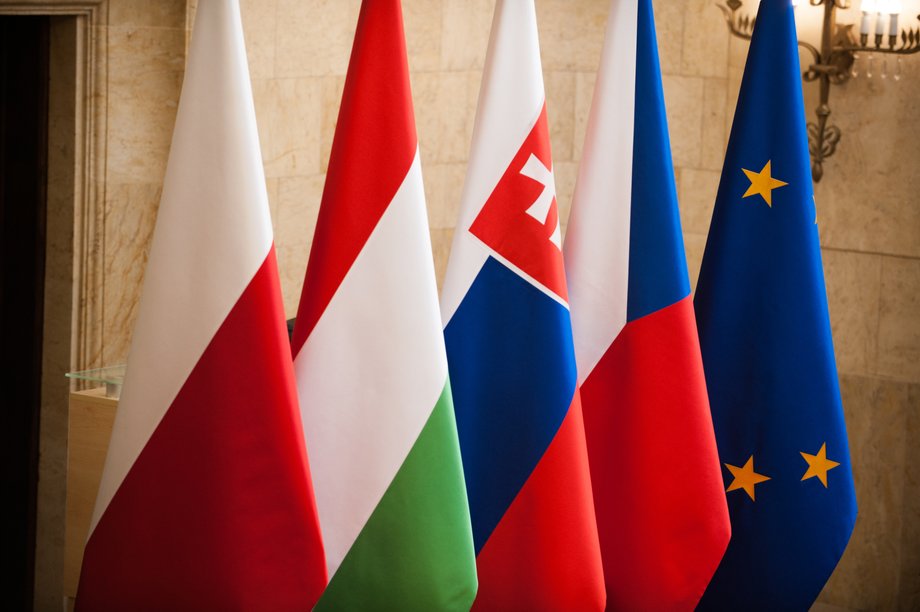
Flags of the Visegrad Group countries
|
Fotophoto / Shutterstock
The Danish Presidency is a strong supporter of the ETS2 system
Denmark, which currently holds the presidency of the EU Council, is a strong supporter of the timely introduction of the ETS2 system. During the visit of Polish journalists in Copenhagen, organized on the occasion of the Danish Presidency by the Representation of the European Commission in Poland, representatives of the Danish side argued that ETS2 is the most effective method of reducing CO2 emissions.
This narrative is shared by the heat pump industry. As Paweł Lachman, president of the Polish Organization for the Development of Heat Pump Technology PORT PC, says to Business Insider Polska, “the ETS2 system is a huge opportunity for Poland, although today many perceive it mainly as a threat.” – In fact, it is a tool that can provide the right impetus for a profound transformation of building heating and independence from fossil fuels – he emphasizes. As Paweł Lachman says, moving away from fossil fuels is not a cost, but an economic opportunity. — Today, we pay for their use not only with huge money, but also with health, environmental degradation and external costs, which – according to analyzes by the International Monetary Fund – reach up to about 7 percent in the world. global GDP per year. Moreover, the current broadly understood energy system uses only about one third of primary energy, and the remaining part is lost mainly in the form of heat in combustion, transmission and transport processes, he enumerates.
In his opinion, ETS2 can reverse this trend if we treat it not as a fiscal tool, but as an investment impulse for the development of clean electrification technologies – heat pumps, photovoltaics, energy storage, electric cars and comprehensive modernization of buildings.
He also does not share the government's approach, which is seeking to delay ETS2. — The greatest risk is not the introduction of ETS2 itself, but its delayed or incomplete implementation. If Poland does not use this moment to accelerate the modernization of buildings, improve energy efficiency and effectively electrify heating in buildings, we will lose not only time, but also access to funds from EU climate funds. — and we will not be prepared for the inevitable increases in fossil fuel prices in the future – warns.

Polish position during the European Council summit in Brussels
|
Aleksiej Witwicki / Forum / Forum Polish Photographers Agency
Smooth implementation of ETS2 for consent to the 2040 climate target
Tobiasz Adamczewski, vice-president of Forum Energii, sheds additional light on the whole matter. As he explains, the conclusions of the European Council indicate that the EU is close to a compromise on setting the emission reduction target for 2040. This reduction is to be 90%. compared to 1990 – One of the key elements of this compromise is the gentle implementation of the ETS2 system – at the moment this system is not adapted to Poland's situation and the Commission received a clear signal at the European Council that it needs to be changed – describes Tobiasz Adamczewski.
As he notes, there are many options, and the most likely option is to propose an effective mechanism to counteract sudden increases in the prices of CO2 emission allowances. However, he emphasizes, “it is important that the initial price of a ton of CO2 is lower than EUR 45.” — This would mean that households would not be exposed to sudden and drastic increases in coal or gas prices, he believes.
The deputy head of Forum Energii also notes that everyone who uses system heat in blocks of flats, heat pumps or electric cars – i.e. about 25 percent. households – they already bear emission costs, so they will not be affected by the changes at all.
Good preparation for the introduction of ETS2 is crucial
Like Wanda Buk, the deputy head of Forum Energii draws attention to the need to prepare for the introduction of ETS2. — Such changes cannot be introduced overnight, support systems and time are necessary for the changes to proceed smoothly. Together with ETS2, a Socio-Climate Plan implementing the Social Climate Fund in Poland is being prepared. It is from the sale of emission allowances under ETS2 that the government will have funds for protective measures and investment support. Energy vouchers will be very important, among other things, to prevent the increase in energy poverty, he points out.
At the same time, however, he adds, it is also important that government financial incentives accelerate the replacement of heating sources and the insulation of buildings. – For this to happen, it is necessary, among other things, increasing the number of energy advisors supporting people preparing to invest in their homes – postulates Tobiasz Adamczewski.
In turn, Aleksander Śniegocki, president of the Reform Institute, believes that in the whole matter “A big problem is the creation of an alternative reality by Polish politicians“. — They argue that we are one step away from being postponed for several years and perhaps even deleting the entire system. Meanwhile, most capitals have already implemented ETS2 into their legal order and are ready for its launch in 2027. Strong resistance to the system as such is currently concentrated mainly in the Visegrad Group countries – points.
Śniegocki calls for the government to focus on preparing its own point corrections, in particular regarding coal used to heat buildings. It is for this fuel that the relative increase in prices will be the highest, and at the same time it accounts for only 2%. total ETS2 emissions across the EU. — Negotiating a more lenient ETS2 implementation path for this fuel would be a real negotiation success for the government, argues Śniegocki. He adds that no system postponements will change anything if we do not accelerate actions to make our buildings and transport independent of fossil fuels.
— It is worth noting in this context that, according to the applicable regulations, a one-year delay in ETS2 means up to PLN 7.5 billion less EU funds for Poland under the Social Climate Fund. – Aleksander Śniegocki warns.
In unofficial talks, politicians are afraid of the social reaction to the introduction of ETS2. There are even voices that if the system is introduced in Poland, it will cause “a revolution or Poland leaving the EU.” However, the experts we talk to agree that – sooner or later – ETS2 will enter into force. The current balance of power in the EU actually indicates this, although given the current dynamics of the geopolitical situation, anything is possible. Right now The government's task, in addition to efforts to mitigate ETS2, is to best prepare society and the economy for the introduction of an emission fee in construction and transport.. This is achieved by supporting the exchange of heat sources and home heating. When it comes to transport, the solution is not only subsidies for the purchase of electric cars, but above all the development of zero-emission public transport, including railway connections.