China is at the center of today's global mineral supply chains. From electric vehicles to semiconductors, many of the technologies that underpin modern industry depend on critical minerals that are mined, refined or controlled by China.
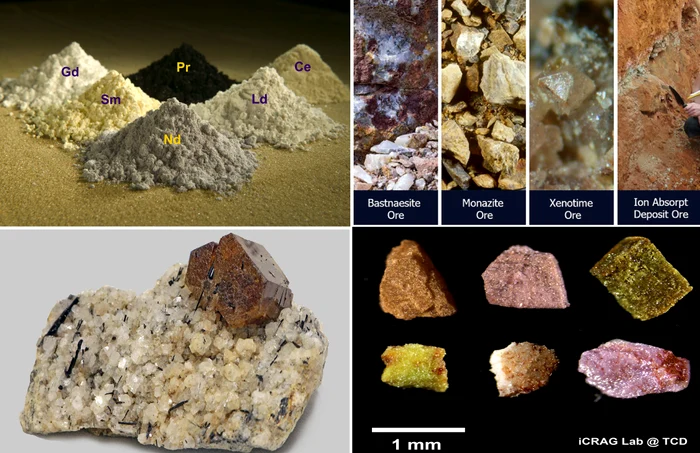
China is at the center of global rare mineral supply chains. Archive photo
China dominates the production of at least 15 minerals or groups of critical minerals, including gallium (98.7%), magnesium (95%), tungsten (82.7%) and rare earths (69.2%), according to an analysis published Thursday. These materials are vital for clean energy, defense and electronics.
In addition to being the leading producer, the country also controls much of the refining capacity for many of these minerals. For example, about 90% of rare earths are refined in China.
This monopoly has become a major concern for other nations, with the Trump administration currently pushing for increased domestic production of these materials.
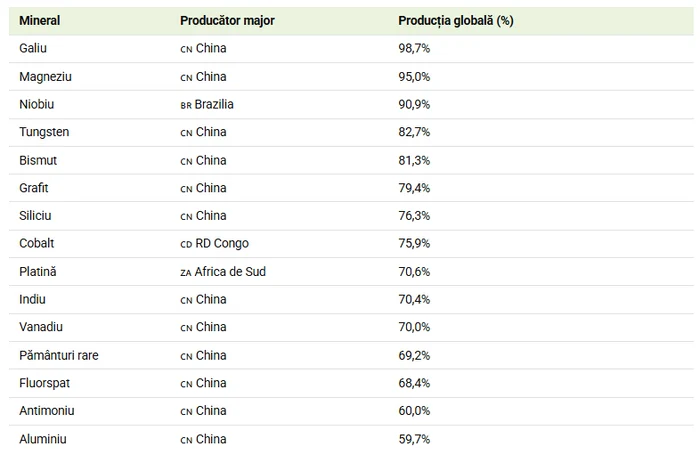
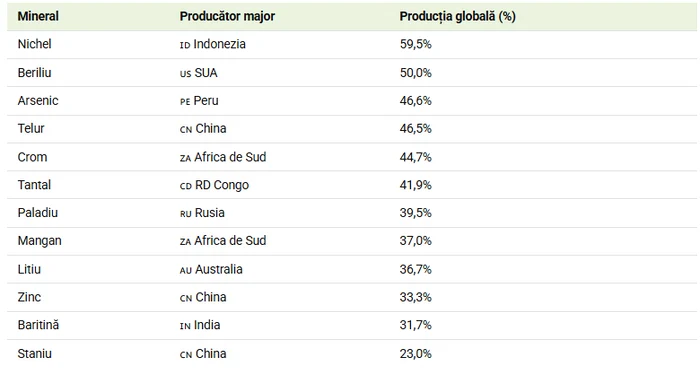
Source Visual Capitalist
Although China's dominance is unparalleled, several other nations play pivotal roles. Brazil accounts for nearly 91% of global production of niobium, a mineral essential for high-strength steel used in pipelines and aircraft engines.
The Democratic Republic of Congo holds 75.9% of cobalt production and 41.9% of tantalum production – both essential for batteries and microelectronics.
South Africa is another heavy hitter, supplying 70.6% of the world's platinum and almost half of the chromium.
Western efforts to rebalance supply chains
Australia, the United States and other Western nations have sought to diversify production and reduce reliance on Chinese materials.
Australia now leads the world in lithium production with 36.7%, helping to anchor non-Chinese electric vehicle supply chains. Meanwhile, the US remains the world's largest producer of beryllium, accounting for half of the total global supply. However, China's overall dependency remains high.
The USA and Australia signed an agreement on the exploitation of rare earths
The US and Australia signed on October 20 an agreement aimed at stimulating the supply of rare earths and other critical minerals, in the context in which the Trump administration is looking for ways to counter China's dominance in this market, reports the BBC.
Australian Prime Minister Anthony Albanese said the deal would support a series of “implementation-ready” projects worth $8.5 billion (A$13 billion; £6.3 billion) that would expand his country's mining and processing capabilities, according to news.ro.
It foresees investments of 1 billion dollars from the two countries in projects in the USA and Australia in the next six months, according to a framework text.
The US and Australia have been working on these issues since Trump's first term. Albanese emphasized, however, that this latest agreement will take the partnership to “a higher level”.
China's decision in April to suspend exports of a wide range of critical minerals and magnets has disrupted core supply chains for automakers, aerospace manufacturers, semiconductor companies and military contractors around the world.
The move underscores China's dominance of the essential minerals industry and is seen as leverage by China in its ongoing trade war with US President Donald Trump.
Trump has sought to redefine the trade relationship with the United States' main economic rival, China, by imposing steep tariffs on billions of dollars of imported goods, hoping to reduce a large trade deficit and bring back lost manufacturing.
Trump imposed tariffs of up to 145 percent on China, only to later reduce them after stock, bond and currency markets rioted over the sweeping nature of the tariffs. China has responded with its own tariffs and is leveraging its dominant position in key supply chains to persuade Trump to back down.