Hurricane Melissa hits Jamaica with 295km/h gusts / 'A catastrophic situation unfolding before our eyes' / Thousands evacuated, hospitals damaged and a warning about crocodiles brought into residential areas

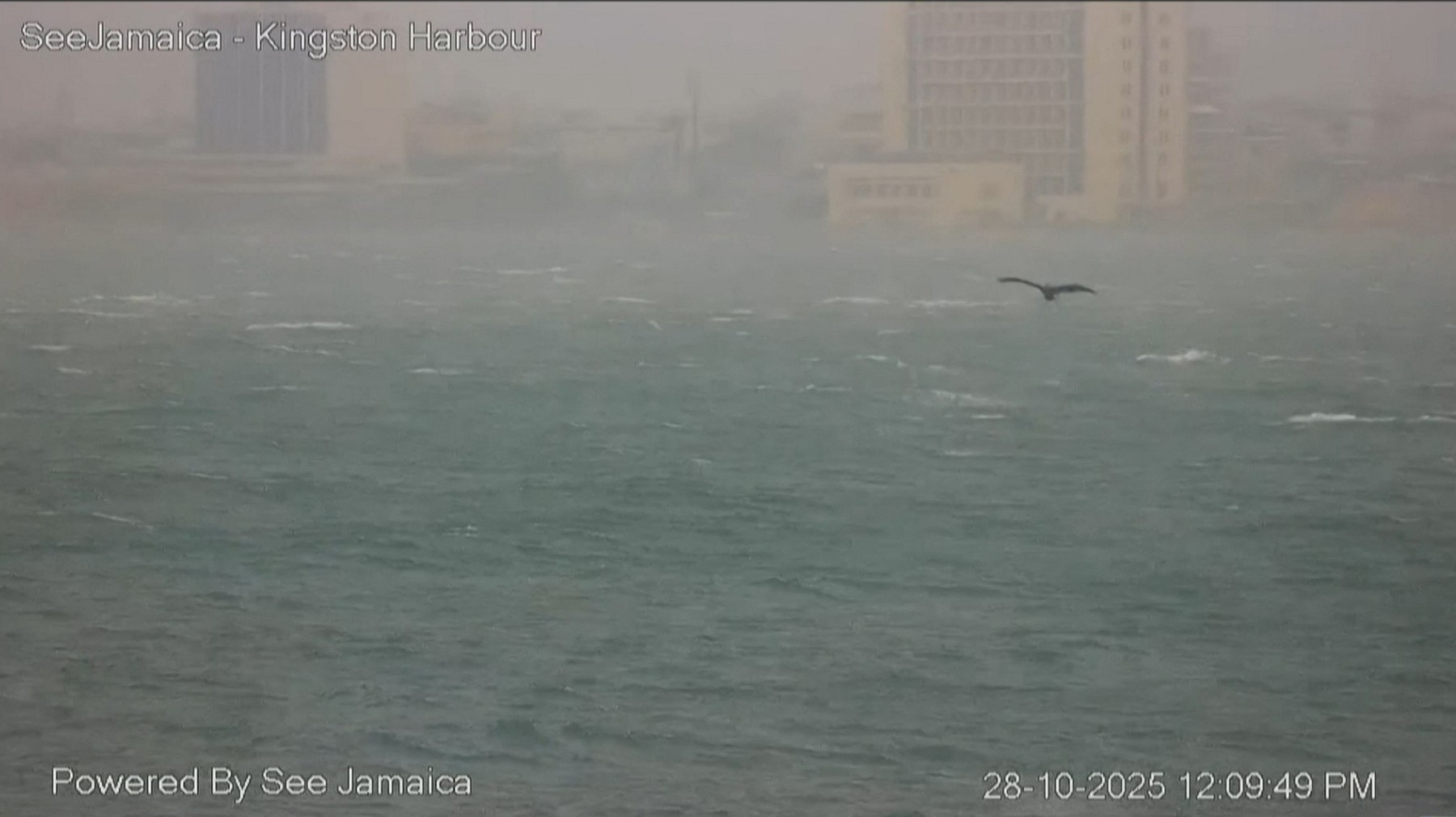
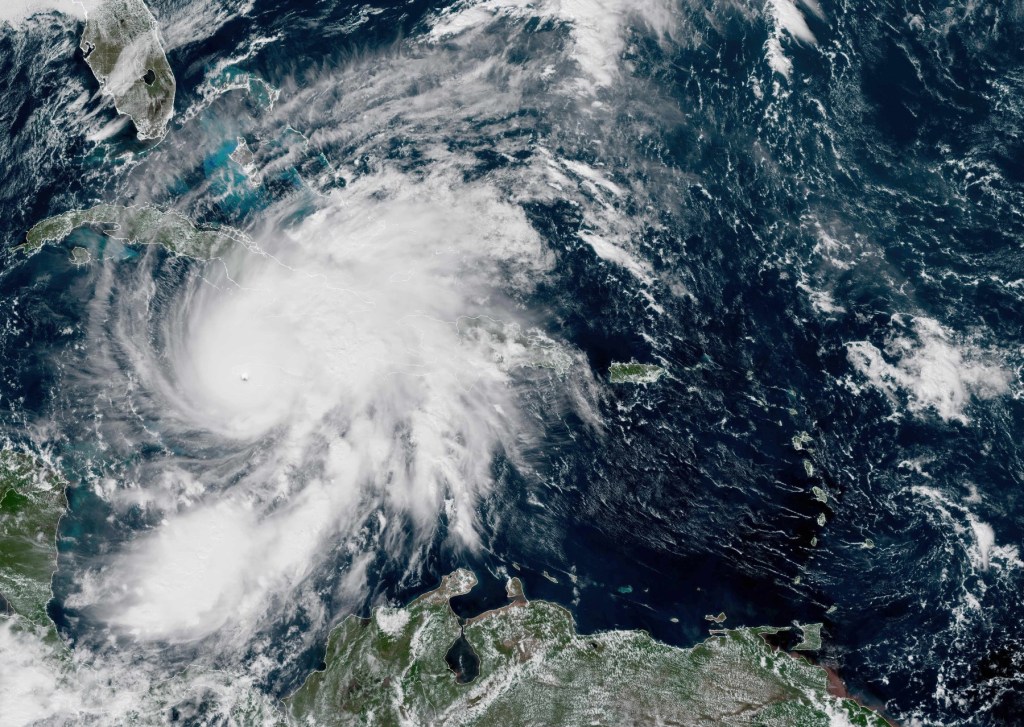
Hurricane Melissa struck the western part of Jamaica on Tuesday afternoon, reaching Category 5 – the most powerful hurricane ever to directly hit the Caribbean island, home to about 2.8 million people, reports Reuters.
According to the US National Hurricane Center, Melissa made landfall near the town of New Hope, located about 62 kilometers south of Montego Bay, with gusts reaching speeds of up to 295 km/h.
By 15:00 (21:00 Romanian time), the hurricane weakened slightly, with wind speeds of 257 km/h, the National Hurricane Center announced.
Around 4:00 p.m. local time, the US National Hurricane Center downgraded Hurricane Melissa from a Category 5 to a Category 4. Category 4 hurricanes have winds between 120 and 160 mph, and the risk of casualties and damage remains very high.
5pm Update sees #Melissa finally weakening to category 4 after almost 40 hours as cat 5. Still a catastrophic hurricane headed towards Cuba. pic.twitter.com/RikA7TXNUB
— That Weather Guy (@That_WeatherGuy) October 28, 2025
The slow-moving storm is expected to maintain hurricane strength as it crosses the mountainous island, where upland towns are at risk of landslides and flooding. Melissa then heads to Santiago de Cuba, the country's second largest city.
The National Hurricane Center in Miami warned that “total structural collapse” is possible in areas along the hurricane's path.
“The devastation could be unprecedented for the people of Jamaica,” said Alex DaSilva, chief hurricane expert at U.S. company AccuWeather. “The island has never been hit directly by a category 4 or 5 hurricane since records exist.”
According to AccuWeather, Melissa is the third most intense hurricane ever recorded in the Caribbean area, after Wilma (2005) and Gilbert (1988).
Gilbert was the last major storm to hit the island directly.
Colin Bogle, a local adviser for the humanitarian organization Mercy Corps in Portmore, near the Jamaican capital, said he heard a loud explosion during the morning, after which everything was plunged into darkness. Sheltered with his grandmother, he said he heard an incessant roar and saw trees uprooted and blown by the wind.
“People are afraid. Memories of Hurricane Gilbert are still fresh, and many are frustrated that Jamaica continues to bear the brunt of a climate crisis we did not cause,” he said.
“Food aid will be needed, but just as important will be recovery support – seeds, tools and vehicle repairs – so that people can resume their daily activities,” said the Mercy Corps representative.
Shortly before the hurricane made landfall, national power company JPS announced that power outages had affected more than a third of its customers. In the worst-hit regions, about three-quarters of consumers were left without electricity.
Local Government Minister Desmond McKenzie said nearly 6,000 people had taken refuge in temporary shelters. The government had issued mandatory evacuation orders for about 28,000 people, but some refused to leave their homes.
“We are receiving images and footage showing serious damage to public infrastructure – hospitals, shelters… just as we expected,” Environment Minister Matthew Samuda told CNN.
“We are glad that the hurricane has weakened a bit, but at 265 km/h we are still talking about a catastrophe,” he added, stating that 70% of the country's population lives less than 5 kilometers from the sea.
In Portland Cottage, about 90 miles (150 kilometers) southeast of where Melissa made landfall, 64-year-old retiree Collin Henry McDonald told Reuters that his community was experiencing torrential rain and strong winds, but the concrete roof was holding up. “He's like a roaring lion. He's crazy. Completely crazy,” he said.
Health authorities in southeastern Jamaica have warned residents to be aware of crocodiles that could be brought by waters from swamps and rivers into residential areas in search of dry land.
“Storm of the Century”
“It's a catastrophic situation,” said Anne-Claire Fontan, a tropical cyclone specialist at the World Meteorological Organization, warning that the hurricane could cause storm surges up to four meters high. “For Jamaica, it will definitely be the storm of the century.”
In Haiti and the Dominican Republic, torrential rains in recent days have caused at least four deaths, according to authorities. In Jamaica, three more people died during preparations for the arrival of the hurricane, local media reports.
After crossing eastern Cuba, still maintaining strength, Melissa is expected to head toward the Bahamas, where Prime Minister Philip Davis has ordered the evacuation of residents of the southern and eastern archipelago.
In Cuba, authorities announced that more than 500,000 people had been evacuated from areas at risk of strong winds and flooding. “There is no room for half measures,” President Miguel Díaz-Canel said in a message published in the state-run Granma newspaper, urging residents of vulnerable regions to evacuate. “Melissa will hit hard and the concern is high about the destruction she could leave behind,” he said.
“There is no infrastructure in the region that can withstand a Category 5 hurricane”
Melissa hit southwestern Jamaica, one of the regions hardest hit by Hurricane Beryl last year.
On Monday, Prime Minister Andrew Holness ordered mandatory evacuations in several areas of the island's south, including the historic town of Port Royal. He warned of possible damage to agriculture, housing and infrastructure, noting that the island, about the size of the US state of Connecticut, has its main airports close to sea level.
“There is no infrastructure in the region that can withstand a Category 5 hurricane,” Holness said.
The prime minister appealed for international support, saying the government had an emergency budget of $33 million and insurance and credit lines for damage only slightly greater than that caused by Beryl.
Beryl was the earliest and fastest Atlantic hurricane to reach Category 5, and scientists warn that storms are becoming stronger and faster due to warming ocean waters.
“Slow-moving major hurricanes often go down in history as some of the deadliest and most destructive,” said AccuWeather Chief Meteorologist Jonathan Porter. “It's a dramatic situation unfolding slowly before our eyes.”