We hand over the PESEL number “on the face of it”. Every fourth Pole does not know who can demand it

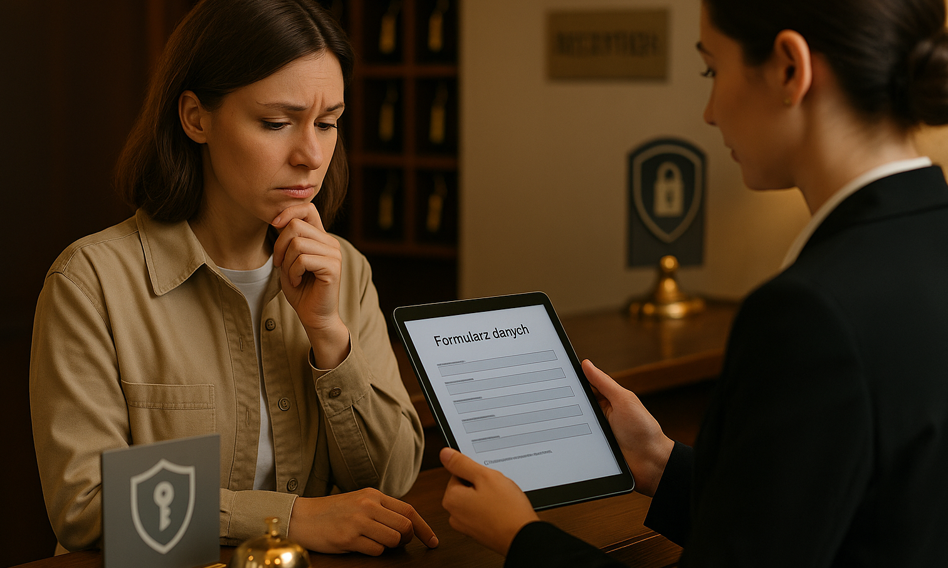
You sign the petition, check in at the hotel, install the app and… without blinking, enter your PESEL number. A study by ChronPESEL.pl and KRD shows that millions of us hand over sensitive data “on a plate”, even though the law does not require it. This is a direct path to financial problems.
Poles declare that they know when they must provide their PESEL number, but their certainty quickly fades when specific details are given. As much as 76 percent respondents claim that they are familiar with the regulations, but only 23 percent he has full confidence in this. Every fourth respondent admits that they do not know who is entitled to PESEL and when. The greatest gaps are visible among people aged 65+, but there is also a high level of uncertainty in the groups 35-44 and 18-24. This is not a simple generational division – the problem affects both the youngest and the oldest.
Practice is even worse. Only 22 percent Poles generally checked which institutions had the right to request a PESEL number. Men do it more often than women, and younger people more often than seniors. As much as 59 percent were never interested in the topic, and another 19 percent doesn't remember if it was ever verified. In the “I didn't check/I don't remember” group, women clearly predominate, and among seniors the lack of interest reaches 87%. – warn the authors of the study.
One leak and you're in trouble
ChronPESEL.pl expert, Bartłomiej Drozd, does not mince words: since 4 out of 5 people do not verify the legal basis, we provide PESEL “at random”, often to companies without appropriate procedures and safeguards. One leak is enough for the ID to fall into the wrong hands and be used for fraud – from company registration to deferred payment purchase fraud.
The most dangerous are false beliefs about the “obligatory” PESEL in everyday situations. Almost half of the respondents believe that the number must be provided when signing the petition, 29 percent he thinks this about checking in at the hotel. 21 percent believe that PESEL is necessary to open an account in applications or websites, 13 percent indicates online reservations, 12 percent rental companies, and 7 percent — regular shopping in e-shops. This is a breeding ground for “leaks” and impulsive consents to data processing.
Who can request a PESEL number?
It must be clearly stated who can request PESEL and who cannot. The number may be requested primarily by public institutions operating on the basis of statutes, such as offices, ZUS or courts. The law also provides for it in health care – when maintaining medical records – and when concluding formal contracts where hard identification is necessary: in banks, employers and telecommunications operators. These are the areas that respondents most often indicated correctly.
In other, ordinary situations, the number can be abused. The organizer of the petition usually has no basis to collect PESEL numbers. The hotel does not need this ID for check-in. An online store or a social media application – even more so. If the form asks for a PESEL number “because that's the form we have”, you have the right to ask about the purpose, legal basis and duration of data storage. If there is no clear answer, refuse and end the process. It is worth remembering that the respondents themselves indicate state institutions and health care as places where PESEL is actually mandatory, while petitions, hotels and online registration are the most common sources of erroneous beliefs.
If you don't have to, don't provide it
When we are looking for information, we usually choose good leads: regulations of banks and offices, websites of state institutions and legal provisions, including GDPR. Unfortunately, every fourth respondent relies solely on their own experience, advice from friends or suggestions from social media. This is a direct path to “good advice” that ends in the loss of data and money.
A practical checklist for everyone. Before entering your PESEL number, ask three questions: for what purpose, on what legal basis and for how long the data will be processed. If the answer is unclear or “because that's the way we have the form,” stop. Where the law provides for a different form of identification, choose that form. Where PESEL is really necessary, provide it consciously and only to the extent necessary. In a world where we fill out forms on autopilot, this minute of reflection may be the cheapest insurance.