
Out of the country with Lukoil? What Romania can do after Trump's sanctions against Russia “We already have a mechanism that can be expanded”


The decision of the Office for the Control of Foreign Assets within the US Treasury to impose sanctions on Lukoil may also affect Romania, given that the company owns a large refinery in our country, several hundred gas stations and is involved in several important contracts. “We have to cut with the scalpel, not with the bard,” explained the experts consulted by “Adevărul”.
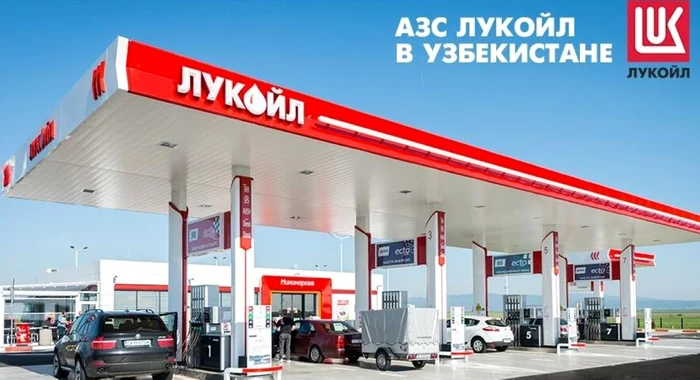
The US sanctions imposed on Lukoil may indirectly affect the Romanian market. Facebook photo
In Romania, Lukoil owns the Petrotel Refinery and 320 fuel distribution stations throughout the country, where there are about 4,000 employees.
The sanctions imposed by the USA may indirectly affect the Romanian market, considering that Lukoil is operated through a company established in Switzerland a few years ago – Litasco (about which “Adevărul” wrote here)
Negrescu: We must cut with the scalpel, not with the bard
Asked what Romania's position should be in this context, given that the European Commission has not yet taken a decision on sanctioning Lukoil in Europe, analyst Adrian Negrescu told “Adevărul” that “we have to be careful and not turn the sanctions against Russia into a witch hunt”.
“If the Romanian state wants to eliminate companies with Russian shareholders from Romania, it must do it very carefully, in order not to create negative economic effects – most of the Russian companies are involved in economic chains, in ongoing contracts, they employ tens of thousands of Romanians. In other words, the solution is to identify an investment alternative that would take over the businesses of Russians in Romania without turning the economy upside down, we minimize the negative economic effects.
The first step should be represented by a very clear analysis of the influence of Russian capital in Romania, of the business ramifications and, subsequently, based on this portfolio of information, to find investors capable of taking over these assets with the consent, of course, of the representatives of the respective companies.
The nature of the capital is not a problem, but the security risks that arise from their presence in Romania. The good news is that we have such a mechanism – currently associated with Chinese capital – which can be extended to Russian capital as well.
Prohibiting the participation of Russian companies in investments and business chains important for national security, on the model of excluding Chinese capital, may represent an optimal solution to solve this problem associated with the embargo on Russia.
It is important, however, not to rush, to cut with the scalpel not with the bard, to try to use this situation as an opportunity to bring, for example, American investors to the oil networks in Romania, to attract foreign capital”, said Adrian Negrescu for “Adevărul”.
Silviu Gresoi: It could increase the prices at the pump
Asked what the effects of these sanctions imposed on Lukoil might be, considering the assets it owns in Romania, the expert in risk and energy analysis Silviu Gresoi explained to “Adevărul” that the direct effects are limited, but over time they can lead to price increases.
“The sanctions imposed by OFAC (Office for Foreign Assets Control within the US Treasury) on the Lukoil company aim to reduce the revenues that reach Russia and restrict its access to technology and services from the Western space. In Romania, Lukoil operates through locally registered companies, so the direct effects are, at least in the short term, limited. However, there is likely to be pressure on operating costs and supply chains, especially if Western financial institutions become more cautious in their collaborations with associated entities. In the medium term, the regional market will tend towards a resettlement and tighter control of the sources of crude oil and petroleum products“, stated for “truthSilviu Gresoi, data scientist and expert in risk and energy analysis.
Asked if this could also mean possible increases in fuel prices in Romania, the expert said that mainly there will be higher expenses, which can also be translated into prices, but not immediately and to a lesser extent.
“Pressures on operating costs and supply chains may mean, in practice, higher costs of transporting, insuring or financing crude oil imports. These additional costs may gradually also be reflected in the price of fuels at the pump, but not necessarily immediately and not in a direct proportion. Much depends on how regional markets will react, on alternative sources of supply and on the pricing policies of the big distributors in Romania”Silviu Gresoi explained for “Adevărul”.
AEI: Lukoil knows everything that moves in this country. It also owns part of the state reserves
The experts of the Intelligent Energy Association (AEI) claim that things are much worse than thought.
“Things will not be simple because Lukoil has gas stations located at the entrance and exit of the cities. They have chosen strategic points from which they can monitor well, they know everything that moves in the city. They have very good databases. I know how much fuel the police consume, because they had contracts, they know how much fuel the Army consumes, because they delivered diesel to them.
In addition, since 2014, all three refineries in Romania (owned by Lukoil, Rompetrol and OMV) keep fuel reserves for the state. This option was chosen as being cheaper for Romania, which asked the large refinery operators to make the stocks. We don't even know if these fuels exist or not. The Smart Energy Association has told all energy ministers lately that it is a serious problem that needs to be solved“, experts from AEI declared for “Adevărul”.
They explained to “Adevărul” that the sanctions applied to Lukoil will not have an immediate effect on the Romanian market, but in 3-6 months they will start to appear.
“Because they don't have many options. They either exit the market, which means they sell everything, or they will raise prices. They don't have many options because the restrictions imposed by the US mean that they are no longer allowed to trade through American banks. And this does not mean isolation, it means that there will be problems throughout the supply chain and not just for crude oil. Even if they find an X-ulescu to broker sales through, it will still be difficult for them, because these new contracts will be more expensive than the ones currently concluded. And all these costs will be seen in a few months in Exits or price increases”energy experts explained.
Lukoil also has contracts with Oil Terminal and CFR Marfă
The Minister of Energy, Radu Miruță, recently stated that, in addition to the Petrotel refinery and the approximately 320 gas stations it has in Romania, Lukoil is part of an economic chain, having contracts with Oil Terminal, for the transport from Constanța to Ploiesti of crude oil intended for refining, with CFR Marfă or other railway companies, for the transport of fuel tanks by train.
In addition, they are partners with Romgaz in the Black Sea, for the development of the Trident gas perimeter, where the works have not yet started, the project is now in the prospecting phase. The local businesses of the Russians could be affected, with effects in the Romanian economy as well, but we should wait and see what arguments and what negotiations the European Commission will carry out, and on our behalf, with the Americans, stated Economy Minister Radu Miruță.
Previously, the state secretary in the Ministry of Energy, Cristian Buşoi, had declared in an interview for the Politico publication that Lukoil should sell the Petrotel refinery in Romania. “We would be happy to no longer have Lukoil”he said.
A similar statement was made by Bulgarian analyst Martin Vladimirov, who said that Neftochim Burgas will have to cease operations on November 21 if it is not sold.
Sanctions against Lukoil and Rosneft and their subsidiaries
On October 22, the US imposed sanctions on Russia's largest oil companies, Rosneft and Lukoil, with the aim of pressuring the Kremlin to conclude a ceasefire in Ukraine. That means freezing the US assets of these companies, paving the way for secondary sanctions against institutions that transact with blacklisted entities
Rosneft and Lukoil are the mainstays of Russia's economy, accounting for almost half of the country's crude oil exports, around 3.1 million barrels per day, according to Russian estimates.
State-controlled Rosneft, run by Igor Sechin, a close associate of Russian President Vladimir Putin, produces about 40 percent of Russia's oil. In turn, Lukoil, the country's largest private energy company, provides about 15% of national production and 2% of global production.
The new US sanctions extend far beyond the parent companies, also targeting six Lukoil subsidiaries and 28 Rosneft enterprises. Among them is Lukoil-West Siberia, which alone provides about 40% of the group's hydrocarbon production.
Both companies were already under certain sanctions, including some that prohibited US entities from providing drilling equipment, technology or services for new Arctic, offshore or shale projects. The October 22 decision by the US, however, practically blacklists them globally.
On Thursday, the European Commission said it was considering its own trading ban against Lukoil.
In Hungary and Slovakia in particular, the new sanctions are raising concerns that oil flows could be cut off completely.
If applied, these “would lead to the stoppage of imports,” admitted a Slovak official, speaking on condition of anonymity, commenting that the government will request “most likely” a waiver from Washington.


