Hungarian Prime Minister Viktor Orban no longer speaks as a European leader, but as a spokesman for a defeated world. When he declared that the creation of a “coalition of the willing” – European countries that will jointly support Ukraine financially and militarily – is “a catastrophe that will only bring more victimshe wasn't talking about peace. Rather, he repeated the old Russian lie about “peace” on the aggressor's terms.
In every sentence in which Orban calls for an end to support for Ukraine, you hear the echo of the Kremlin, not the voice of Budapest. While Europe strives to uphold its fundamental principles of freedom, law and responsibility, the Hungarian Prime Minister continues to deepen his political submission to Moscow. It's not just pragmatism; it is also an ideological dependence. Orban no longer balances between East and West; chose one side. And this is not the side that defends its homes, but the one that destroys them.
Viktor Orban is not neutral – he is part of the Russian front in the heart of Europe
The “peace” rhetoric he promotes is not a call to end the war, but to surrender. When he says that supporting Ukraine “will only bring new graves,” he is actually arguing that lives have already been lost and it is no longer worth fighting. It is the same logic that once justified the occupiers — that resistance is not worth the effort because it only prolongs suffering. But Ukraine does not fight a war to suffer; fights to survive.
The article continues below the video
Orban knows this. Therefore, his statement is not a misunderstanding, but a calculation. He understands very well that ending support for Ukraine would be the greatest victory of Russian President Vladimir Putin. Therefore, he uses every opportunity to undermine European unity and present Ukraine as a burden rather than a line of defense for the entire continent. In this respect, Orban is not neutral – he is part of the Russian front in the heart of Europe.
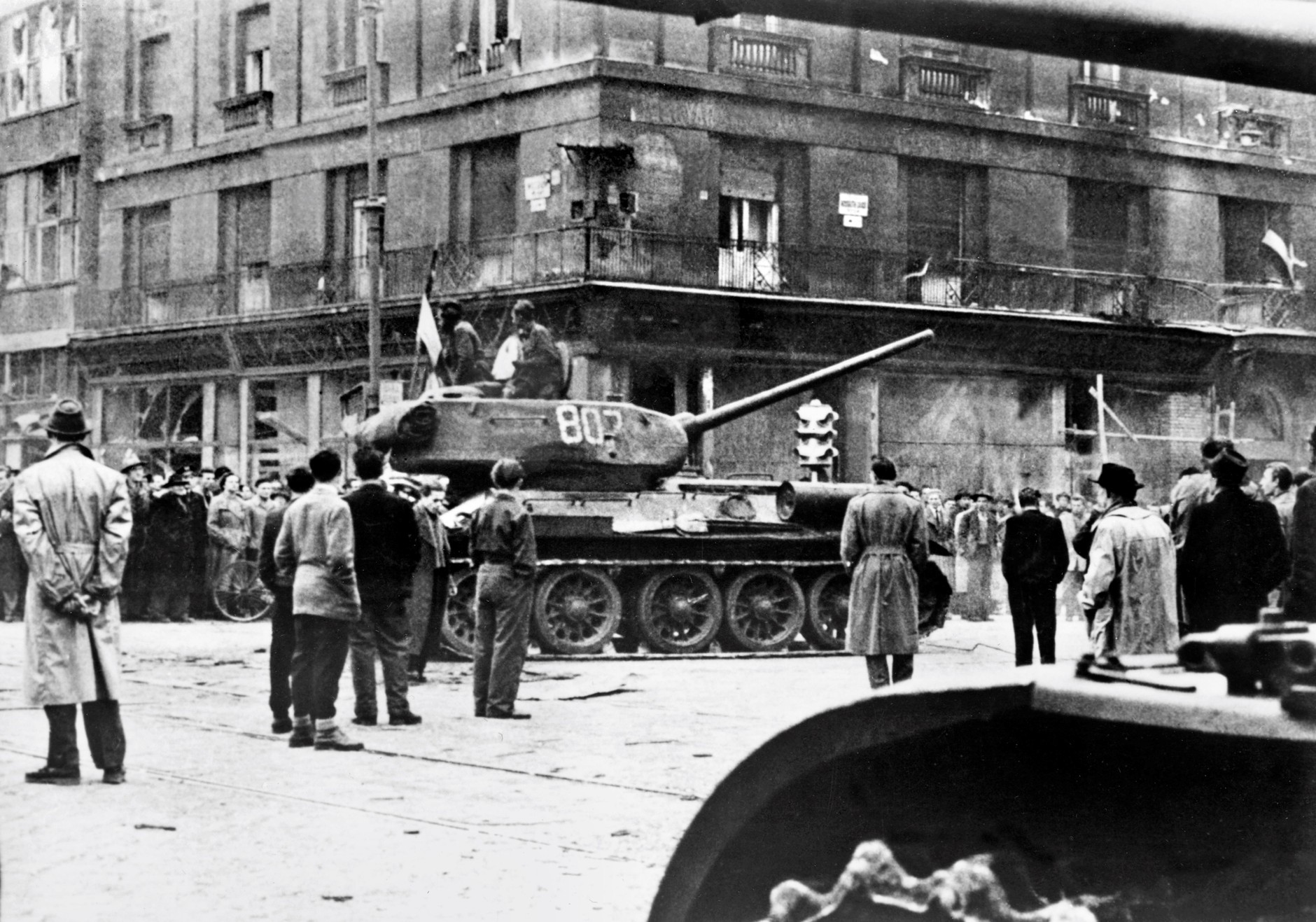
Hungary, the country that opposed Soviet tanks in 1956, now has a prime minister who greets tanks from the east with political applause. When the Soviet army entered Budapest, over 2,500 Hungarians lost their lives in places that are now tourist trails. Over 200 thousand people fled the country. The Hungarian revolution was an act of desperate faith in freedom.
A Soviet tank patrols the streets of Budapest, October 30, 1956.KEYSTONE/PHOTOPRESS-ARCHIV/St / PAP
Today, Orban speaks with the words of those against whom his compatriots once fought. He is not looking for peace – he is looking for oblivion. It does not talk about how Moscow trampled Budapest or how Hungarians sacrificed their lives in the name of freedom. He ignores the parallels between 1956 and 2022 because then it would become clear that history is repeating itself — only this time Budapest is not a victim but an accomplice.
In Orban's vocabulary, “peace” is no longer a moral idea, but a commercial term. He uses it as currency to pay for his own comfort and political gain. His definition of peace does not include the cessation of violence, but the cessation of resistance. In this language, peace becomes another name for surrender. It is not a moral category, but a technical tool for maintaining the balance of power in which the aggressor retains the initiative and the victim is silenced. Such peace does not calm down – it cements injustice. This is why it is more dangerous than war: because it is sold as sanity and delivered as defeat.
Viktor Orban knows how to increase his value in the Kremlin
Orban doesn't believe in peace – he believes in control. In a world torn between truth and propaganda, he chooses propaganda because it allows him to present himself as a “reasonable European”, while undermining the very idea of European unity. JHis policy towards Russia is not a policy of peace, but a trade in illusions. He knows that every statement against helping Ukraine increases his value in the Kremlin and among European politicians who are afraid of their own shadow.
Orban not only undermines European policy towards Ukraine; it destroys the very idea that Europe has a soul. If European leaders accept his “neutrality” logic, this will mean the moment when Europe loses the right to talk about values. Values that are not defended disappear.
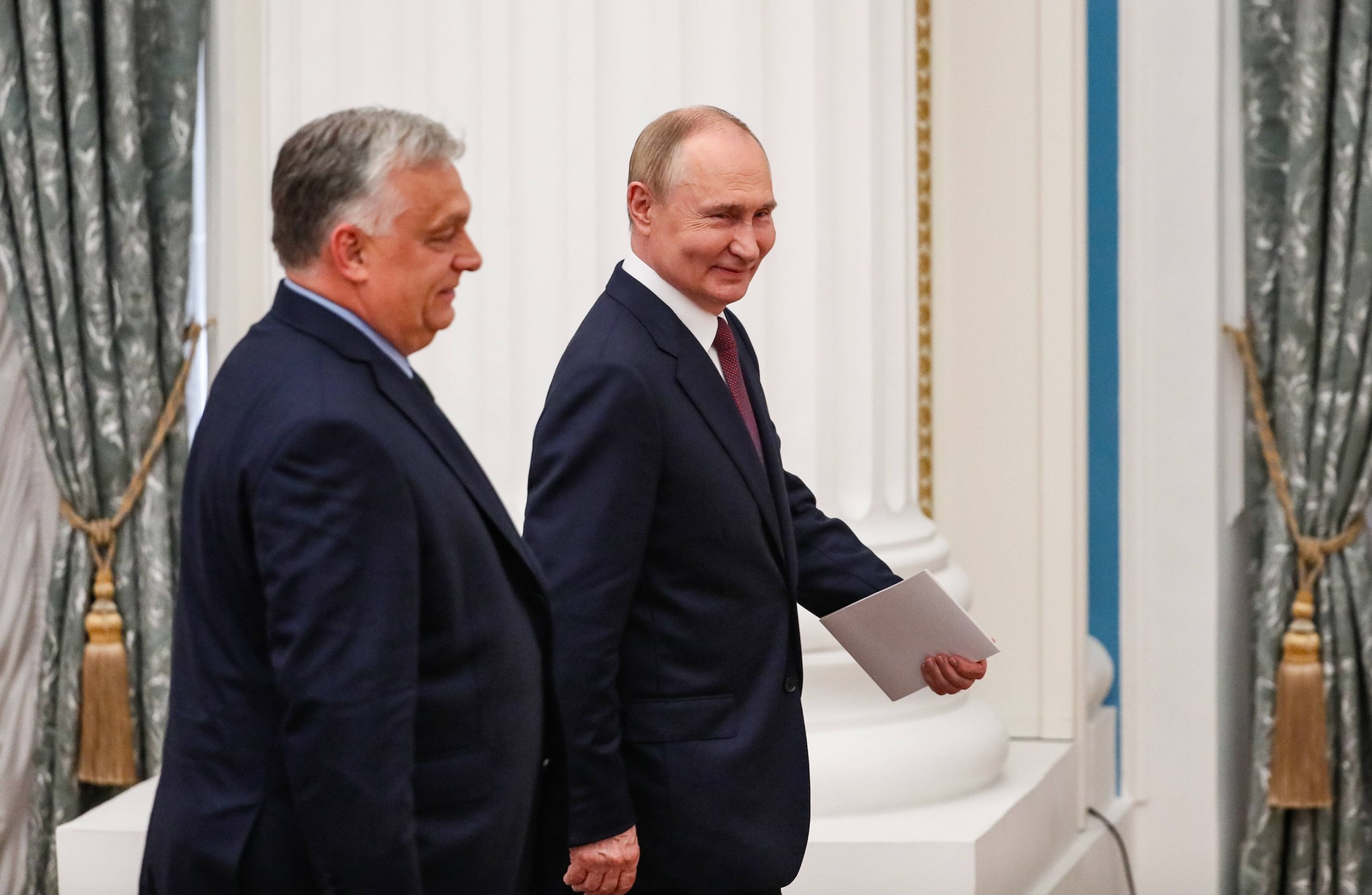
Viktor Orban and Vladimir Putin in the Kremlin, 5/07/2024YURI KOCHETKOV / PAP
Hungary, once the country of the heroes of the 1956 uprising, is now a symbol of silent capitulation. But Europe must be the opposite – a symbol of resistance, consistency and morality. Those who do not stand on Ukraine's side today will have nowhere to stand tomorrow. Orban knows this. Therefore, he tries to convince others to ignore the obvious: evil is stopped by defending against violence, not by praying for peace.
Europe can survive economic crises, political disputes and bureaucratic conflicts, but it cannot survive moral cowardice. When an EU member state becomes the Kremlin's megaphone, it is no longer a matter of politics – it is a matter of principle. Those who today justify the Russian attack on Ukraine will tomorrow justify any attack on the weaker side, every border erased and every lie told in the name of “realism”. This is how you die from the inside – without firing a single shot.
In the midst of this silence, Ukraine has become what Europe once was: a continent of conscience, resistance and hope. While Russian bombs destroy cities, Europe should look to those who dig through the rubble to save a child, not to those who count the delivered missiles and score political points.
On this front line, between truth and calculation, there is a clear difference: Ukraine chose dignity, while some in Europe chose oblivion. History will remember that at a time when the fate of freedom was being decided, Ukraine was not alone. However, some of her neighbors decided to abandon living in harmony with their past.
I’m Ashley Davis as an editor, I’m committed to upholding the highest standards of integrity and accuracy in every piece we publish. My work is driven by curiosity, a passion for truth, and a belief that journalism plays a crucial role in shaping public discourse. I strive to tell stories that not only inform but also inspire action and conversation.