VIDEO Russian monster tanks: equipped with increasingly bizarre armor, in an attempt to survive on the front. But how resistant are they now to drones?


Russian tanks have become veritable steel “prickly pigs” in an attempt to improve their armour, with rows of metal rods or spikes protecting them from drones. In some cases, this armor works, writes Forbes.
The Kremlin has spent much of this year adding protection to tanks, infantry fighting vehicles and other armored vehicles. Then, at the beginning of October, these vehicles attacked, writes journalist David Ax in a text published by the Ukrainian portal EuromaidanPress.
First, the tanks attacked in the east, around Pokrovsk, and in the south, around Mala Tokmacika. Then, last Thursday, they advanced on a third front, near Siversk, in eastern Ukraine's Donetsk region.
The attacks ended in failure, but showed that the tanks had become somewhat more resilient in the face of the main enemy FPV (First Person View) kamikaze drones, which threatened to take them off the battlefield.
A “turtle” tank, covered by additional anti-drone armor, led Thursday's attack, and similarly armored infantry vehicles followed. Equipped with a front-mounted mine roller, the tank safely detonated several mines and repulsed several kamikaze drones as it moved west.
russian mech and bike attack near siversk today
UA 81st and 54th brigadeshttps://t.co/9wymRjfE4p pic.twitter.com/WvLHLNqJNT— imi (m) (@moklasen) October 23, 2025
But more drones were waiting. After absorbing dozens of blasts, the tank finally succumbs to a drone that appears to have hit its engine bay.
The crew left the burning vehicle, only to fall victim to another drone that struck from the air, writes Axe, which warns that more attacks are to come.
Metal rods and spikes
In an analysis of how tanks have tried to improve their anti-drone armor lately, Forbes notes that tanks have turned into veritable “prickly pigs” of steel.
First seen on Russian vehicles, the bizarre armor with rows of metal rods or spikes is now also used by Ukraine. And it seems to work.
“For those scoffing at armored vehicles, look at the sheer number of drones it takes to destroy a well-armored tank,” OSINT analyst Jonpy wrote last week on X , posting a clip of a Russian tank being hit by at least five Ukrainian drones.
For those mocking armored vehicles and especially turtle tanks and thinking drones are a wunderwaffe that have rendered armor obsolete, take a look at the sheer amount of FPVs that are required to destroy a well uparmored tank. https://t.co/ZD6GenHdWH
— Jompy (@Jonpy99) October 17, 2025
Forbes cautions that it is not yet time to celebrate the return of the tank as master of the battlefield.
“FPV drones are effective against any type of armored vehicle if you can hit the right spot,” “Michael,” commander of the Ukrainian National Guard's Typhoon drone unit, told this publication.
“You need a skilled operator who can fully control the drone and identify the weak points of the armor,” he said.
Even monsters equipped with the most complex armor can be stopped – if the drone operator knows how. But future developments may present an even greater challenge.
“With proper modifications, the armor can withstand 10-15 drone hits”
At the start of the 2022 invasion, Russian tanks were equipped with simple frames above the turret, which proved largely ineffective. First the portable rocket launchers, then the drones destroyed a large number of armored vehicles.
Western tanks have proven to be more resistant to drones. Even if the vehicles were ultimately destroyed, the optimized design for crew protection allowed the military to escape with their lives.
Both camps on the front made efforts to improve armor.
Another Russian monster tank with a huge number of improvised anti-drone structures pic.twitter.com/6nMQoqfaoX
— Special Kherson Cat 🐈🇺🇦 (@bayraktar_1love) October 20, 2025
According to a recent report by British think tank RUSI, “with appropriate modifications, the armor can withstand 10-15 FPV drone hits, sustaining repairable damage.”
Modifications typically include a generous coating of explosive reactive armor plates that effectively mitigate the explosive charges carried by these drones.
It takes multiple hits to the same spot to penetrate them, and the plates can easily be replaced if the tank survives.
Turtle tanks
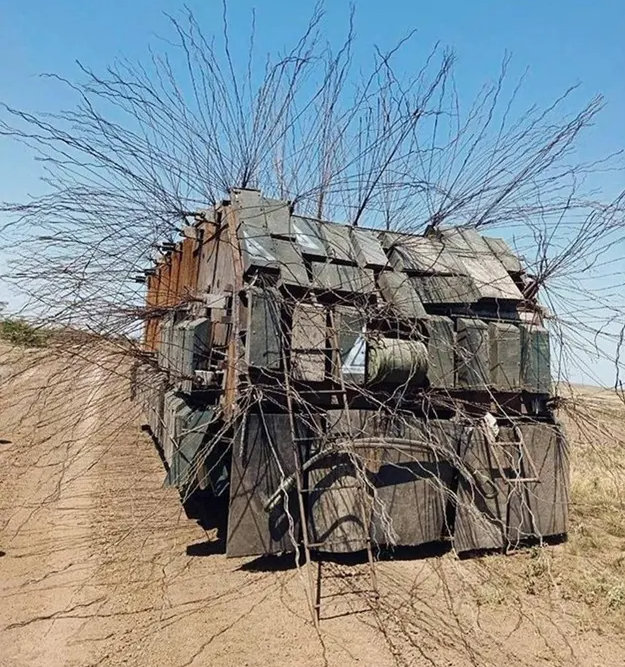
The Russians took the idea of armor to a higher level, and by 2024 they began using “turtle tanks” covered with a full armored shell.
This improvised configuration prevents turret rotation and was used primarily on enemy line penetration vehicles. The case reduces visibility, but absorbs drone strikes. Tanks also carry less ammunition to avoid the risk of explosions.
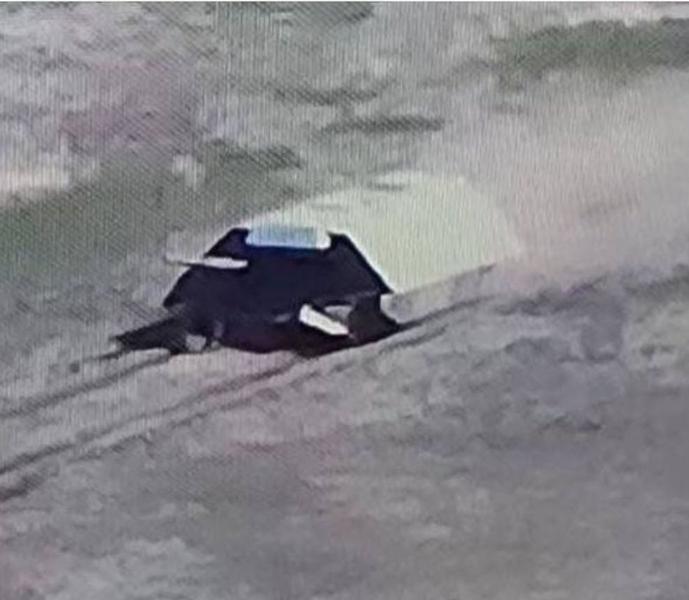
“It's a deliberate compromise,” Michael explained to Forbes. “Sacrificing offensive capability in favor of survivability,” he said.
At first, it took artillery strikes to stop them, but within weeks the turtle tanks were destroyed with repeated FPV drone strikes as the operators perfected their technique.
Mad Max
Later, the metal casings were replaced with protruding spikes, which reminded commentators of post-apocalyptic films such as Mad Max.
The metal extensions are highly functional: FPV drones are pierced, deflected or detonated before they get close enough to cause real damage.
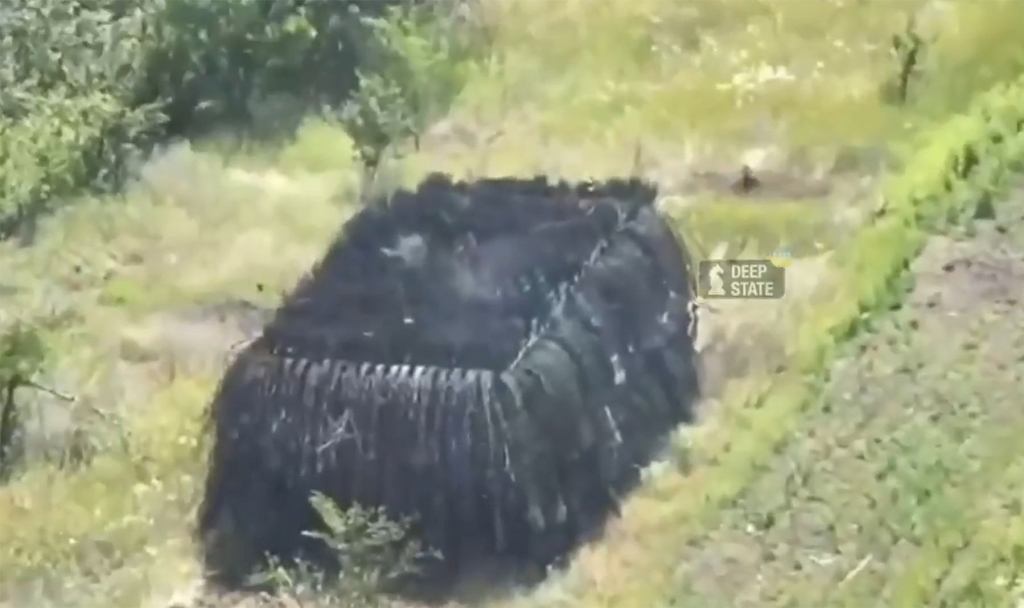
In one famous incident in July, a Russian “monster tank” reportedly needed nearly 60 FPV drones to stop it.
The number was inflated in later accounts to “more than 70” hits. Russian proponents further exaggerated the number, claiming the monster tank survived 110 FPV drones and several bombs from Baba Yaga drone heavy bombers.
Other Russian armored vehicles were seen at the front, but none matched the (albeit limited) success of this example.
How to destroy a tank
The commander of the Ukrainian National Guard drone unit explained to Forbes that even unmodified Russian tanks often require multiple hits to destroy.
“In most cases, it takes multiple FPV drones to destroy an armored vehicle,” Michael said. “The process is usually carried out in stages: first, you have to stop the heavy armor, then destroy it,” he said.
“Over 20 hits is an extreme case with heavily protected vehicles and active countermeasures, but the need to use multiple FPV drones on a single armored target is more common than unusual,” he said.
For a drone operator, the first problem is getting past jamming, which can be a bigger problem than shielding.
“The challenge is to have the right equipment for that specific sector of the frontline to see the clear picture – drones operating on the appropriate frequencies for both control and video transmission to bypass local jamming,” Michael said.
Even with fiber optic drones, which are immune to jamming, factors such as weather conditions, artillery fire and other drones mean a hit is not guaranteed.
While targeting tracks may seem like the obvious way to stop a tank, Michael says it's rarely the preferred option.
“You lose the clear image due to interference and ground effect, which makes it difficult to see specific components such as wheels or tracks. In addition, these are moving targets that require exceptional accuracy,” the Ukrainian military said.
So operators typically target larger, more visible targets located higher up on the vehicle – where they have better video clarity and a greater likelihood of causing significant damage,” he said.-
A typical FPV drone carries a payload of 3-5 kilograms of explosives, significantly less than an artillery shell or a Javelin anti-tank missile.
Therefore, the skill and knowledge of the drone operator is crucial.
This, the Ukrainian military suggested, was also the problem with the “monster tank”: FPV drone operators had difficulty identifying weak points. They had never encountered this type of armor before, and the drones were initially wasted trying to break through the mass of spikes.
An alternative
The evolution of tanks seems to be moving towards a tank completely covered by a cloud of metal extensions, which leaves no clear path for drones.
But that, Forbes writes, doesn't mean it's game over for FPV drones.
Brian Davis, CEO of Kraken Kinetics, an American company specializing in munitions for small drones, pointed out that the new armor only works because of the type of warhead currently carried by FPV drones.
Known as a cone charge or HEAT (“High Explosive Anti-Tank”), it works by launching a narrow jet of metal at high velocity upon detonation. The jet is powerful enough to pierce steel, but quickly loses focus and must be fired at a precise distance.
An alternative design, known as EFP, is effective from much greater distances. It launches an aerodynamic metal projectile instead of a jet.
EFPs would have no difficulty with additional armor and are already being used in Ukraine in weapons such as the Bonus artillery projectile, say experts cited by Forbes.