One of the most mysterious places on earth and its secrets. Where is Egypt's Area 51 and what is hidden in the depths of the earth

One of the most mysterious places on Earth is at Zawyet El Aryan in Egypt. Here, at the beginning of the 20th century, a huge underground structure was discovered, from the ancient era, including an unknown liquid. Access is today prohibited, being called Area 51 of Antiquity.
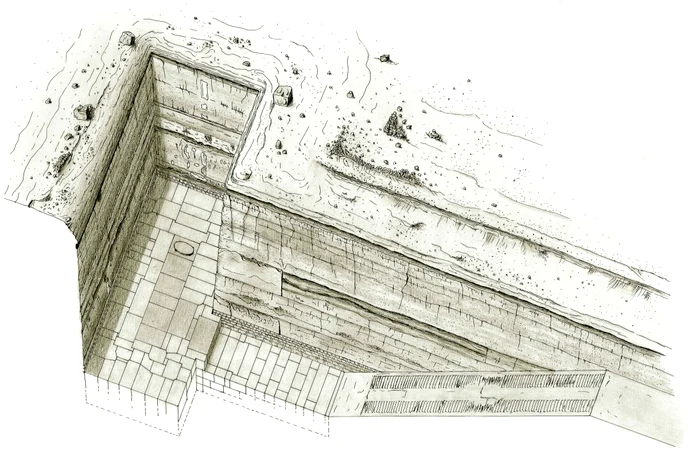
Mega structure from Zawyet El Aryan PHOTO wikipedia
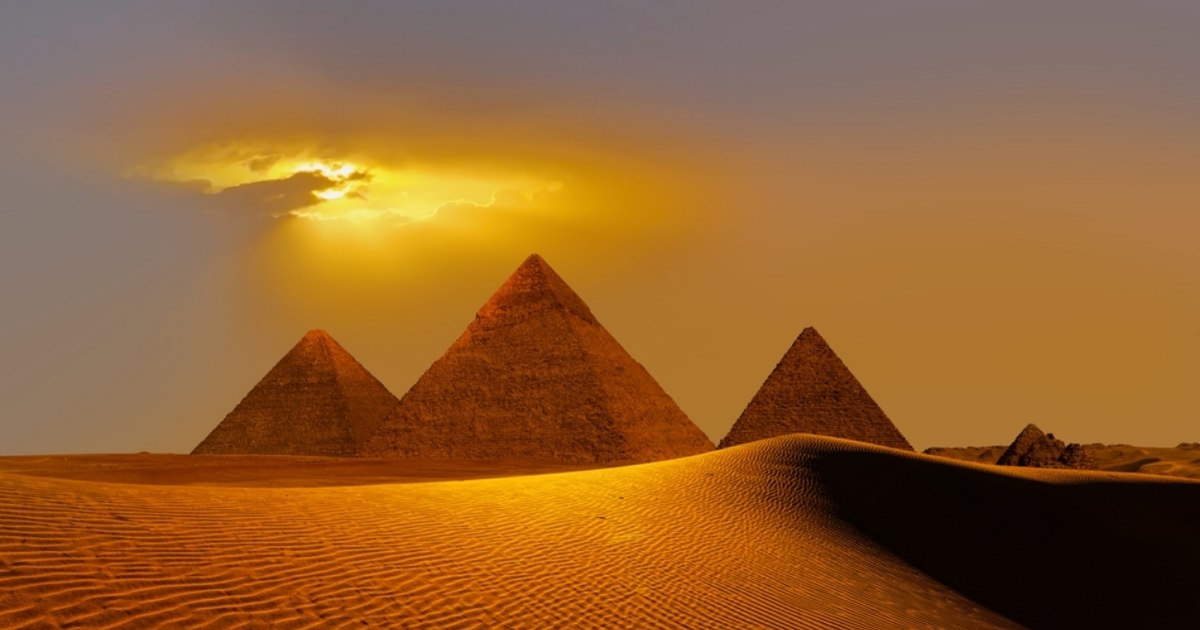
For tourists arriving in Egypt, the main objective is the Giza plateau, where the great pyramids of the pharaohs have been enthroned for over 5,000 years. Few know that only 5 kilometers from Giza and the pyramids of Cheops, Khefren and Mikerinos, there is another Egyptian funerary complex of great value. It is about the one located in the west of the Egyptian city of Zawyet El Aryan, in the governorate of Giza. In addition to a truly historically and archaeologically fascinating area with cemeteries from different eras, from the Old Kingdom to the Roman period, there are also two interesting structures. One of these has remained a mystery of history even today. It is a deep underground structure, dug directly into the stone and with a series of completely bizarre layouts that have not been deciphered even today by the specialists in Ancient Egypt. Since 1964, the area has been restricted to the public and researchers, becoming a military base. It is precisely for this reason that this construction, known in the world of archaeologists as the “unfinished northern pyramid of Zawyet El Aryan”, has come to be nicknamed the Area 51 of Antiquity, and because of the fact that many conspiracy theories have been woven around it.
A fascinating discovery in the cities of the dead
There are no less than 118 ancient pyramids in Egypt. They were erected throughout the entire history of Ancient Egypt, but especially during the period called the “Old Kingdom”, i.e. 2700–2200 BC (4700 years ago), also known as the “Age of the Pyramid Builders”.
In addition to prestige and religious importance, the pyramids may have had other functions, including as an astronomical observatory. The most famous pyramid sites in Egypt are Giza, Saqqara and Dahshur. Little known to tourists and the general public is the fact that the ancient Egyptians also tried to build pyramids in a secret place. This is the area outside Zawyet El Aryan. Here is a whole funerary complex from several eras. There are five cemeteries with graves starting from the Old Kingdom period (4700 years ago) and up to the Roman Egypt period (ie until the 4th century AD). In short, there are several thousand years of funerary history in a small area. But those were, for the most part, graves of ordinary people. Not far from these necropolises, several mastabas and two other structures were discovered, experts say, intended for the pharaohs. First, easily identified is the “Layered Pyramid”.
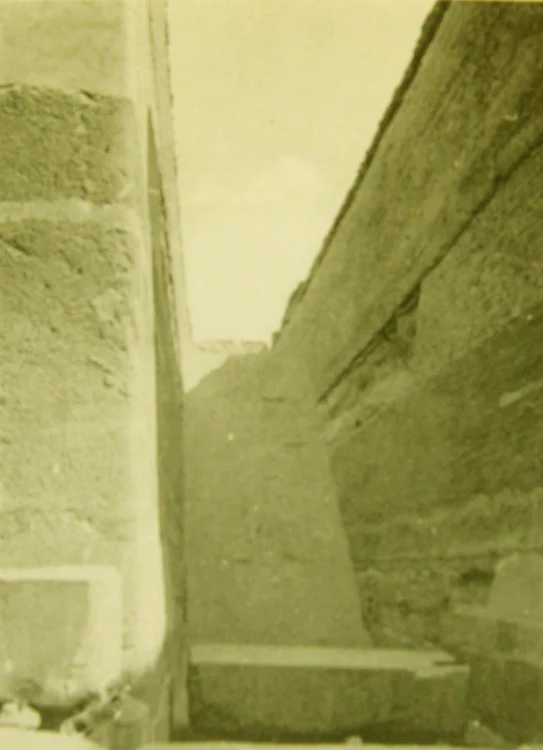
Descent ramp PHOTO wikipedia
It was supposed to be a step pyramid, intended for the third dynasty pharaoh Khaba. But it was never finished, it is not known for what reason. It is certain that the Egyptian engineers and workers managed to raise a few floors of the pyramid, after which they abandoned it. Its internal structure has been completed, which consists of a corridor that leads to a massive area divided into 32 rooms.
Not far from this step pyramid of Pharaoh Khaba is another mysterious structure. It is about an underground construction with a considerable depth and a series of bizarre elements and arrangements. This mysterious construction, which many Egyptologists say is actually the basic structure of another pyramid, as monumental or even bigger than the pyramid of Cheops, was discovered in the early 20th century by the Italian archaeologist Alessandro Barsanti. The structure had also been previously noticed by the German Egyptologist Karl Richard Lepsius who called it “Pyramid XIII”. The first to conduct archaeological research and reveal the monumentality and massiveness of the structure was the Italian Barsanti.
“The overall feeling is one you never forget”
Initially, the structure looked like a pyramid base. As Barsanti began removing the sand and debris, with the help of hired workers, a fabulous construction emerged. It was a T-shaped underground facility more than 30 meters deep. Interestingly, this huge pit was dug directly into the natural rock. In the vintage photographs taken by Barsanti, it is clear how the well descends into the depths and its limestone walls have been perfectly smoothed, indicating a colossal work in Antiquity.
At the bottom of the pit is a floor covered with massive granite blocks, each about 4.5 meters long and 2.5 meters thick. Not to mention the fact that they could sing 8 tones. Deep in the pit are some kind of rooms of unknown purpose. The underground is reached by means of a ramp. There is no superstructure on the surface. Inside one of the rooms was a granite sarcophagus and on the walls of the underground complex Barsanti found numerous inscriptions made in black and red. The precision of the work and the years of hard work impressed everyone who got to see it, including Gaston Maspero, then director general of Egypt's Supreme Council of Antiquities. He visited Barsanti's excavations and was impressed by the monumental size of the construction and its perfection.
“I hope that the most knowledgeable of tourists will come to admire the monument. The pleasure they will experience during this journey will be worth the two or three hours they will travel here. The immensity of the work undertaken by the Egyptians will only be perceived at the foot of the stairs. And when they step on the granite pavement, it will become apparent. It is not that anything in particular, examined in detail, is remarkable or out of the ordinary, but the feeling general is one you never forget. The size and richness of the materials, the perfection of the cuts and joints, the unrivaled finish of the granite sarcophagus, the boldness of the structure and the sheer height of the walls, all come together to compose this hitherto unique ensemble. It is an impressive shock and nowhere is the strength and craftsmanship of the ancient Egyptian architects so well highlighted like here”specified Maspero.
The mysterious liquid in the main chamber of the structure
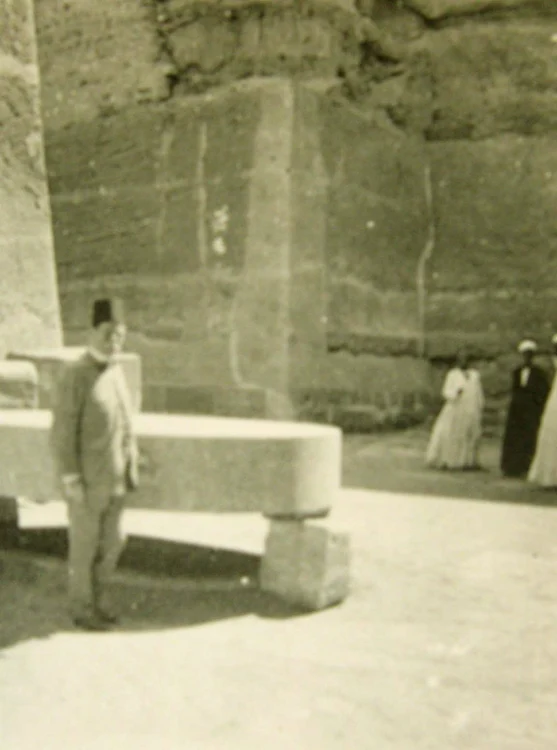
One of the most mysterious arrangements within this underground complex at Zawyet El Aryan is a sort of sealed oval tank apparently located in the main chamber of the structure. This tank measures three meters long, 2.1 meters wide and 1.5 meters deep. Barsanti found it sealed when he entered this room, suggesting that there was something of great importance within it. After breaking the seal and opening the tank, Barsanti discovered an unknown substance.
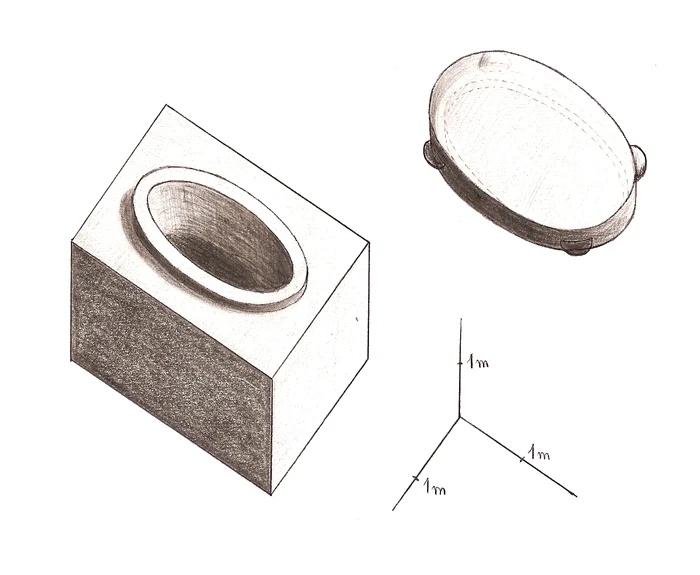
The sealed container PHOTO wikipedia
“In close proximity to the western end of the chamber, an unusual cistern was discovered. Oval in shape, it was built into one of the stone blocks that formed the floor of the chamber. Interestingly, this cistern seems to have been brought into the chamber during the construction of the foundation, as its dimensions make it impossible to pass through the passage leading to the chamber. The presence of an intact oval lid suggests that this cistern was sealed at some point. Although Barsanti reported that traces of a substance were discovered inside the vat, unfortunately these substances were never subjected to further examination and were lost”states Dimosthenis Vasiloudis for “The Archaeologist”.
The mysteries of a complex and little understood structure
It is not known for certain what the purpose of this underground complex and that pool of unidentified liquid was. A good part of the specialists believe that it was an attempt to build a pyramid. The builders only made the underground structure. However, there are also quite a few opinions that indicate that this underground complex at Zawyet El-Aryan was not meant to become a pyramid. And no one knows, even to this day, what it could be used for.
“The substructure of the pyramid presents a more detailed picture. It comprises a T-shaped shaft, with the corridor running from south to north and the chamber extending from east to west. Interestingly, the entire shaft lacks any remaining ceiling, raising the possibility that it may never have been covered. A steep staircase descends into the room, but halfway up its length, it meets a horizontal surface of unknown purpose. The walls of the shaft are remarkably smooth, but they were never decorated with stones, and unfortunately the chamber itself was left incomplete. Only the floor of the chamber was completely made and paved with massive granite blocks, each measuring 4.5 meters long, 2.5 meters thick and weighing up to 9 tons each”adds Vasiloudis. The mystery was also deepened by the numerous inscriptions inside the underground complex. The Italian archaeologist Barsanti testified that he also saw a clay tablet, damaged, with a dedication to the pharaoh Djedefre. And the complex was dated, reaching the conclusion that it is 4200 years old. Other specialists say that it would have been the unfinished pyramid of Pharaoh Baka or Bikheris, belonging to the 4th dynasty, that is, the structure would be 4610 years old.
From inside the underground complex PHOTO wikipedia
The identity of the pharaoh who commissioned this complex and its functionality remain a mystery. Several Egyptologists have tried to decipher the inscriptions based on Barsanti's drawings. Unfortunately, many did not faithfully reproduce the inscriptions. Of the 67 inscriptions, the one that particularly attracted attention was a hieroglyphic cartouche. The Ka symbol has been identified with certainty, but the first sign is illegible. Various interpretations have been proposed, from Nebka to Seth-Ka, remaining a fascinating mystery. Specialists like Kurt Sethe say that that mysterious word was Nebka, translated as “His Ka is the master.” Another specialist, Jean-Philippe Lauer, read Bik-Ka, meaning “His Ka is divine.” For some this place represents a spiritual gateway to another world or actually a place where pharaohs received astral energies. Obviously, no one can prove such a thing at the moment.
Area 51 of Egypt
Perhaps many would question why the specialists do not go to Zawyet El-Aryan and simply analyze the inscriptions and structure themselves, with modern means. The answer is simple: the area has been militarized. Since 1964, this complex has reached a restricted military zone, further excavations being prohibited. There is now a military base in the area. The complex remained a mystery and the area was nicknamed Egypt's Area 51.