October 26: The “Great Earthquake” also hit Romania, two centuries ago. Magnitude, 7.9–8.2 degrees


On October 26, the “Great Earthquake” took place, with a magnitude of 7.9–8.2 degrees, which led to the collapse of, among others, the Colțea Tower in Bucharest. On the same day, Park Chung-Hee, one of South Korea's most influential presidents, was assassinated by a close friend.
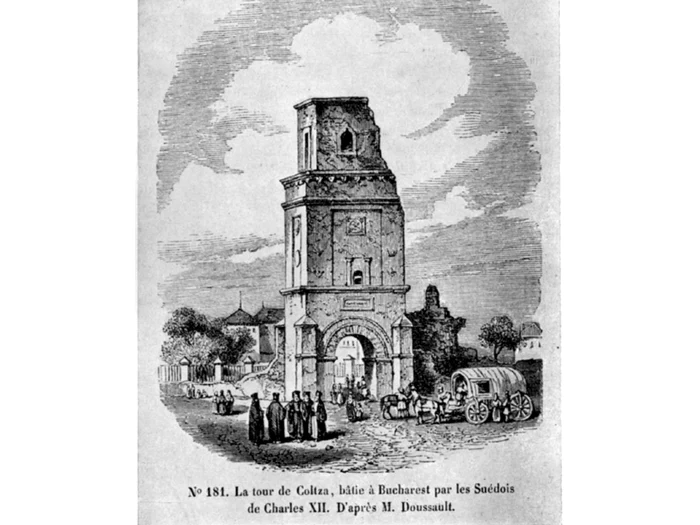
The Colțea tower, collapsed after the 1802 earthquake/PHOTO: Wikipedia
1673: Dimitrie Cantemir, lord of Moldavia, was born
Born in Falciu County, Moldova, on October 26, 1673, Dimitrie Cantemir was lord of Moldavia twice (March – April 1693 and 1710 – 1711), encyclopedist, ethnographer, geographer, philosopher, historian, linguist, musicologist.
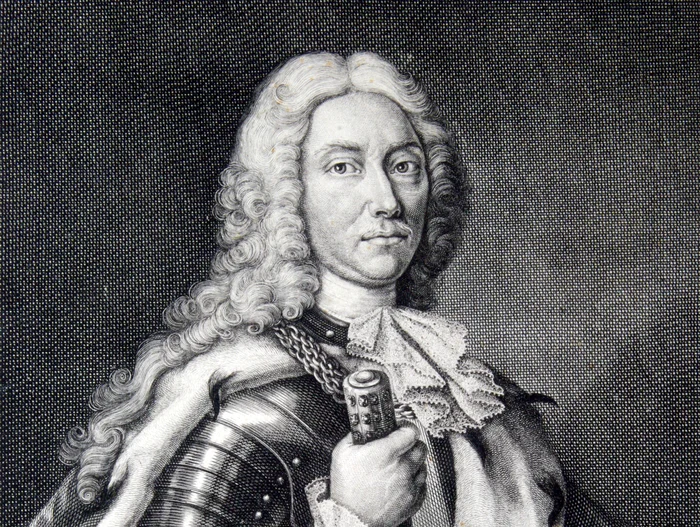
Dimitrie Cantemir/PHOTO: Archive
Among his diverse occupations were encyclopedist, ethnographer, geographer, philosopher, historian, linguist, musicologist and composer. (…) In 1714, Dimitrie Cantemir became a member of Societas Scientiarrum Brandenburgicalater known as Berlin Academy.
On July 11, 1714, the Academy accepted him into its ranks and awarded him the diploma of membership, signed by the vice-president Johann Carol Schott, in the absence of the president of the Academy, Leibniz. (Ștefan Lemny, op. cit. p.185).
After being admitted to the Academy, Cantemir wrote Descriptio Moldaviae (Description of Moldova) and Moldavian-Wallachian history (in Latin, Moldavian-Vlach history). As a member of Berlin Academy corresponded with Leibniz, trying to establish the principles of founding a Russian Academies.
Dimitrie Cantemir died on August 21, 1723 in Russia.
1860: The University of Iasi was inaugurated, in the presence of Alexandru Ioan Cuza, with four faculties: Law, Philosophy, Sciences and Theology.
1802: An earthquake with a magnitude of 7.9-8.2 on the Richter scale occurs in Romania at 10:55 a.m.; the Colțea Tower in Bucharest collapsed, but so did the Church of Saint Nicholas in Pitesti.
1802: Massive earthquake in Romania, after which the Colțea Tower collapsed
“The Great Earthquake”, as the earthquake of October 26, 1802 was called, caused numerous victims and immense material damage on Romanian territory and in cross-border areas, according to INFP.
It was felt over a very large area (more than 2 million km2), to Constantinople, Kyiv, Moscow, St. Petersburg, Warsaw, Varna and Vidin.
The movement of the earth resembled that of the waves of the sea, producing cracks from where it came out “water as black as fuel”. Following the earthquake, the Colțea Tower in Bucharest and the Saint Nicholas Church in Pitesti collapsed.
1901: The historian Constantin C. Giurescu was born
Born on October 26, 1901, in Focșani, Constantin C. Giurescu was a Romanian historian, member of the Romanian Academy and professor at the University of Bucharest.
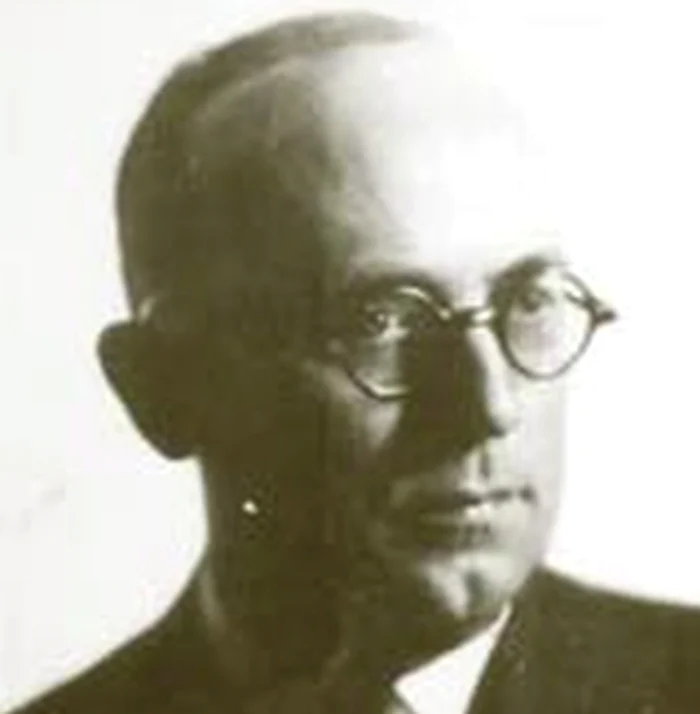
Constantin C. Giurescu/PHOTO: WIkipedia
He attended primary and high school in Bucharest, after which he went to Paris to continue his studies. Between 1920-1926, he was an assistant at the Bucharest National Museum of Antiquities.
At the end of the 1930s, he was a member of the Royal Dictatorship, holding several important positions in the state. He founded and directed the Institute of National History from 1941 to 1948.
In 1948 he was expelled from the university, and between 1950 and 1955 he was a political prisoner in Sighet Prison. Later rehabilitated, he was readmitted to the faculty (1963) and to the Romanian Academy (1974).
On November 13, 1977, the historian died, in Bucharest.
1949: The artist Corina Chiriac was born
Corina Chiriac was born on October 26, 1949, in Bucharest. He studied at Music School No. 1 in Bucharest in 1955, and between 1966-1972 at the Institute of Theatrical and Cinematographic Art at IL Caragiale, in Bucharest.

Corina Chiriac/PHOTO: Click!
Corina Chiariac settles in the USA between 1989-1994, where she performs and attends schools for her professional reorientation, according to RADOR. In 1992, she married Virgil Anastasiu, a Romanian-American businessman, from whom she divorced four years later.
“In Romania, I had money, I was successful, I was 38 years old and I thought that I was going to bury myself in my country. I never thought that the Berlin Wall would fall, I thought that the communist system would be destroyed”the artist said about going to the USA in an interview.
In 1995, she resumes her work as a vocal soloist on TV stations and works as a producer of talk shows, on shows on TVR, Tele 7 abc, ProTV, and on radio stations such as Radio Total and Radio Romania Cultural. After more than a decade of television, the great artist retires from the field in 2020.
1979: Park Chung-Hee, President of South Korea, was assassinated
Park Chung-Hee, born November 14, 1917, in Gumi, North Gyeongsang Province, Korea (today South Korea) was a South Korean general and politician, President of the Republic of Korea (South Korea) from 1963 until his death in 1979.
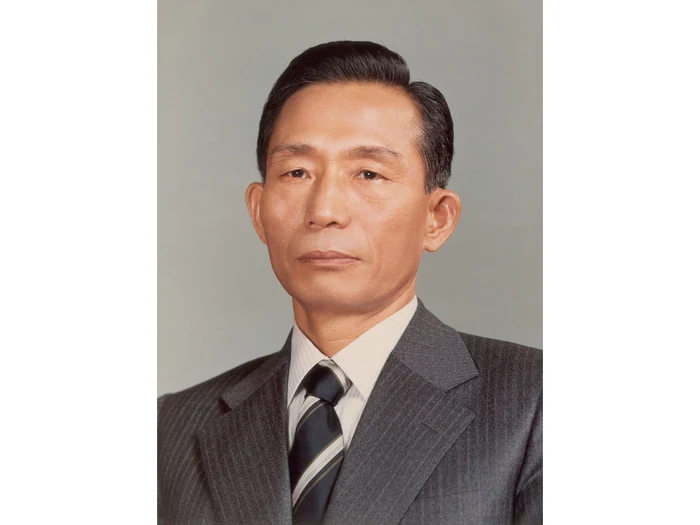
Park Chung-Hee/PHOTO: Wikipedia
Widely regarded as the most influential South Korean leader of the 20th century, Park remains a deeply controversial figure.
His 18 years of rule are closely associated with “the miracle on the Han River”, the transformation of South Korea from a poor country into one of the most advanced economies in the world, writes Britanica.
In October 1979, Park was assassinated by an old friend of his, Kim Jae Kyu, the head of the Korean Central Intelligence Agency (KCIA), after a meeting.
Although the precise events of that meeting and Kim Jae Kyu's internal motivations remain unclear, Park is believed to have criticized Kim for his inability to effectively suppress protests against his government. Agitated by the criticism and frustrated by Park's insistence that the KCIA somehow crack down on the growing protests, Kim shot Park and his bodyguard, Cha Ji-Cheol.
2007: The footballer Nicolae Dobrin died
Born on August 26, 1947, in Pitesti, Nicolae Dobrin, or “Gâscanul” as he was nicknamed, remains one of the most appreciated footballers by Romanians.
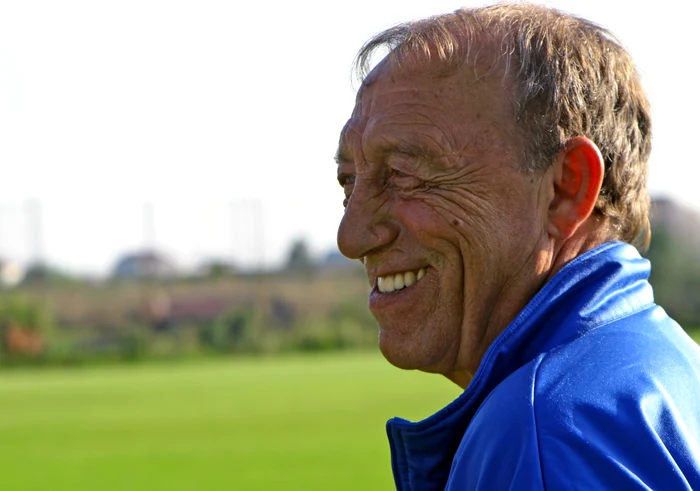
Nicolae Dobrin/PHOTO: Archive
He started playing as early as 1959, until 1980 at the FC Argeș Pitești club (Dinamo Pitești until 1968), to which he remained loyal. From the age of 14, thanks to his talent, he became the youngest footballer to play in the first league.
He received the title of the best footballer of the year three times, in 1966, 1967 and 1971, was selected 48 times for the national team, with six goals scored and has 409 appearances in the first division.
He participated in the 1970 World Cup in Mexico and in the European Championship in 1972. In the World Cup in Mexico he did not play a single minute in the final, and another failure of his career was when Real Madrid refused him a transfer. The transfer was rejected by the club, but wanted by Santiago Bernabeu, who were impressed by the Romanian's goal against the Spaniards in the Champions League.
Although he died on October 26, 2007, in Pitesti, Dobrin remains a model in the history of Romanian football through his loyalty to football, his dignity and fair play.