“Are employees who work from home really working?” How specialists see the strategy adopted by more and more companies


In an increasingly digitized world, remote work is no longer perceived as a convenient activity, but has become a preferred work strategy for more and more companies and employees, in the desire to increase efficiency. Specialists show what challenges it brings.
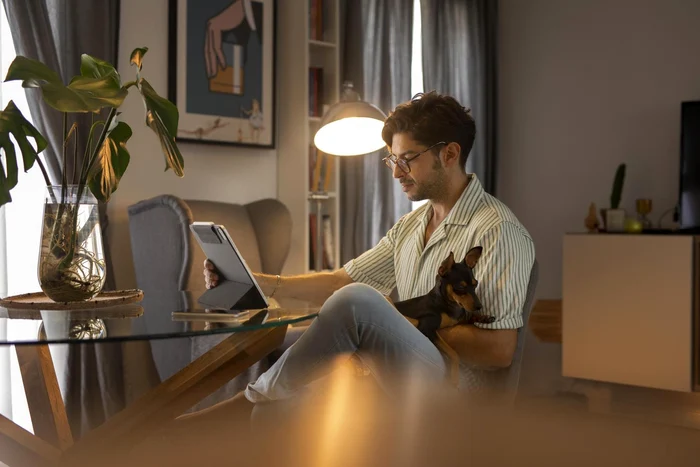
Working from home is preferred by more and more employees. Photo: Freepik.com
People's perception of “remote” work has changed in recent years, following the pandemic, but also as digitization has taken off. Working from home, sometimes viewed with suspicion in the past, is preferred by more and more people, specialist studies show.
Several studies carried out in recent years have tried to answer questions related to the productivity of such activities for companies and employees, but also the effects they have on them.
Less work for those working from home
A recent study published by Gallup, an international public opinion research and analysis company based in Washington, DC, sought answers to the questions “Are remote employees really working?” and “What does this mean for productivity?”
According to research, full-time employees in fields that allow remote work spend less time working and more time on personal activities.
“By 2022, people in predominantly remote roles were working, on average, about an hour less per day than in 2019. Of that time, between 30 and 60 minutes were redirected to leisure activities, a trend in line with other remote productivity statistics. The decrease is not just due to the elimination of commuting, as reduced commute time only explains a small portion of the decrease in work hours.”says Gallup, citing data from the American Time Use Survey (ATUS) for the period 2019-2023.
The authors of the study note that if in 2019 American employees reported an average of 44.1 hours worked per week, in 2024 the average dropped to 42.9 hours. The reduction of working hours has positively influenced productivity and innovation, due to the choices made by employees and not to the increase in their efficiency.
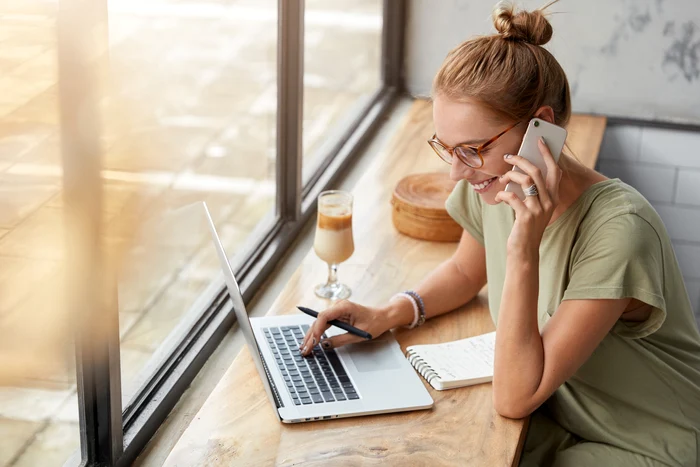
Working from home brings personal satisfaction to many employees. Photo: Freepik.com
“After adjusting for a model in which employees choose jobs based on skills and preferences, the study found a slight increase in productivity per employee in the economy. This increase was not because people in highly remote roles suddenly became more efficient, but because people were able to move to jobs that suited them better, and employment shifted to sectors with higher productivity per employee.”notes Gallup.
Risks of working from home: “Strategies can easily go off the rails”
Companies that have broken free from geographic constraints and started hiring the best people for each role, regardless of where they live, have experienced a jump in remote work productivity, but managers have a critical role to play in how technological change affects employees.
“Technological progress usually has positive effects on performance, but these effects are amplified when managers build trust within the team. The standards for effective management are even higher with remote teams. Knowing how to lead a remote team has now become a core leadership competency, one that influences clarity of expectations, performance management and organizational trust.”the company says.
The authors of the study also show that physical proximity between colleagues can generate positive effects on productivity, and for young or newly arrived employees, working in the same place with colleagues can bring additional benefits. In contrast, other employees see the possibility of working from home as more autonomy and flexibility.

The future of hybrid and remote work is here, experts say. Photo: Freepik.com
“Although the productivity benefits of remote work are mixed, employers can offer the flexibility to work from home as a competitive advantage to attract and retain valuable employees. Gallup's data on hybrid work supports this idea: 76 percent of employees who work hybrid say that better work-life balance is one of the biggest benefits of this model.”show the authors of the research.
One of the risks mentioned by specialists is that completely remote strategies can easily go off the rails. They may attract people who are less willing to put in the extra effort. The benefits of remote work are not universal, they vary depending on the type of activity and the quality of the manager, experts say.
“The future of hybrid and remote work is already here. What matters now is how much flexibility is offered, how it works in practice and how risks are managed. These decisions belong to leaders and managers”concludes Gallup.
How working from home has changed the lives of Romanians
When asked what has changed working from home in the lives of Romanians, Mihaela Ancu, IT Recruiter, Human Connection, told “Adevărul” that it is not only about advantages, but also disadvantages, as some of the employees find it difficult to demarcate their personal life from their professional life.
“For many people, working from home meant more than a change of scenery, it was a change of rhythm and perspective. With the move of the office to the personal space, many Romanians discovered the freedom to organize their day according to their own needs and to work in an environment that offers them comfort and peace”said Mihaela Ancu.
The specialist noticed that an immediate effect was the reduction of stress associated with traffic and commuting, especially in big cities, where people can gain even two hours a day, time that they can spend with family, with themselves or invested in activities that bring them balance. Many employees feel that this gained time has improved their quality of life and given them more clarity on their personal priorities.
“Beyond the practical aspects, working from home also brought emotional benefits: reducing social pressure, interruptions and stimuli in the office allowed people to be more focused and feel less overwhelmed. In many cases, the flexibility was accompanied by a noticeable decrease in anxiety and an increase in the sense of autonomy.” said the HR expert for “Adevărul”.
However, this way of working is not without its challenges.
“Some employees talk about the difficulty of separating their personal and professional lives when both take place in the same space. Others feel a reduced sense of belonging to the team and miss the spontaneous interactions that happened naturally in the office.” said the HR expert for “Adevărul”.
Work from home, encouraged by psychologists
In recent years, researchers have followed the lives of thousands of people around the world to understand what makes us good, what drains us, and what makes us lose our meaning.
“The conclusion is surprisingly simple: where there is freedom and trust, people thrive, become creative, engaged and create communities. Those who worked from home slept better, felt healthier, calmer, more connected to themselves and their loved ones. In an ever-moving world where time seems to run out, researchers have rediscovered a truth that psychology has known for a long time: balance is not a concept of wellness, but a fundamental need of the human psyche, that of stability and meaning”, says psychologist Gabriela Marc, for “Adevărul”.
The psychologist shows that working from home was not just a change of scenery, but a change of consciousness, where freedom became a form of inner healing.
“For the first time, many people felt that they could decide for themselves how to live their day when they start, when they stop, when they need silence. This freedom had a therapeutic effect: stress decreased and personal control increased“, adds psychologist Gabriela Marc.
An international study published in 2025 shows that, with the disappearance of commuting, people sleep on average thirty minutes longer, and the time gained turns into movement, quiet meals and moments of respite.
When the body no longer lives on alert, the mind quiets down and creativity returns. Many Romanians describe this period as a rediscovery of their own life, a silent healing, a return to the natural rhythm of being, the specialist mentions.
“People don't just work for a paycheck, they work for meaning. When they understand why their work matters, they engage wholeheartedly. Leaders who cultivated trust and provided clarity, not just instructions, found that their teams became more united and resilient. Common sense became the team's invisible energy, because behind all genuine performance is a relationship based on trust. When people feel respected and have freedom to contribute, the intrinsic motivation appears, the one that does not die out at the end of the program. This is the essence of mature leadership: not to control, but to create a space in which others can grow“, notes Gabriela Marc.
Well-being, essential in the quality of work
She points out that freedom without connection can become isolation.
“Homework has put us in front of an essential question: how do we stay close to each other when physical distance separates us? The answer comes from the psychology of attachment: people thrive when they feel safe in their relationships, when they know they belong, that they can make mistakes without fear of sanction, when they are seen, not just evaluated. This safety is not about proximity, but about emotional presence. You can be far, but close through authenticity, listening and care In teams where there is empathy and honest communication, distance does not break the connection, but makes it more conscious and deeper“, she adds.
According to some studies, with remote work, productivity increased, not because people worked more, but because they worked better. Quality sleep, regular meals, and physical comfort reduced irritability and conflict, and people became calmer and more patient.
Gabriela Marc states that for psychologists, research confirms a simple truth: well-being is not the opposite of performance, but its foundation, just as secure attachment is the basis of healthy child development.
“Working from home was, for Romanian society, a maturing exercise. We lived a long time in a culture of control, where presence was proof of seriousness. But the world is changing. Trust becomes the new psychological commitment. When people know that they are given freedom, they tend to become more conscientious, not more superficial. And organizations that understand this principle become more humane, more creative, more resilient. When people have freedom, meaning and real relationships, not only do I work better, but I live better.” concludes the psychologist.