The researcher who became a billionaire at 24 explained why the laboratory working on “superintelligence” laid off hundreds of employees

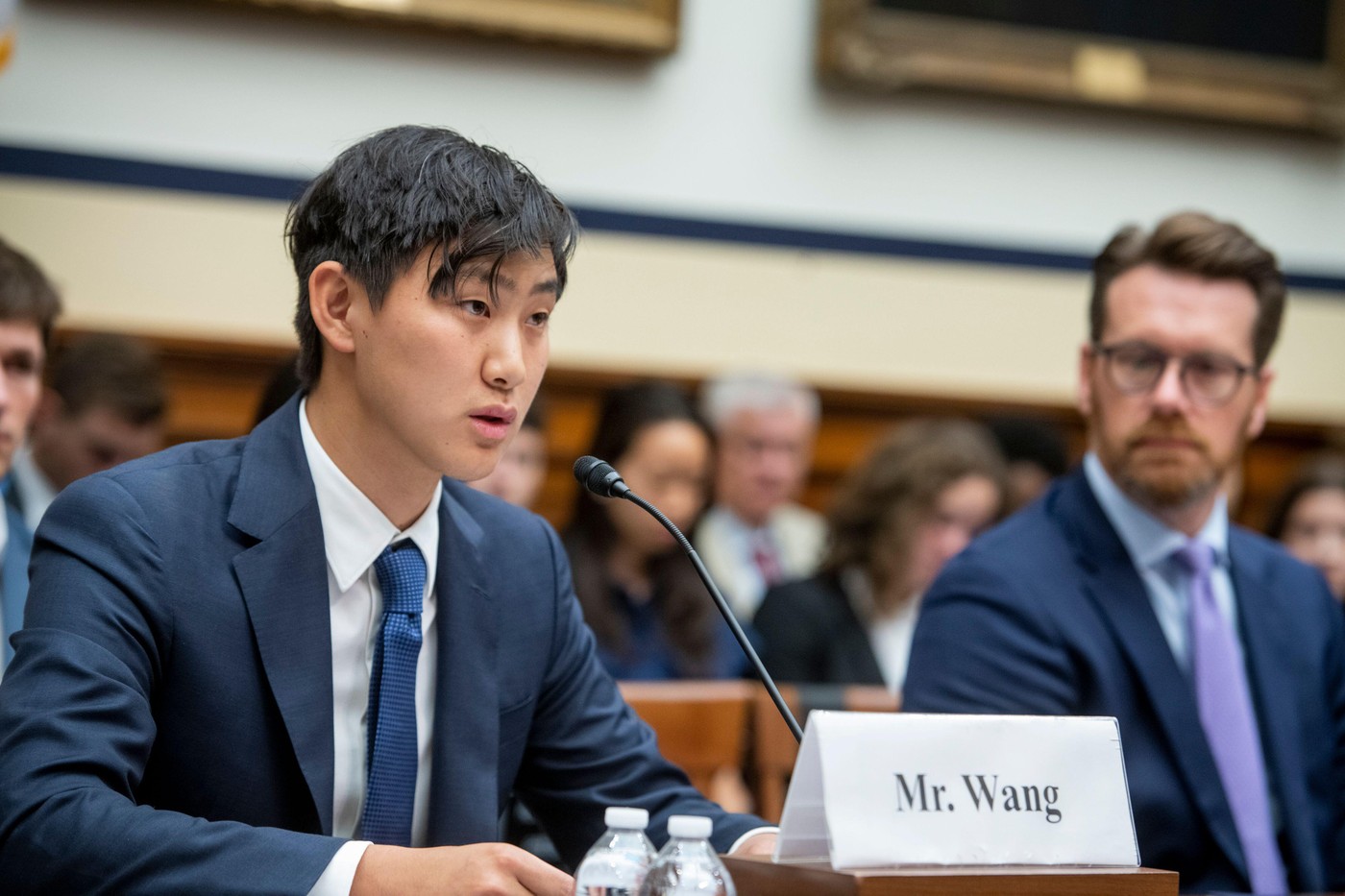
Alexandr Wang, photographed during a hearing in the US Congress on the topic of superintelligence, PHOTO: MediaPunch Inc / Alamy / Profimedia Images
Alexander Wang, the entrepreneur-researcher who in 2021 became the youngest billionaire in the world at the age of 24, explained why Meta, the company he now works for, fired 600 employees from its Superintelligence Labs division, reports Business Insider.
Wang became Meta's chief artificial intelligence (AI) after Mark Zuckerberg's company paid $15 billion this year for a 49 percent stake in the Scale AI startup co-founded by the US-born researcher of Chinese immigrants.
Forbes estimated 4 years ago that his fortune crossed the $1 billion mark after Scale AI reached $7.4 billion. Wang held a 15% stake in the company at the time and ran it as chief executive officer (CEO). Forbes today estimates Wang's fortune at $3.2 billion.
Wang issued an internal document to employees at his new job on Wednesday announcing that Superintelligence Labs had made layoffs.
“By reducing the size of the team, it will take less discussion to make a decision, and each person will have greater responsibility and greater impact,” Wang wrote in the document obtained by Business Insider. He added that the affected employees had already been notified.
Wang's full message to Superintelligence Labs employees:
“Earlier today, we made some changes within MSL (no Meta Superintelligence Labs) to move closer to our goal of becoming the most agile and talent-focused team in the industry. By reducing the size of the team, it will take less discussion to make a decision, and each person will have greater responsibility and impact.
Saying goodbye to colleagues is never easy. They are talented people who have worked extremely hard and contributed significantly to our AI efforts. Anyone in North America whose role was affected has already been notified. Those who may be affected in the EMEA region have been notified and remain under consultation.
We support the majority of those affected to find new roles within the company. We have assembled a team of top recruiters to help this group identify positions that match their expertise and get onboarded quickly through an expedited hiring process.
This in no way signals a reduction in investment. On the contrary, we will continue to recruit top talent, skilled in the field of artificial intelligence. Our goal is for MSL to be able to move forward faster. We remain excited about the models we are training, our ambitious plans for computing power and the products we are developing – and I have full confidence in our path to superintelligence.”
Superintelligence Labs is the division of Meta tasked with making so-called “superintelligence” a reality, the term used by Mark Zuckerberg to refer to what appears to be an agentic AI that can perform a wide range of tasks and activities for customers.”
 What is the “superintelligence” that one of the richest people in the world is promising us all?
Redundancies and restructuring within Meta
Business Insider notes that this personnel reshuffle at Superintelligence Labs comes as Meta reorganizes its massive AI structure, which includes multiple workgroups — including product and research, infrastructure, Facebook Artificial Intelligence Research (FAIR) and TBD, an elite division tasked with developing intelligence models. the company's next-generation artificial
Meta founded Superintelligence Labs in June to spearhead CEO Mark Zuckerberg's initiative on what he calls “personal superintelligence” — a term he uses to refer to artificial intelligence systems that could eventually surpass human capabilities. Alexandr Wang was appointed at that time the general director of the division working on “superintelligence”.
Superintelligence Labs quickly became one of Meta's most important and expensive investments. In recent months, the company has spent hundreds of millions of dollars to hire engineers and researchers from OpenAI, Google DeepMind, Apple and other firms.
But the rapid growth of this division also generated internal tensions: overlapping tasks and frequent shifting of priorities led to conflicts and early staff departures.
These layoffs come amid Meta's shift to “small, talent-focused teams,” as Mark Zuckerberg himself described the new approach.