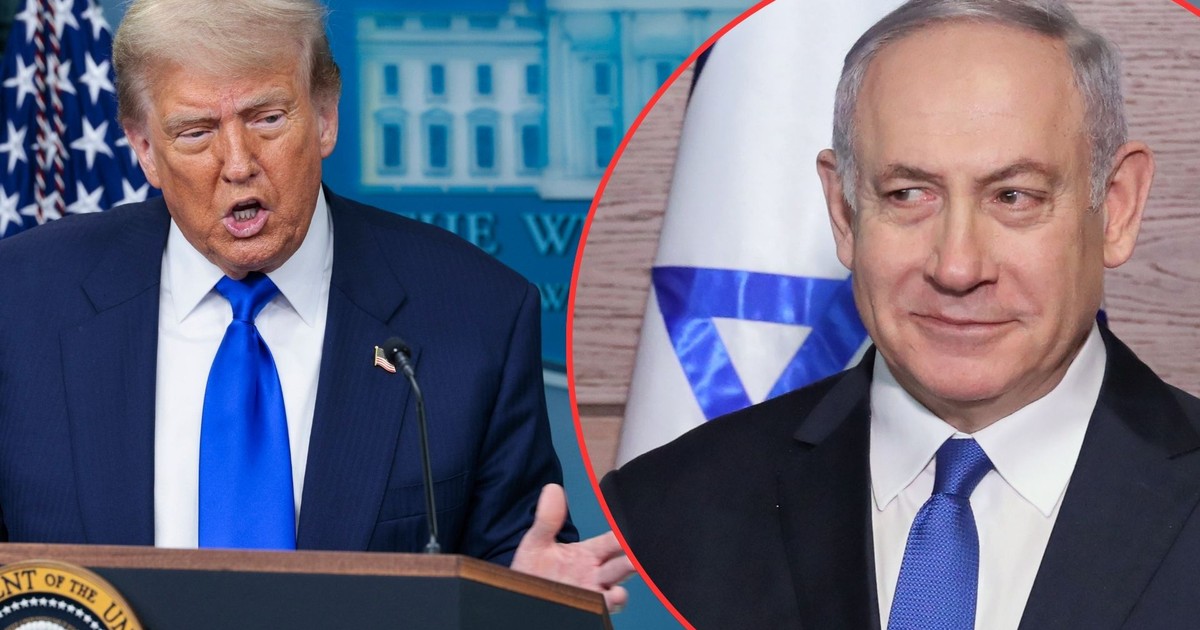
Self-censorship in the USA. I left the newspaper because I didn't want to suck up to Trump

The worst, or at least the most insidious, may be the censorship that you never hear about. Fortunately, many journalists are speaking out at this crucial moment for the press. Virtually all major media outlets rejected the Pentagon's decree, to publish or broadcast only information provided to them by the Department of Defense (which the administration calls the War Department). Several other examples of journalists leaving their jobs in response to censorship pressure have emerged in recent days.
Let me add my name to this list. Until October 10, I was the editor-in-chief of Governing, a magazine and website devoted to state and local government. But in the face of increasing pressure from internal censorship — mainly to avoid being critical of President Donald Trump — I refused to comply and resigned.
Why would the president of the United States care about such a niche title?
I thought about this decision for a long time. Earlier this year, the Chief Content Officer at our parent company, e.Republic, stated in a meeting that We should not publish articles that could attract the attention of the Trump White House and cause them to try to shut us down.
At the time, her position seemed wrong to me for several reasons. First of all, it was an obvious betrayal of journalistic ethics. Second, Governing is such a small (I would like to say prestigious) publication that the idea of anyone in the current White House reading it, let alone preparing for an attack, seemed dubious to me.
Governing was founded nearly 40 years ago by the editors of Congressional Quarterly magazine who believed state politics should be more widely covered in the news. Even after being bought by e.Republic in 2009 Governing has remained one of the few outlets with sustained attention to government outside Washington. He often receives compliments for this. This is a unique publication and while not huge, it has an excellent reputation and fills an important niche.
The article continues below the video
The idea that the litigious Trump would hit us with a lawsuit wasn't unbelievable, but it was unlikely. Certainly our existence was not dependent on federal contracts. However, after the start of Trump's second term, the board's concerns about causing a storm with our materials never left us.
This is one of the saddest parts of Trump's campaign against the media. After the government went after big shots — Trump engaged in legal battles this year with CBS, ABC, The New York Times, The Wall Street Journal and the Associated Press, not to mention cutting funding to NPR radio, my former employer — smaller players too often decide they lack the resources to fight back. Capitulation becomes the easier solution.
We have already seen this in other countries. Self-censorship is particularly harmful because it happens silently. There are no photos of reporters leaving the Pentagon, so no one even knows it happened. Individuals and institutions drown themselves more effectively than governments ever could. Not knowing where the boundary is, they become very cautious and avoid publishing anything that could cause a storm.
The editorial office lost its independence. I had to leave
Serving as Governing's editor-in-chief throughout this year I received orders from above warning me to stay away from various topics. For example, I was told that an article about vaccine attitudes caused “consternation” among higher-ups because the issue had become political. I warned my boss that if we didn't report reality – if we didn't do journalism – I would have to leave.
Things came to a head last month at the height of the free speech debate over slain conservative activist Charlie Kirk and Jimmy Kimmel, the temporarily fired ABC late-night host.
I prepared an article defending free speech, noting that Trump has attacked people and institutions he considers too critical or “unfair” towards him. For me it was measured and at almost any other point it probably would have seemed downright tame. But I immediately encountered resistance. Although my boss said the article was “very well done,” she questioned whether it was necessary given the mass of material on freedom of speech that had already appeared in this context.
She also asked, using an internal corporate slogan, how my text would make the government better. I argued that the article adds a new perspective and that pushing back against government overreach is actually a way to make it better. My boss didn't budge. She told me she didn't think it would be a good idea to publish the article; finally, as she noticed, he violated company policy that prohibited raising alarms in the Trump White House. The text was not published, and the words “I'm leaving” came out of my mouth.
Banning me from defending free speech came almost too easily. Although e.Republic management praised my “honesty” in trying to convince me to stay, They were unwilling to offer me the guarantees I was looking for in terms of editorial independence. After 20 years at Governing and proudly being promoted to editor-in-chief, I knew it was no longer my professional home.
In response to a request for comment, an e.Republic spokesperson said: “Governing's mission is to inform and support state and local leaders working to make government better. […] Our journalism is intentionally nonpartisan, designed to ensure all perspectives are considered. This is what our customers expect from us and this is what we try to deliver. The only editorial direction we give our team is to stick to our mission and approach.”
Donald Trump does not want criticism
I became interested in politics at an early age. When I was 8, my mother convinced me to change the channel from “George of the Jungle” so she could watch the Senate Watergate hearings. At a possibly premature age I have read about Americans who have defended basic rights throughout our history. I was recently reminded of a phrase from the McCarthy era in the 1950s, when playwright Lillian Hellman wrote, “I cannot and will not trim my conscience to fit this year's fashion.”
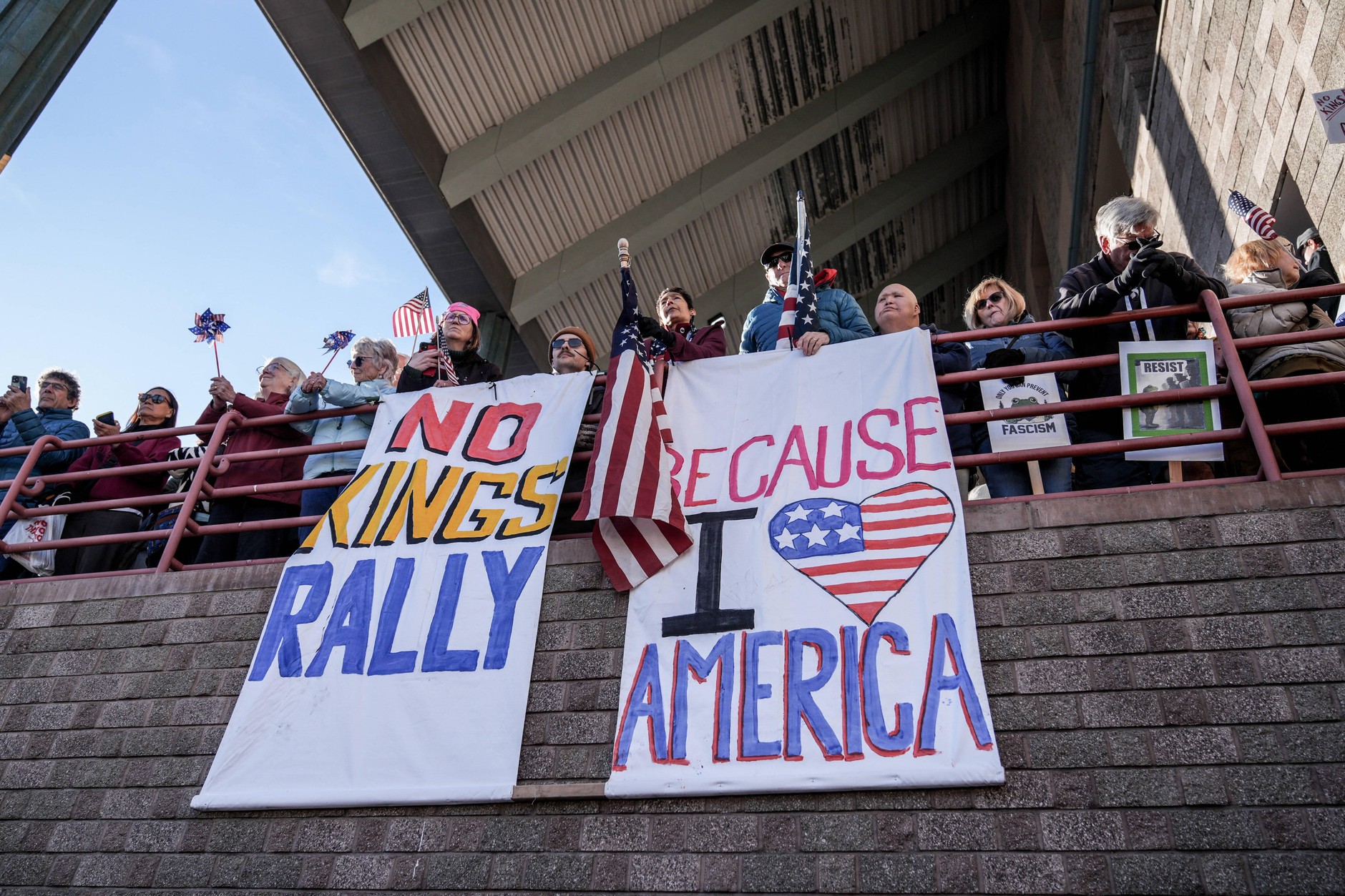
“No Kings” protest in defense of democratic values and constitutional rule. Anchorage, October 19, 2025Hasan Akbas / Anadolu/ABACAPRESS.COM / PAP
I am not the only one who fears that we are experiencing a similar historical moment. Dan Conaway, a columnist for the Daily Memphian online newspaper, quit after being told his articles were too critical of Trump. Jim Rodenbush, director of student media at Indiana University, was fired after resisting internal calls to limit what student journalists can print. Don Craven resigned as CEO of the Illinois Press Association when his board wanted him to withdraw from legal action against the Trump administration over its coverage of anti-ICE protests. Last month, four journalists in Alaska resigned after a story about Charlie Kirk was changed after publication in response to complaints from the local Republican Party politician.
I commend them all. Still, their departures are a loss. Fewer and fewer people willing to stand up and demand honest reporting remain in positions where they can do so. Now that almost all reporters have left the Pentagon building, public opinion will certainly suffer at least a little.
While it's gratifying to be called a hero by my friends – and the support of my wife and son has been essential – honesty won't let me pay my electricity bills. If I hadn't given up, I could have been planning my next vacation instead of telling my dog he would have to wait until dog treats went on sale.
No one should shed tears for me. My point is that all praise has its backside. It is easier – and can be very profitable – to placate a bear than to poke it. We know that this happens not only in journalism, but also in other fields. We just don't know to what extent. No one is issuing press releases saying they suppressed information that the administration wouldn't like.
However, we know that dozens of people lost their jobs for publishing critical comments about Kirk after his murder. And it's clear that Trump is a president who doesn't want to hear bad news. Post a bad employment report? You will lose your position as head of the Bureau of Labor Statistics. Insisting on seeing the science behind vaccine guidelines? We thank you for your work at the helm of the Centers for Disease Control and Prevention.
As official government data becomes increasingly politicized, it is increasingly important that independent sources insist on their integrity. Journalists, in particular, have a professional obligation to pursue the truth and deliver it to the best of their ability. That's their job. I hope and trust that most of my colleagues still have the courage to do it well.