October 22: Spectacular accident at a Paris station in 1895. A train derailed and exited through the facade of the building

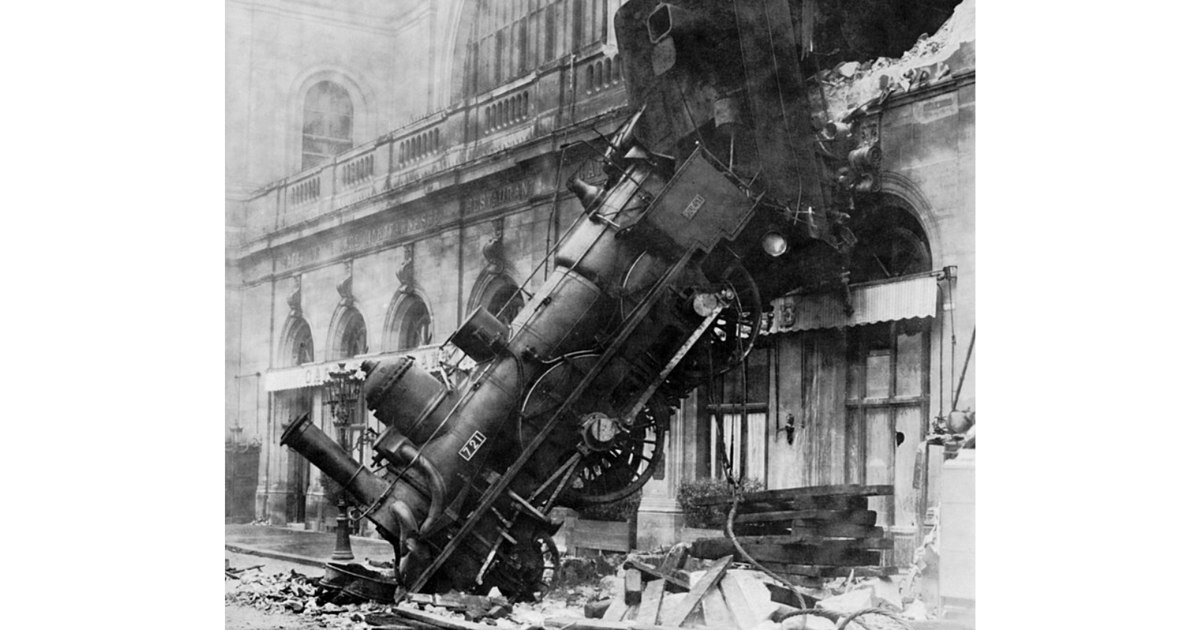
On the 22nd of October, the “Black Spider”, the Soviet goalkeeper Lev Iashin, and in Paris, a spectacular accident took place in the train station in the west of the capital. A train derailed, crossed the line and exited through the facade of the station.
1846: Dimitrie Brândză, founder of the Bucharest Botanical Garden, was born
Born on October 22, 1946, in Bivolu, Moldova (today Viișoara commune in Botoșani), Dimitrie Brândză was a doctor, botanist and naturalist, member of the Romanian Academy.
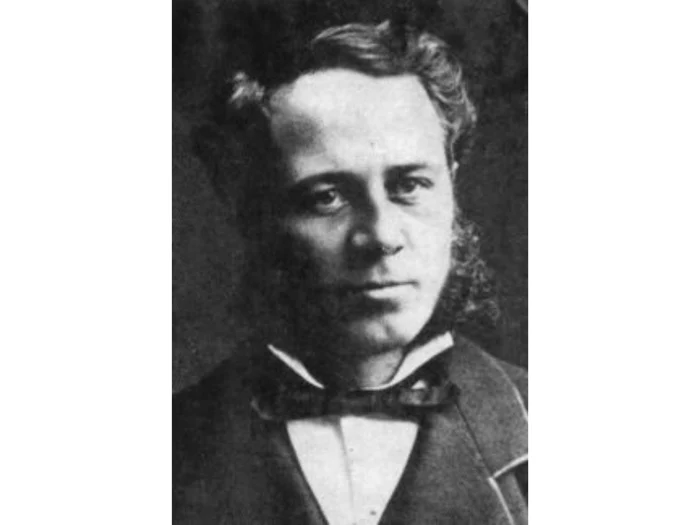
Dimitrie Brândza/PHOTO: Wikipedia
After finishing the courses at the Mihăilene Academy, Brândză went to Paris, where he studied at the Faculties of Natural Sciences and Medicine, obtaining his doctorate in 1869. After teaching at the University of Iași, he was transferred in 1874 to the University of Bucharest, to the department of natural sciences, carrying out a multilateral activity.
In 1875 he began to develop the botanical collection of the Faculty of Natural Sciences, and a year later he was elected a member of the Romanian Geographical Society. In 1882 he obtained from the Minister of Education, Petre S. Aurelian, the right to establish a botanical section at the “Grigore Antipa” National Museum of Natural History in Bucharest.
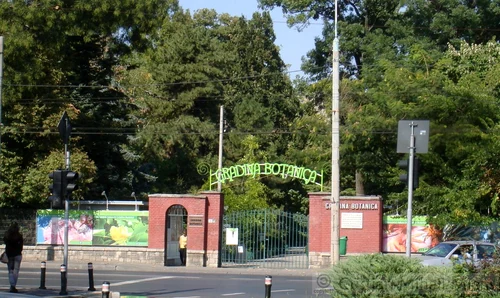
Image 1/2:
“Dimitrie Brândza” Botanical Garden/PHOTO: Wikipedia


The collection was destroyed by fire, and in 1884, the Government allocated funds for the establishment of a botanical garden in Cotroceni. In 1885, the first works were started on the new garden in Cotroceni.
In 1895 Dimitrie Brândza died in Slănic Moldova at only 49 years old.
1882: The painter Ion Andreescu died
Born on February 27, 1850, in Bucharest, Wallachia, Ion Andreescu was a Romanian painter and pedagogue, elected posthumously as a full member of the Romanian Academy in 1948.
At the age of 19, he enrolled in the “School of Fine Arts”, led by Theodor Aman.
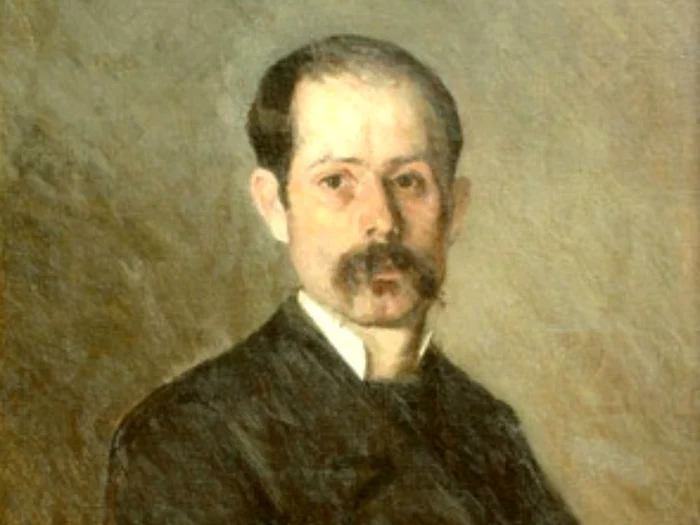
Ion Andreescu/PHOTO: Wikipedia
In just three years, he became a professor at the drawing and calligraphy department of the Episcopal Seminary in Buzău. In the following three years, he also taught at the “Tudor Vladimirescu” gymnasium and at the Vocational School in the same locality.
During all this time, he painted a lot, with a predilection for landscapes (“Forest edge”, “Rocks and birches”, “Beech forest”, “After the rain”, “Casa ciurari” and, the most famous – “The oak tree”), still lifes (“Currants”, “Watermelon slices”, “Chrysanthemums”, “Pink roses”, “Ducks”) and portraits (“Peasant with green beard”, “Peasant with straw”, “Red beard” and the series of self-portraits).
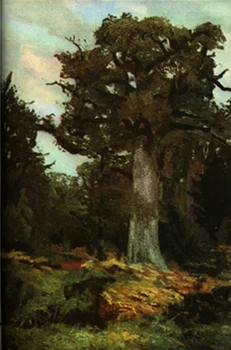
Image 1/4:
“The Oak”, by Ion Andreescu/PHOTO: Wikipedia
At the end of 1878, Andreescu went to Paris to complete his studies. There, he enrolled at the “Julian Free Academy”. He painted in Barbizon, in the Île-de-France region, the nearby forest of Fontainebleau and the surrounding rural settlements. Also there, he met Nicolae Grigorescu, with whom he formed a close friendship.
In France, he participated in group exhibitions with Manet, Monet and Renoir. After only three years of stay in Paris, in 1881, he had to return to the country, due to his deteriorating health.
He died a year later, at only 32 years old, in Bucharest.
1895: A train from Montparnasse Station overshot the end of the line and exited through the station facade
On October 22, 1895, a particularly spectacular railway accident took place at the Western Station, later renamed the Montparnasse Station, writes the Musée d'Orsay.
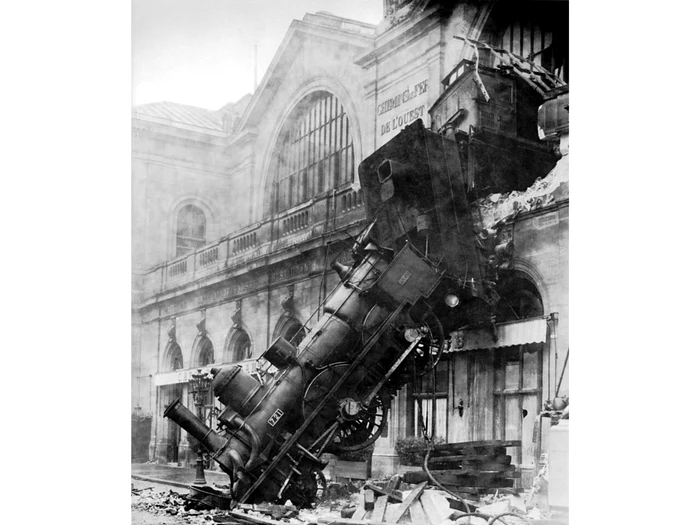
The October 26 edition of L'Illustration magazine recounted the event as follows:
“Train No. 56, coming from Granville, rushed into the station at a speed of 40 to 60 kilometers per hour and, unable to stop, went through the stops at the end of the platform.
The locomotive pierced the facade of the station building […] and fell in the Place de Rennes. […] The only casualty was a newspaper vendor in the market, killed by a piece of collapsed wall.”
For several days, curious onlookers gathered around the locomotive, stuck in the middle of Paris.
Among them were numerous photographers, professionals and amateurs. They found here the perfect opportunity to use their cameras to prove that sometimes reality trumps fiction, adds the quoted source.
1929: The “Black Spider” Lev Yashin, Soviet footballer, was born
Lev Iashin was born on October 22, 1929, in Moscow, where he grew up. The onset of the second world conflagration, when he was only 12 years old, meant the beginning of a difficult period for Iaşin, being forced to work in a factory, according to Agerpres.
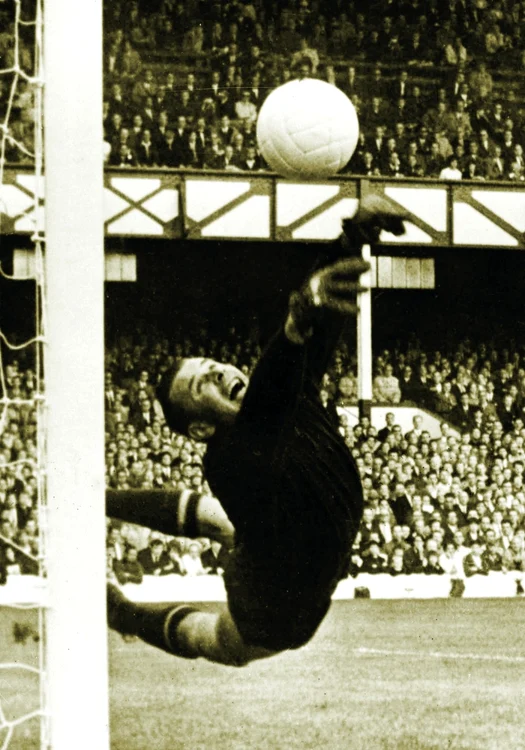
Lev Iasin/PHOTO: AP
At 18, he suffered a nervous breakdown, which made him lose his desire to play sports.
He was noticed by the coach from the youth group of the Dinamo Moscow team, Arkadi Cernişov, and signed with this team in 1950, but there was already an indisputable starter there – Alexei “Tigrul” Comici, a formidable goalkeeper.
Comici's excellent form placed Iaşin in a zone of uncertainty, abandoning football for hockey, where he won the Soviet Union cup in 195
However, Iașin currently remains the only goalkeeper to have won the Ballon d'Or.
Iaşin revolutionized the football of the era: he was the first goal-keeper who assumed the role of the defense organizer, who went outside the small box, called out to his teammates and came out on crosses.
Always dressed in black equipment, Lev Iaşin was nicknamed the Black Spider or the Black Panther and received the award for the best goalkeeper of the 20th century.
He died on March 20, 1990.
1964: Philosopher Jean-Paul Sartre refused the Nobel Prize for Literature
Born in Paris in 1907, Jean-Paul Sartre became one of the most representative exponents of the existentialist current in philosophy, influencing whole generations of young people, especially after 1945. Through his novels and essays, he stood out not only as a philosopher, but also as a writer, journalist and social activist.
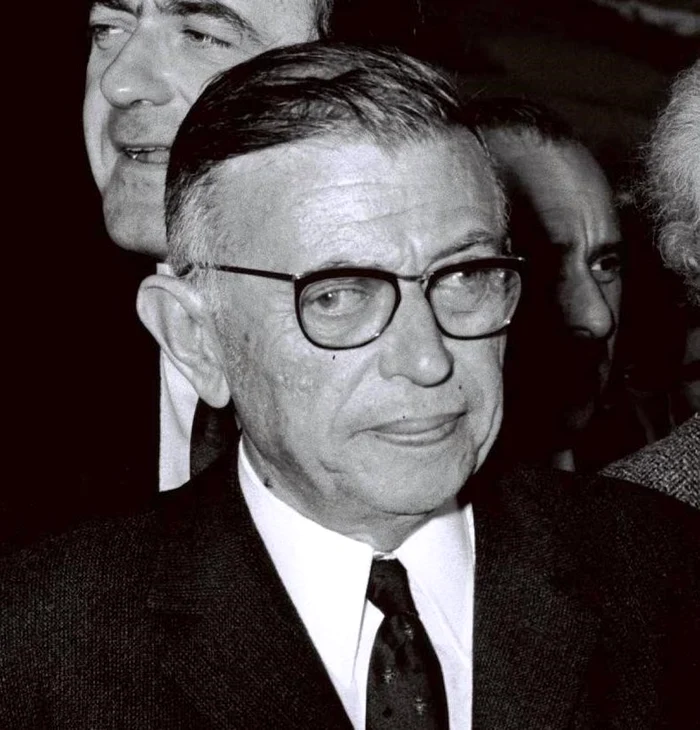
ean-Paul Sartre/PHOTO: Wikipedia
In 1964, the existentialist Jean-Paul Sartre causes a real scandal after he refuses to receive the Nobel Prize for Literature.
Before the vote, he sends a letter to the committee that was to designate the winners, in which he says that, for personal reasons, he does not want to appear on the list of possible winners.
“Mr. Secretary,
According to some information I learned today, I would have some chance of getting the Nobel Prize this year. Although it would be presumptuous to pronounce on a vote before it takes place, I take the liberty of writing to you to dispel or avoid a misunderstanding. I assure you first, Mr. Secretary, of my deep esteem for the Swedish academy and the prize with which it has honored so many writers. However, for some reasons of my own and others that are more objective, I wish not to appear on the list of possible laureates, and I cannot and will not, either in 1964 or later, accept this honorary distinction.
Please, Mr. Secretary, accept my apologies and believe in my high regard for you,
J.-P. Sartre”, wrote the philosopher.
Jean-Paul Sartre's letter was, however, opened after the vote had taken place, so that on October 22, 1964, a member of the Academy officially announced: “This year's Nobel Prize was awarded to the French writer Jean-Paul Sartre for his work which, through the spirit of freedom and the search for truth it represents, has exerted a vast influence on our age.”
Jean-Paul Sartre, who obviously was not present at the festivity, sends a new letter to the Academy, explaining the reason why he refuses to accept the Nobel Prize.
“The personal reasons are the following: my refusal is not an improvised act. I have always refused official distinctions. After the war, in 1945, when the Legion of Honor was proposed to me, I refused even though I had friends who were in the government. Likewise, I never wanted to enter the Collège de France as some of my friends suggested. (…) It is not the same if I sign Jean-Paul Sartre or if I sign Jean-Paul Nobel laureate Sartre. (…) A writer must refuse to allow himself to be turned into an institution, even if this takes place under the most honorable forms, as is the case now”, is part of the message sent by the philosopher to the Academy.
2021: The actress Liliana Tomescu died
Actress Liliana Tomescu was born on August 12, 1929. She graduated from the Institute of Dramatic Art and settled in Sweden with her husband, actor Lucian Muscurel, in 1980.
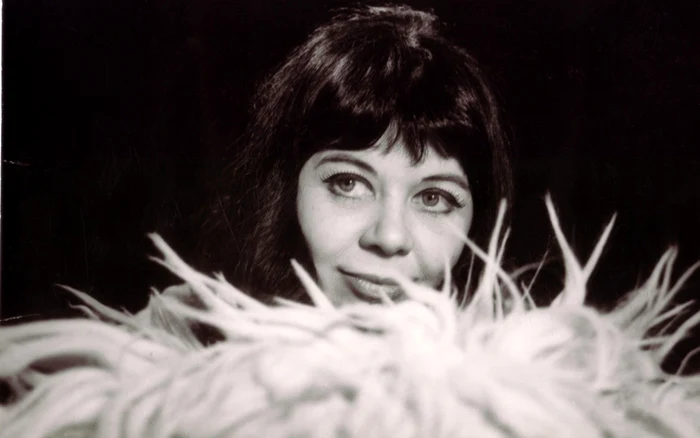
Liliana Tomescu/PHOTO: Archive
In 1981, he graduated from intensive Swedish language courses at the University of Gothenburg, obtaining a diploma that gave him the opportunity to work at all language levels.
Liliana Tomescu was an actress of the Notarra Theater in Bucharest for 30 years and had an impressive career in theater and film. He played with great actors, such as Ion Lucian, Lucia Sturdza Bulandra, Beate Fredanov, George Constantin, Victor Rebengiuc, Ştefan Iordache, Ion Dichiseanu, Constantin Codrescu. The show “Pygmalion” was performed 500 times, and “Goodbye, Charlie!” 870 times.
In 1964, she received the title of “Artist Emeritus”, establishing, in Romania, a record as the youngest actress (35 years old) who ever received it.
In 1991, he also received in Sweden, from the mayor's office of Stockholm, the title of “Honorary Citizen” of the city in recognition of his activity in the field of theater education.
The artist returned to her country of origin in 2006, when she was awarded the UNITER Award for her entire artistic activity, ICR reports.
On October 22, 2021, the actress died at the age of 21.