The special pensions of magistrates, again on the table of the CCR. Why their removal could be rejected again


The elimination of special pensions has already been challenged at the Constitutional Court by the magistrates of the High Court of Cassation and Justice, and on May 6, 2020, the initiative was declared unconstitutional. Now, the matter returns to the table of the judges of the CCR, who are again called to rule. Cătălin Pop, lawyer and specialist in the activity of the Constitutional Court, explains for “Adevărul” what the constitutional judges look at and in which situations there may be changes in decision.
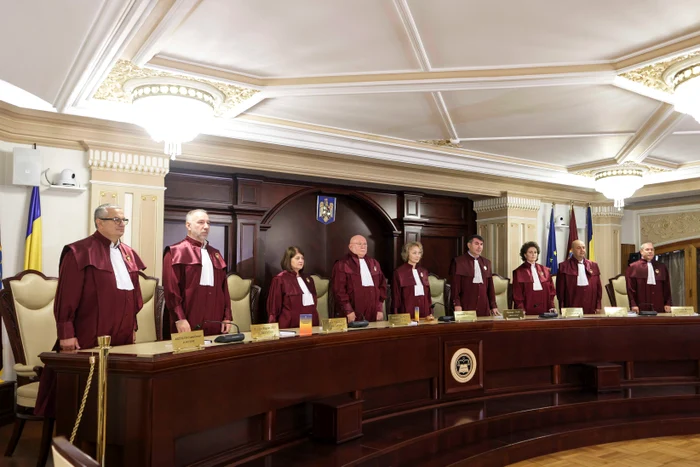
The Court postponed the decision until October 8 PHOTO Inquam / Octav Ganea
The project adopted by the Parliament by assuming the responsibility of the Government, which provides for the increase of the retirement age and the decrease of the special pensions of the magistrates, reached the CCR, upon notification of the High Court of Cassation and Justice. The constitutional judges twice postponed the resolution of the referral. Once for October 8 and once for October 20, thus extending the public wait.
The decision on this initiative represents the main stake of the second package of fiscal-budgetary measures, the prime minister hinting that he could resign if the project is declared unconstitutional by the CCR judges, as happened in 2020.
However, the new initiative only provides for the situation of magistrates, excluding constitutional judges or even parliamentarians, who were included in the previous project. The current draft also indicates a 10-year extension of the retirement age.
Why the 2020 project was rejected
Motivating the 2020 decision, the Constitutional Court stated that the requirements imposed on each regulatory area were not respected. In the context in which the criticized law had a profoundly heterogeneous character, targeting different professional statutes, as well as functions of public dignity, all treated together.
The CCR also points out at that time, that in the adoption procedure the referral order of the Parliament Chambers was violated, both of the latter observations being given by the fact that the previous draft also contained the repeal of pensions for former parliamentarians.
Another objection of the Court consisted in the fact that it was not based on any documentation or substantiation, research or impact study, being in this sense violated the constitutional provisions of art.1 paragraph (3) and (5) which enshrine the rule of law, respect for the Constitution, its supremacy and the laws.
Also, the Court finally found that the law was also adopted in violation of the general binding nature of the decisions of the Constitutional Court, regulated by art. 147 paragraph (4) of the Constitution, according to which its decisions are generally binding and have power only for the future, having the same effects for all public authorities and all individual subjects of law.
What will the CCR judges look at in the current analysis
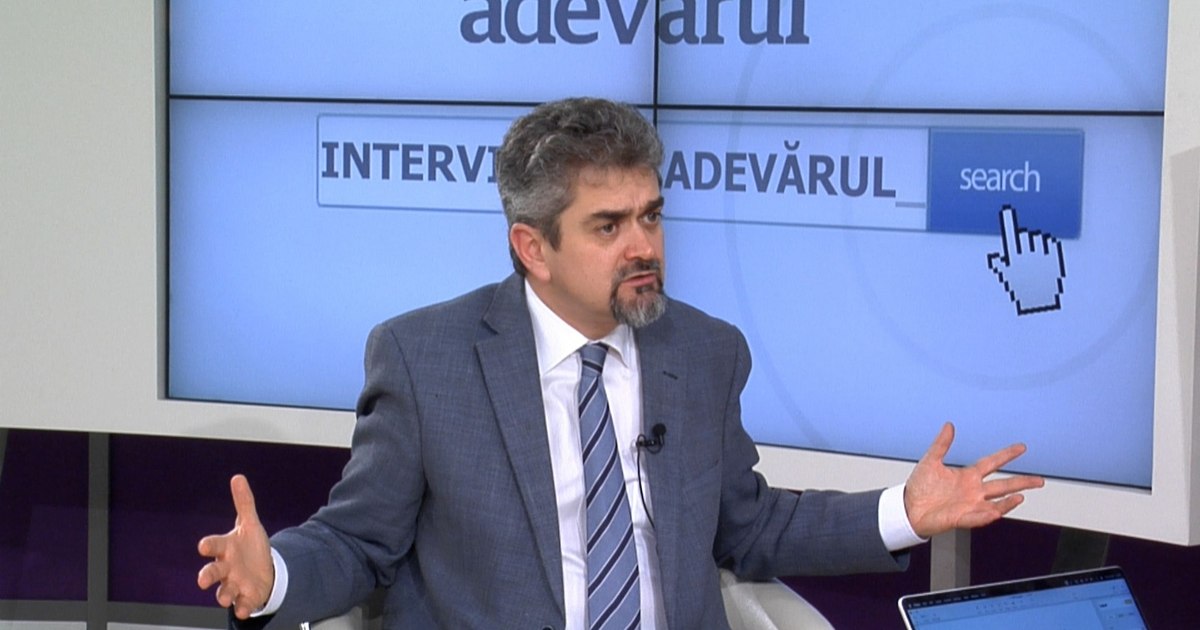
Cătălin Pop, lawyer and specialist in the activity of the Constitutional Court, author of the book “The Constitutional Court of Romania: strategic judicial behavior“, which analyzes all the decisions of the CCR, explains to “Adevărul” that the decisions of the Court “are taken strategically, not purely politically”considering several factors:
“My analysis shows that the Constitutional Court does not make purely political decisions. That is the conclusion. Never, no constitutional court anywhere, in any country or a supreme court of justice, makes purely political decisions, but the decisions are strategic. That is, many more factors are taken into account than just the legal ones or just the political ones. So we are dealing with a state body or institution that was thought that way, that is how it is thought everywhere in the world, it is not an exception, we do not make a separate opinion, in such a way that good decisions are made from as many perspectives as possible: economic, political, social, legislative. So, by all accounts, there must be professionals there on several levels. Decisions are made strategically, but not purely politically.”
Previous jurisprudence, among the key elements analyzed
They have to look at their own case law. If they can follow that case law and reject the law, if they have rejected it in the past. But also, given that there are new judges, different thinking, different arguments can appear, and then we can also expect a different decision” – Cătălin Pop, lawyer and specialist in the activity of the Constitutional Court
The lawyer Cătălin Pop emphasizes that, in making the decision, the judges will first of all look at the file, the elements notified by the High Court and the motivation of the initiative, which must present an impact study. But the decisions must also take into account the previous jurisprudence.
“Being in a different composition, new judges were elected compared to the past moments, they must also look at the previous decisions, at their own jurisprudence, to see in what sense the judges decided differently, because now there are others. They have to look at their own case law. If they can follow that case law and reject the law, if they have rejected it in the past. But also, given that there are new judges, there may be different thinking, different arguments, and then we can also expect a different decision.” the lawyer explains.
The gradual change in the Court's jurisprudence
In general, the decision differences of the CCR are “punctual and made with time”, that is, through decisions of partial unconstitutionality taken over several years.
“Basically, judges know what happened in the past and make balanced decisions. That is, they also take into account what was in the past and what will be after. Usually – jurisprudential revisions – that is, changes in jurisprudence happen over time. It happens gradually. If changes are made from one decision to another, there is a lot of argumentation, it is discussed why the jurisprudence has changed, either on different laws or according to the object of the law, but it is always argued why it had to change. This is because the Court also argues through its decisions that it must also rally to the good running of society. Society in Romania is no longer the same as it was in 1995. Then, the Constitutional Court ruled in agreement with the development of society”explains lawyer Cătălin Pop.
The decisions that have concerned magistrates over the years do not indicate a “pattern” (no – model)however, as a rule, parliamentarians have often made mistakes in terms of regulation in the case of this category, with either procedural mistakes or substantive unconstitutionalities being found more often.