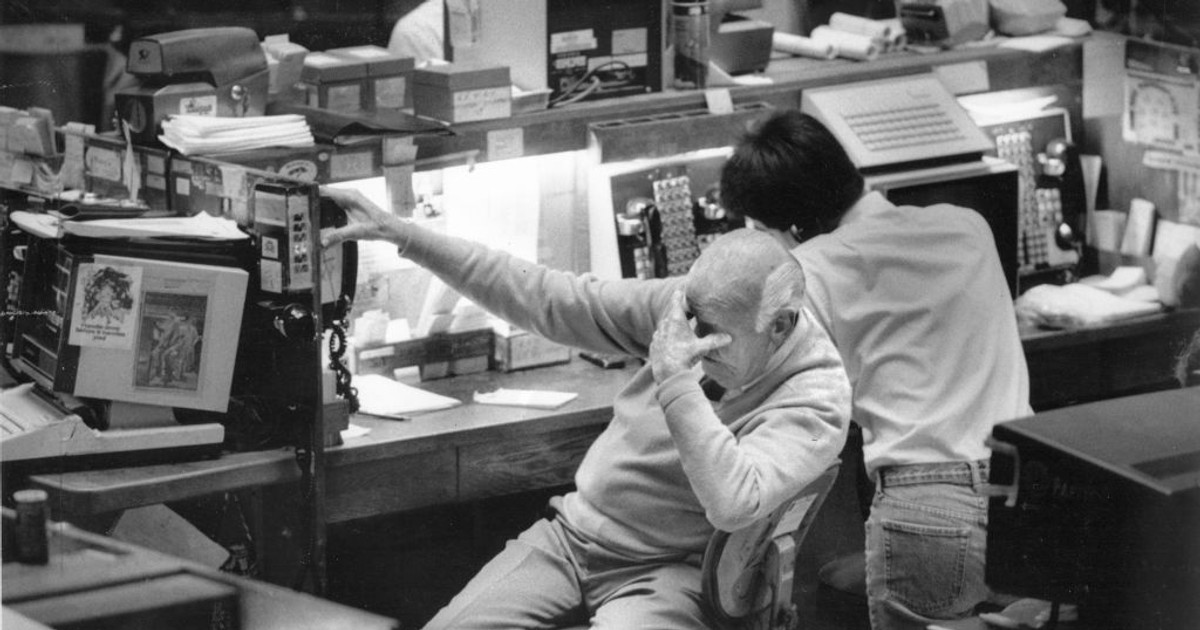
“Black Monday” took place on October 19, 1987. On that day, the Dow Jones Industrial Average (DJIA) recorded the largest one-day percentage drop in the history of the American stock market, losing as much as 22.6%.
“Black Monday” was preceded by a long period of growth on the American stock exchange. Stock prices reached record highs, but U.S. economic fundamentals left much to be desired.
At that time, the American economy was struggling with a weak dollar, rising inflation and a significant trade deficit. Additionally, Japan's dynamic economic development raised concerns about the loss of the United States' global position. The situation was worsened by geopolitical tensions, including an attack on a US tanker off the coast of Kuwait in October 1987.
Black Monday on Wall Street. The first signs of problems
Signs of trouble ahead emerged on October 14, when a bill was introduced in the House of Representatives to limit the tax benefits associated with financing mergers and leveraged buyouts. On the same day, the US Department of Commerce released data showing a high trade deficit. This information caused a decline in the stock market and a weakening of the dollar, which in turn increased fears of an increase in interest rates and a decline in share prices.
As a result, the Dow Jones Industrial Average fell by over 3 percent on October 14, and in the following days it recorded further losses of several percent. These declines, combined with uncertain economic conditions, caused investors to hold off on stock purchases, setting the stage for Monday's crash.
The stock market crash in the US spread to foreign markets
On Monday, many of them decided to panic sell shares, which caused a snowball effect. Sell orders came in in such large numbers that Wall Street's computer and communications systems were overwhelmed. Delays in executing transactions and transferring funds further deepened the chaos.
The scale of losses on Wall Street shocked markets around the world. Many foreign stock exchanges recorded record declines, which emphasized the global nature of the crisis.
In response to the events of 1987, the U.S. Securities and Exchange Commission (SEC) introduced safeguards known as “exchange circuit breakers.” They were intended to prevent similar situations in the future. The mechanism assumed suspending trading in shares for 15 minutes after a 7% drop in the index, for 60 minutes after a 13% drop, and after a 20% drop. quotes were suspended until the end of the day.