Trump is vulnerable. China is now taking advantage of America's weakness by using its rare earth monopoly against it. These are a total of 17 chemical elements, metals that are not actually rare, but are found mainly in small amounts as admixtures with other minerals. They are crucial in industry and armaments – from machines to modern F-35 fighters. With few exceptions, they are virtually irreplaceable.
Meanwhile, the trade conflict between the superpowers has just intensified – and neither side currently seems willing to make concessions. Therefore, that China is in an exceptionally good negotiating positionthe regime in Beijing is currently taking advantage of its advantages. The West, in turn, made a strategic mistake in the game against the Middle Kingdom.
— China may feel emboldened to set new standards in negotiations with the U.S., says Jan Hatzius, chief economist at Goldman Sachs, the world's largest investment bank. Other experts express similar views and estimate the consequences for the global economy, which will also hit Europe.
They watch each other, constantly raise the stakes, maybe they're bluffing, maybe they're not. Donald Trump and Xi Jinping started another round of poker. The presidents of the United States and China want to win at all costs this game, which is not a game, but a fierce fight: for tariffs, trade shares, power.
For a while, relations between Beijing and Washington seemed to have eased. On June 26, both countries signed a framework agreement on trade relations. Under its main points, the United States would impose 30 percent tariffs on imports from China, on top of the 20 percent basic tariff that applies to everyone.
At the same time, China was to impose only 10 percent tariffs on US imports and allow imports of high-quality semiconductors again, while the US regained access to rare earth metals. However, the agreement has not yet entered into force. There is a deadline of November 10 in which the US only imposes a basic tariff of 20%.
The article continues below the video
However, instead of finalizing the agreement, since October 9, both sides have escalated the conflict again. First, Beijing announced tighter controls on the export of rare earth metals.
US President Donald Trump responded by threatening to impose an additional 100% tariff on Chinese goods from November 1. China responded by imposing higher port fees on U.S. ships starting Oct. 14, and Trump is currently considering an embargo on cooking oil from China.
So why did China decide to make a bold move by using rare earth metals?
China has an ace up its sleeve
— Processing rare earth metals is often an environmental disaster, and their production is extremely energy-intensive, says Christian Jasperneite.
For this reason, the United States and Europe, which previously had the technical capacity to produce these metals themselves, have withdrawn from this market in recent decades and left it virtually entirely to China. However, this did not help environmental protection because production was simply moved to other countries. The West, in turn, has made the prosperity of its economy dependent on decisions made in Beijing.
Rare earth metals are needed for the production of almost all modern technical goods. For most of these raw materials, China currently has a dominant market position. 90 percent of them are mined and processed in China or in mines under Chinese control. The United States, on the other hand, is 100 percent dependent on imports of twelve minerals classified as “critical” by the United States Geological Survey.
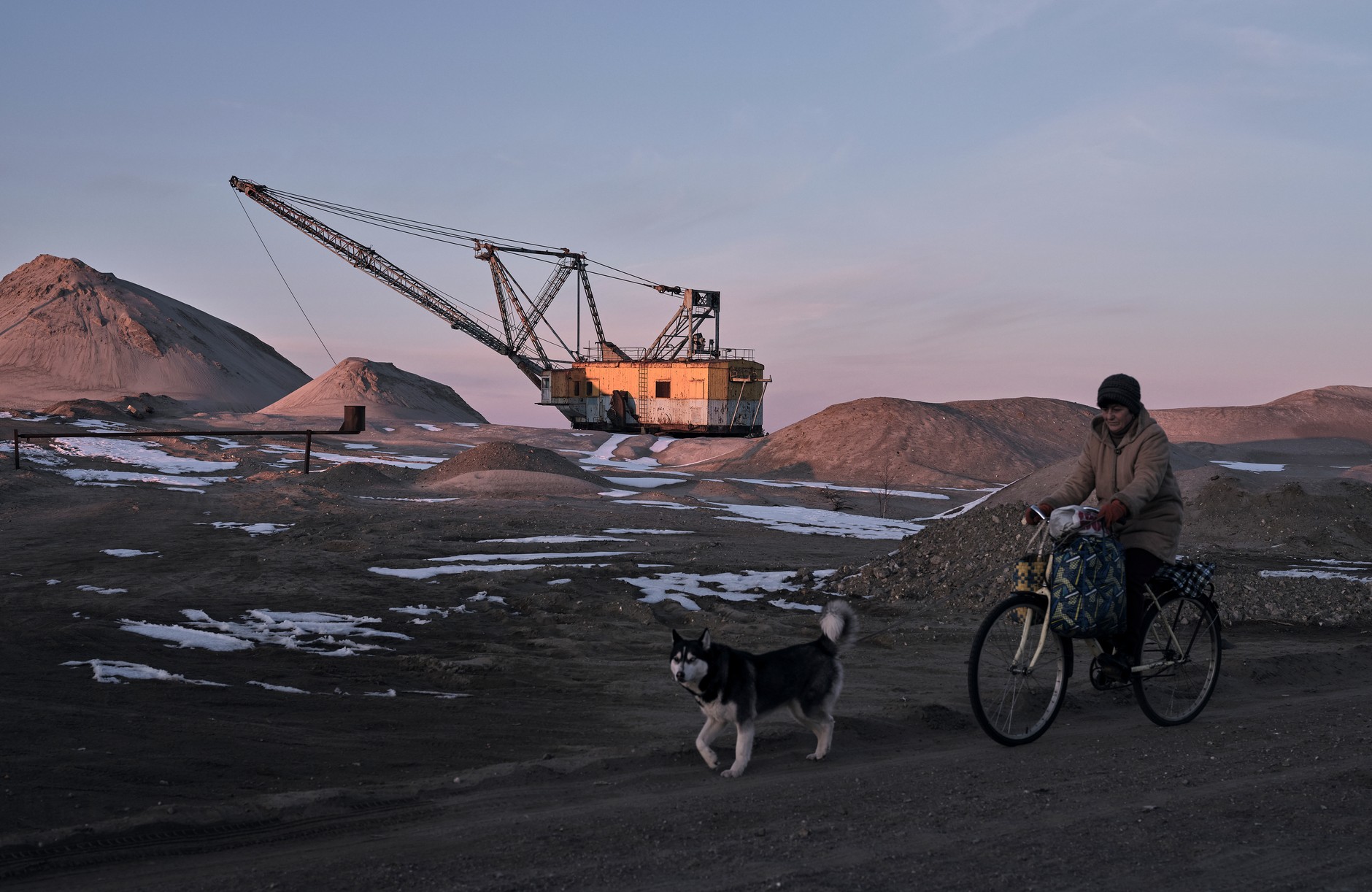
Ukrainian rare earth mine in Zhytomyr Oblast (illustrative photo)Kostiantyn Liberov/Libkos/Getty Images / Contributor / Getty Images
— China has a geopolitical ace in its hand, says Christian Jasperneite, a finance expert from the private bank MM Warburg. According to the expert, the situation is clear: the West is susceptible to blackmail. — In any conflict, regardless of its nature, China has an irresistible trump card in its hands, he says. “They could paralyze industrial production in the Western world in the blink of an eye.”
November 10 is the deadline for the United States and China to suspend new tariffs agreed in June. Beijing seems to want to significantly improve the terms of the agreement at that time again. — According to recent reports, Chinese politicians are particularly seeking to eliminate the 20 percent tariffs that the United States introduced at the beginning of the year, says Jan Hatzius, chief economist at Goldman Sachs, the world's largest investment bank.
The question is whether Trump will agree to such a deal, which would ultimately represent a major defeat for him. However, given the current layout of the cards, he seems to have no other choice. An alternative could be to extend the deadline for introducing the agreed tariffs, but this would only mean postponing the conflict.
The struggle for power will continue
Even if an agreement is reached now, the conflict highlights what threatens the global economy in the coming years.
“Geopolitical fragmentation and regional reorientation of supply chains are ongoing,” says Robert Greil, chief strategist at private bank Merck Finck. “Both the United States and China are investing heavily in their own production capacity for strategically important goods — from semiconductors to batteries to defense technologies.”
At the same time, Beijing will continue to use its threat potential.
— China, like the empires of the past, is interested in expanding its power and changing the rules and methods of global cooperation to its advantage, says Christian Jasperneite. “So we can assume that China will continue to use its influence in the rare earth context to push its own interests.”
Europe's role in this geopolitical power game depends on the response of individual countries' governments. It may lose out completely in this conflict if it does not take its own steps in a timely manner by securing the appropriate assets. However, as a united economic bloc, the EU could become a powerful third player. However, it requires will and courage.
I’m Ashley Davis as an editor, I’m committed to upholding the highest standards of integrity and accuracy in every piece we publish. My work is driven by curiosity, a passion for truth, and a belief that journalism plays a crucial role in shaping public discourse. I strive to tell stories that not only inform but also inspire action and conversation.