Will France bring financial disaster to Europe? “Politicians are the problem”


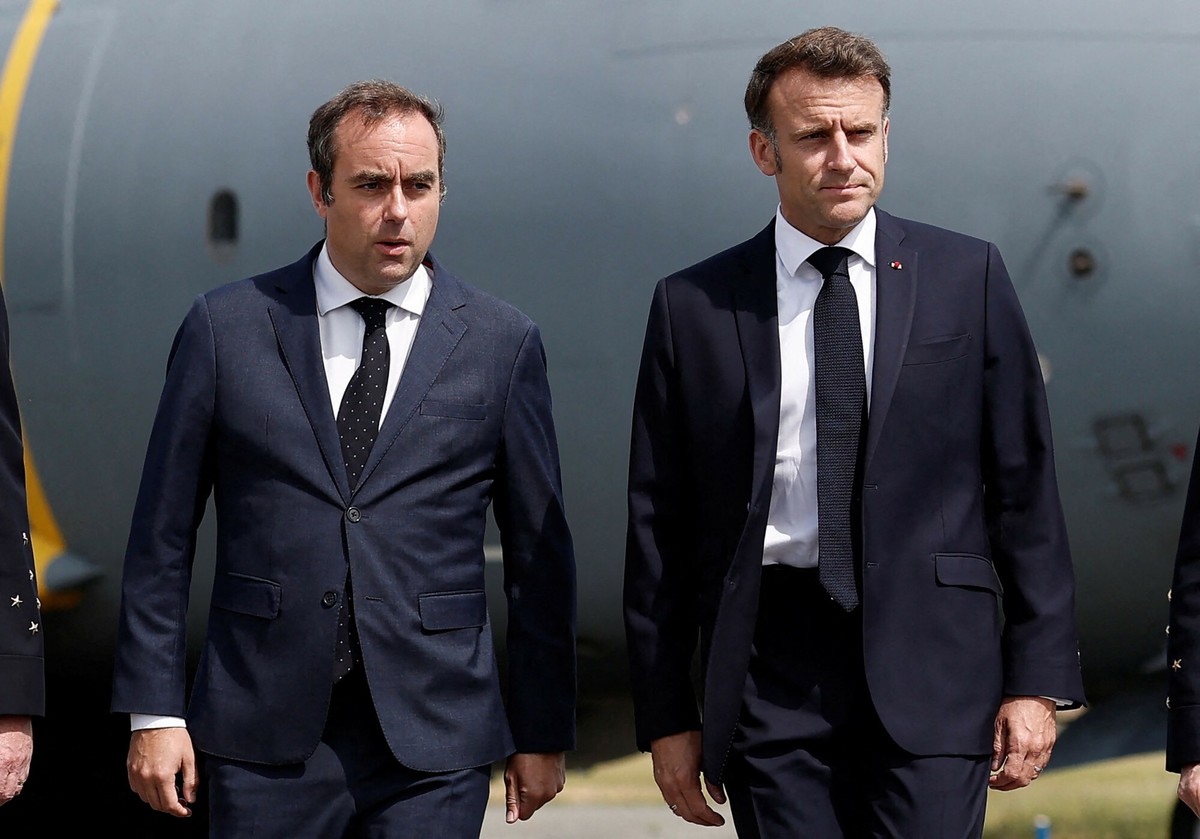
France is stuck in its most serious institutional crisis since the founding of the Fifth Republic. It was introduced in 1958 by former World War II general Charles de Gaulle after years of chaos. The office of president was then endowed with much greater powers to ensure stability. There is now nothing left of this stability, and Emmanuel Macron is the president who is particularly weakened today. He no longer has a majority in parliament, nor can he rely on his popularity in society – quite the contrary. He will remain in office until 2027 only because the constitution provides for it. Even so far, politicians close to him have suggested he step down early.
Read also in BUSINESS INSIDER
The crisis was caused by Macron himselfwhen he dissolved the French Parliament in June 2024 after Marine Le Pen's far-right Rassemblement National party recorded a clear victory in the European Parliament elections. His hope that moderate parties would win the new elections did not come true. The forces from the right and left extremes of the political scene won. Since then, the president has failed to form a stable government.
The two prime ministers he appointed were removed from power by the parliament after a few months as a result of a vote of no confidence. Sébastien Lecornu – the president's trusted man – was disappointed and resigned on his own initiative on October 6 after less than a month. Although later, at Macron's insistence, he again took responsibility for the government, he still cannot count on certain support in parliament. This does not change the fact that on October 14, the socialist faction promised at least that it would not support motions for a vote of no confidence in him.
See also: Will the refinery attacks bring Putin to his knees? The analyst talks about the real scale of the Kremlin's problem
Switzerland started counting
France's direct importance for Switzerland is due to its close trade relations. Political turmoil affects the economic situation in France – and thus indirectly affects the demand for goods from Switzerland. According to the latest data, France ranks sixth among Switzerland's most important trading partners. For industry, the French export market is in fourth place.
Consumer confidence in France has dropped significantly this year. Since the summer, the situation in industry has further deteriorated, as indicated by the latest PMI index data, suggesting a shrinking sector. For the Swiss industry, which is already suffering from 39 percent US tariffs, this further downturn in an important sales market comes at the worst possible time. As Jean-Philippe Kohl, deputy director and head of economic policy of the Swissmem association, explained in an interview for “Blick”, Swiss exports to France already in the second quarter of the year shrank by 4.3% compared to the previous quarter.
See also: The economist's study alarmed Switzerland. “Because of the decline, people are limiting their work hours”
However, the bad atmosphere in France also has consequences for the services sector. Its PMI index also indicates a recession. However, the crisis in France may have much more serious consequences for Switzerland indirectly if it threatens the stability of the euro zone.
Everything is decided on the budget
The greatest risk comes from debt. Political turmoil is making it extremely difficult to adopt a French budget that would stop the country's exploding debt. In order for the French Parliament to constitutionally have at least seventy days to consider the draft budget law, it should be submitted on October 13. On October 14, Sébastien Lecornu at least managed to obtain a promise from the socialists that in the upcoming confidence votes they would not overthrow him together with the far right and the far left.
However, the price for this is the suspension of important reforms, such as the one regarding raising the retirement age. This, in turn, further worsens the country's financial situation. If the budget is not finally adopted, next year there is a risk of a provisional budget, in which state finances must be based on the assumptions from the current year. The state could indeed perform basic functions, but new political ventures would be largely excluded. New spending programs and investments would be suspended or delayed, as well as subsidies and support programs that are no longer regulated by law.
According to data from the International Monetary Fund (IMF), France last ran a budget surplus in 1980. In the 45 years since then, expenditure has exceeded revenue every year. In 19 of the 26 years since the eurozone was established, the country exceeded the allowable budget deficit of 3 percent or less. gross domestic product (GDP), sometimes even significantly. From 2023, the deficit is well over 5%, in 2024 it reached 5.8%. The effects of this neglect of public finances are visible in the increase in gross debt: in 2000 it was still approximately 60 percent. GDP, currently this indicator is 113%.
This is the third highest level in the euro zone after Greece and Italy. Over the next two years, according to IMF estimates, it is expected to increase even above 120%. These developments clearly show that the problems result from deep structural failures. The French state dominates the economy with a share of 58.3%. in GDP production – this is the highest state share among developed Western countries. Tax and contribution burdens are also among the highest, as is the share of social spending in GDP. Reforms in these areas have little chance of success given the extreme social opposition in France, which is also confirmed by the current situation.
One effect of the crisis is that none of the major rating agencies no longer gives the euro zone's second-largest economy the highest creditworthiness rating. Fitch and Morningstar DBRS lowered their ratings in September. The agencies justify their position with the country's fiscal imbalances and uncertainty regarding further fiscal policy. On the capital markets, the crisis led to a significant increase in the yield on ten-year French government bonds – in September it amounted to approximately 3.6%, while a year earlier it was 3%. In the meantime, it has even exceeded the yield on Italian bonds, although the ratio of public debt to GDP is much higher in Italy (137%), and the country is therefore considered a classic problem case in the euro zone.
Although the yield on government bonds has fallen somewhat thanks to the latest agreement between the French Prime Minister and the Socialists, it is still high, which means not only uncertainty about the country's public finances, but also that France must take out new debts at higher interest rates; the same applies to rolling over existing debt when it needs to be repaid. France's interest costs already amount to approximately EUR 58 billion, which is approximately 10 percent. the entire state budget.
Fear of another euro zone crisis
Looking at government bond yields, the fear of another euro zone crisis returns. From 2011 to the summer of 2012, bond yields in an increasing number of eurozone countries rose rapidly – driven primarily by fears of a Greek default. Higher yields have not only increased sovereign debt costs, but also worsened economic growth prospects — and therefore tax revenue projections. The result was a spiral of ever higher yields and interest rates across the euro area. Bankruptcy of one or more member states became probable, and eventual collapse of the monetary union.
This vicious circle was only broken when Mario Draghi, then president of the European Central Bank (ECB), announced that he would use monetary interventions to stop further increases in yields – provided strict requirements were met. This crisis also affected Switzerland through the massive depreciation of the euro against the franc. To counteract the dramatic strengthening of the franc, the Swiss National Bank, after massive interventions in the currency market, introduced a minimum exchange rate of 1.20 francs per euro in the summer of 2011, which it maintained until January 2015.
Although the yield on French government bonds is currently not significantly different from the highest level of approximately 3.7%. from the times of the euro crisis, the risk of such a development is currently assessed as low, also because profitability has recently fallen slightly again. In an article in the Financial Times, Natacha Valla, dean of the faculty of economics at Sciences Po in Paris and former director general of the ECB, explains the relative calm in the markets with the expectation that the ECB or other euro zone countries will also come to the rescue this time. However, the economist doubts that France can count on such help. It also warns that market crises do not develop in a linear and slow manner, but tend to escalate suddenly – especially when additional international crises exacerbate an already fragile situation.
There is also the fact that the cohesion of eurozone countries has suffered anyway since the euro crisis; in many countries, parties are gaining strength or governments are coming to power that put national interests above community ones. Political stability is declining not only in France.
However, Natacha Valla also emphasizes that France has no solvency problem. The country is generally wealthy and its economy is strong enough to support the cost of debt. The French economy is one of the most innovative in the world, with many international leaders, especially in the high-tech area. For example, the French start-up Mistral AI is ahead of all other European providers in the field of artificial intelligence.
The problem is a policy that does not care about sustainable public finances and shows little sensitivity to the economic framework. As recent developments show, the crisis does not lead to improvement. Political polarization continues to deepen and there is little sign that structural deficiencies will be addressed – quite the contrary. Even if relative calm were to return for the time being, a sudden increase in yields and interest rates is a constant threat – and therefore also a risk of a crisis spiral that would cover the whole of Europe.
The above text is a translation from Swiss portal Handelszeitung