“For almost two months there have been extremely many illnesses.” The cases of COVID have increased in Romania and other European countries / What are the symptoms of the new variant


“We do not have a correct picture of the number of cases of COVID-19, because there are many who say: “we are staying at home”, says Sandra Alexiu, a family doctor in the town of Jilava near Bucharest, in a dialogue with HotNews. Official data show that there was an increase in illnesses, and this is not only happening in Romania.
- The article is part of the Pulse project, an international journalistic consortium of which HotNews is a part, which provides the public with documented and diverse perspectives, with information from several countries, on issues of great public interest. The article was written by Alina Neagu (HotNews – Romania), together with Andrea Muñoz (El Confidencial – Spain), Krasen Niolov (Mediapol – Bulgaria), Justė Ancevičiūtė (Delfi – Lithuania), Sarah Rost (VoxEurop – France) and Anna Sawerthal (Der Standard – Austria).
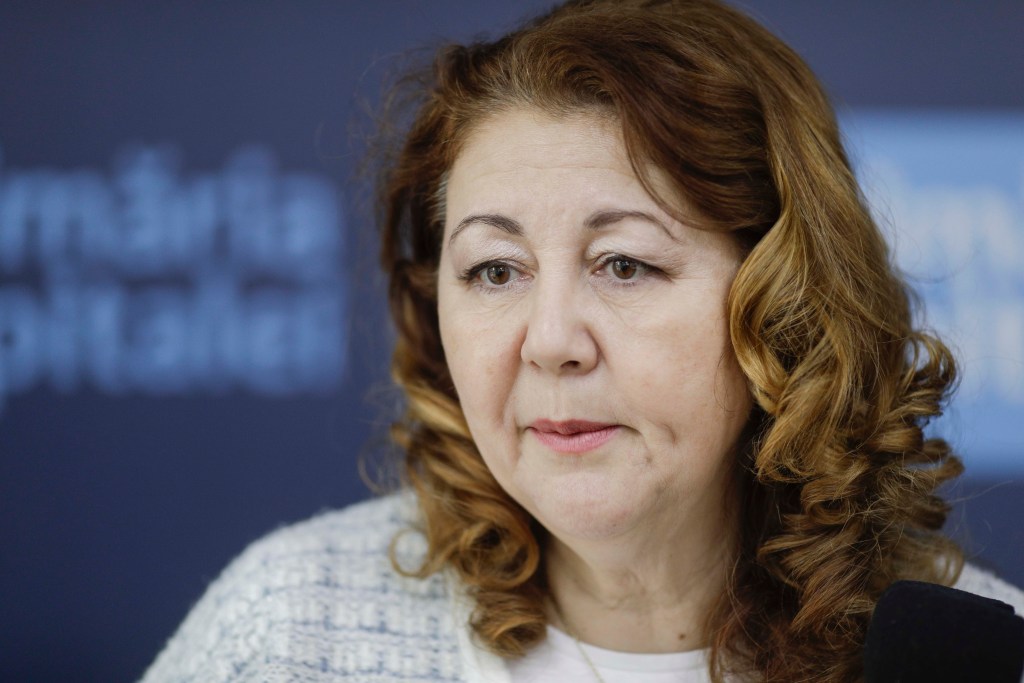
“For a month or so, almost two months, there have been extremely many cases of illness,” says Sandra Alexiu, president of the Association of Family Doctors Bucharest – Ilfov.
The same opinion is shared by Simin Aysel Florescu, an infectious disease doctor and the manager of the “Victor Babeș” Infectious Diseases Hospital, who says that the number of illnesses increased especially in the months of August and September.
Diseases, increasing and other European countries
What does the official data show? According to data from the National Institute of Public Health, the peak was reached in the week of September 1-7, when 5,133 cases of the disease were officially confirmed. In that week, 11 deaths were reported in people infected with SARS-CoV-2.
And in Austria, the number of cases of COVID-19 began to rise from the beginning of September.
Likewise in France, where in mid-September, in a population of 68.5 million inhabitants, there were 25,000 new cases of COVID-19 in one week. French media reported that the virus spread even more after the school year started.
In Spain, however, the number of infections remains low compared to last year. In 2023-2024, there were 1.5 million registered cases. Now, there are approximately 51 cases per 100,000 inhabitants, writes El Confidencial. However, the number started to increase here as well, also after the school started.
“They test at home and stay at home“
In the last two weeks, in Romania, the number of cases entered a downward trend.
In the week of September 29 to October 5, 2,249 new cases and 15 deaths were recorded. And between October 6-12, 1,627 cases and 12 deaths were registered, all patients also having other ailments.
But, it is not clear if this number is also the correct one, because some “test at home and stay at home, even if the test comes out positive or negative”, says infectious disease doctor Simin Aysel Florescu, in the dialogue with HotNews. She also points out that there are patients who go to the family doctor.
Therefore, doctor Sandra Alexiu says that, in recent weeks, she has also had 5 positive tests per day. “Which for a single family practice is a lot.”
For her part, she says that those who arrive at the hospital are those who have complications, but “most are filtered through us, the family doctors.”
What are the symptoms?
The most common symptoms of the new variant of COVID-19 are, as a rule, characteristic of an upper respiratory tract infection – pharyngitis or sinusitis, in particular.
“People come with severe pain in the throat, stuffy nose, rhinorrhea (runny nose – ed.). They also have fever, headache and muscle pain. These are the most common symptoms. And many of the young people describe a state of severe asthenia, which causes them to come to the hospital”, says doctor Simin Aysel Florescu, from the “Victor Babeș” hospital.
“In cases suggestive of COVID, we do the tests, and the procedure has remained the same: depending on how serious it is, they remain hospitalized or not. The more serious cases remain hospitalized and receive treatment here,” explains the doctor.
Most of them are elderly, affected by other diseases, and some of them come from nursing homes.
Simin Florescu still says that “most, fortunately, are mild or average cases. We evaluate them – clinical, biological and radiological – and if they have a recommendation, almost all of them receive antiviral treatment. But most cases can be treated at home, fortunately, they are not serious cases.”
Another headache for patients: sick leave rules
Many of those who get sick with COVID then run into another problem: the bureaucracy and the rules surrounding medical leave, which change frequently, says Sandra Alexiu, president of the Association of Family Physicians Bucharest – Ilfov.
In the case of leaves for COVID-19, says the doctor, Ordinance 158, which regulates the issuance of medical leaves, “has been constantly modified”: “Until the pandemic, it was one of the most well-made normative acts. But it kept being modified: that it is quarantine, that it is not quarantine, that it is 7 days, that it is 14 days and so on.”
The current form was recently modified and “allows leave to be issued for COVID, a contagious disease of group A, and the leave is settled 100%. The number of days of leave is decided by the doctor who consults and we are not limited, as doctors, to grant a fixed number of days. I can grant 3 days or I can grant 7 days, I am not limited, as with other leaves”, explains the doctor.
“I had conflicts with employers, for my patients”
Sandra Alexiu talks about “a form of leave with exceptions”, because “it is a very infectious disease, and this is the idea: to keep the patient at home, so as not to make sick a whole floor of people who work together”.
In normal sick leave, the payment for the patient is 55%, while for COVID-19 the payment is 100%, adds Sandra Alexiu.
But not all employers have kept up with the frequent changes, says the doctor. “Very few employers know these things and I have had conflicts with employers, for patients of mine, I have had to send countless extracts from this law and documents.”
“After many changes, we ended up in this bureaucratic situation, in which many do not know the changes”, adds Dr. Sandra Alexiu.
In addition, Romania faces another problem: the lack of COVID vaccines, which in other countries are offered free of charge. How it got here and what solution the Ministry of Health proposes, in the next part of the article, on HotNews.

The PULSE project is a European initiative to promote cross-border journalistic partnerships, co-financed by the European Commission (DG CONNECT) within the Multimedia Actions through grant agreement LC-02772862. HotNews.ro collaborates in the project with other prestigious publications from Europe: Delfi (Lithuania), Deník Referendum (Czech Republic), the largest Austrian newspaper Der Standard (Austria), some of the largest publications in Greece – EFSYN, El Confidencial – Spain, the largest Polish newspaper Gazeta Wyborcza, the oldest Bulgarian analytical and informational website Mediapool, one of the largest independent Hungarian publications HVG and Italian economic newspaper Il Sole 24 Ore, one of the oldest and strongest publications in the Peninsula.
Three renowned transnational media organizations – OBCT (Italy), N-ost (Germany) and Voxeurop (France) will coordinate the project activities.