A researcher proposes a trivial solution to the Fermi Paradox, one of the great mysteries of science

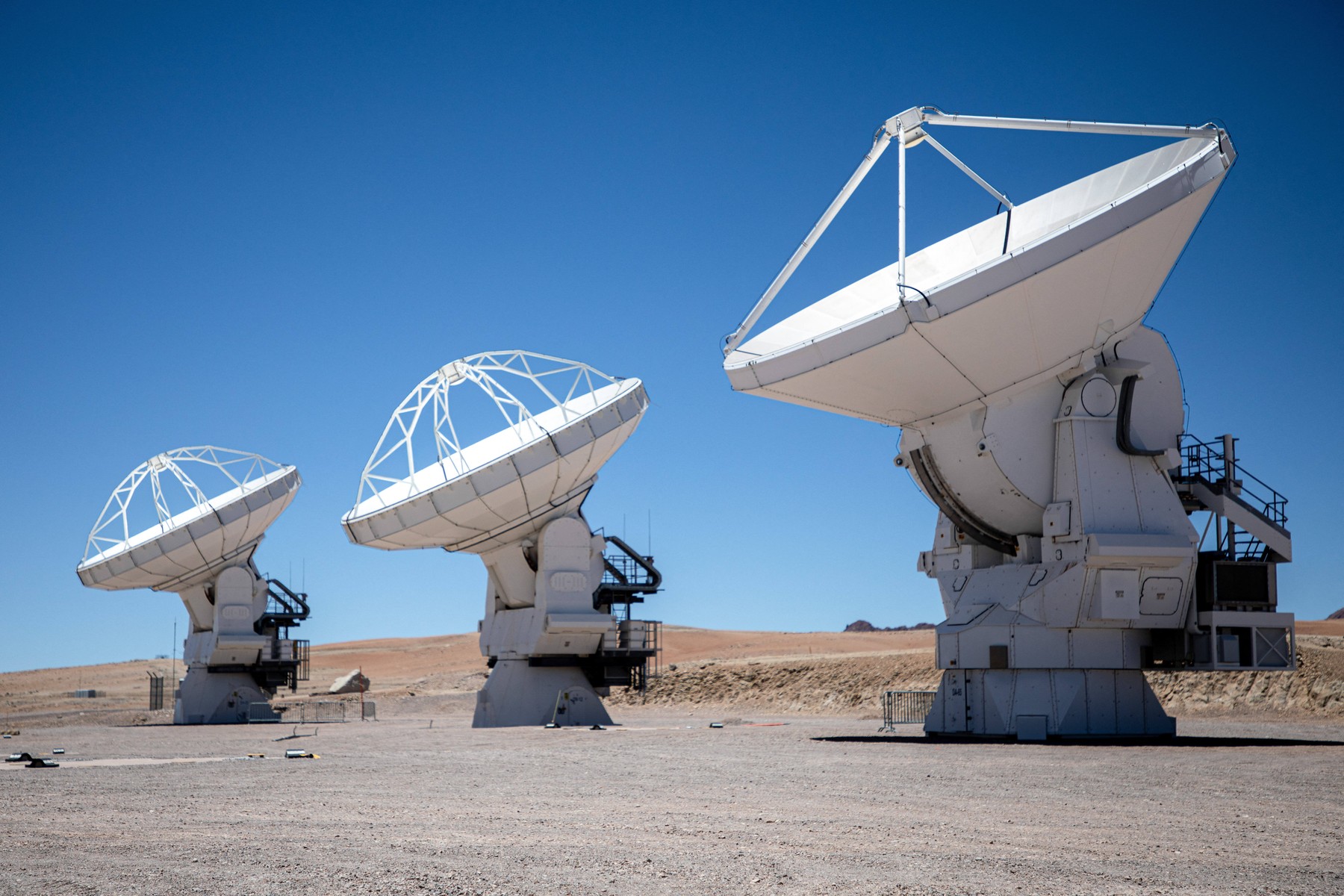
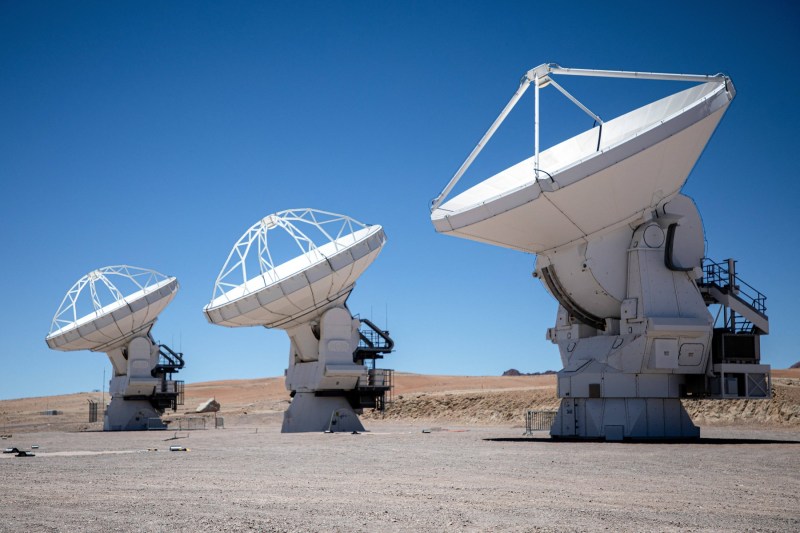
Radio telescopes in Chile's Atacama Desert, PHOTO: AA / Abaca Press / Profimedia Images
In 1950, renowned astrophysicist Enrico Fermi asked a profound question about our galaxy during a casual lunch with his colleagues: “Where is everybody?”. In other words, if there is an extremely high probability that advanced alien civilizations exist somewhere, why haven't we found evidence of them? At least that's what the story says, reports Gizmodo.
But regardless of the circumstances in which it was uttered, this question – known today as Fermi's paradox – has captured the minds of researchers ever since.
In a new scientific paper, which has not yet been peer-reviewed, astrophysicist Robin Corbet proposes “extreme banality” as a possible explanation. Corbet, a senior research scientist at the University of Maryland, Baltimore, and a fellow at NASA's Goddard Space Flight Center, suggests that the galaxy is inhabited by a modest number of extraterrestrial civilizations that are not much more advanced than our own.
According to this hypothesis, because the aliens' technology is similarly limited to ours, neither civilization can detect the other.
“The idea is that they're more advanced, but not much more advanced. It's like having an iPhone 42 instead of an iPhone 17,” Corbet explained to The Guardian. “This seems more possible, more natural, because it doesn't propose anything very extreme,” he believes.
An Alternative Explanation for “The Great Silence”
Calculations using Drake's equation – a formula that estimates the number of civilizations in the Milky Way capable of transmitting radio signals – suggest that there should be a significant number. Some astrophysicists believe the entire galaxy could be populated by advanced civilizations in a relatively short span of time, on the scale of astronomical time.
Moreover, humanity should already be able to detect their presence through a number of technological signatures. These could include an artificial electromagnetic beacon, signs of astro-engineering, or emissions of gases that do not occur naturally in the atmosphere of exoplanets.
So far, however, I haven't found any of these.
Astrophysicists have come up with many different hypotheses to explain this lack of evidence, also known as the “Great Silence”. Maybe the intelligent aliens are simply too advanced for humanity to detect, or maybe they choose to stay away from Earth? Maybe we really are alone in the galaxy? Or, more pessimistically, perhaps all sufficiently advanced civilizations end up self-destructing.
To Corbet, these possibilities seemed extreme, so he decided to ask another question: What if civilizations have a natural technological limit that prevents them from becoming advanced enough to create detectable technosignatures or to detect us?
The galaxy may be more boring than we think
According to Corbet's hypothesis, humanity may be close to the upper limit of technological progress. Alien civilizations could reach a similar plateau without advancing far enough to easily detect or contact other civilizations.
This idea, derived from the so-called principle of “extreme banality”, suggests that extraterrestrial societies do not build massive space structures and do not travel at the speed of light. Instead, they are probably very much like us – and just as limited in their ability to find other civilizations in the galaxy. And they stay that way, losing interest in cosmic exploration over time.
Even if this hypothesis is correct, it does not mean that we will never find evidence of an alien civilization. In his article, Corbet explains that a technologically mundane world might still be detectable by the radiation its technology emits, and such a discovery “may not be far off” if radio telescopes continue to improve.
“While this would have profound implications in many ways, it might not lead to a major leap in our technological level and might leave us somewhat disappointed,” Corbet concludes.