What the future of express highways and roads in Romania looks like. The plan of over 3,200 kilometers of fast roads


By 2030, Romania should have over 3,200 kilometers of highways and express roads, according to official plans. But so far, only part of the projects considered essential have been completed.
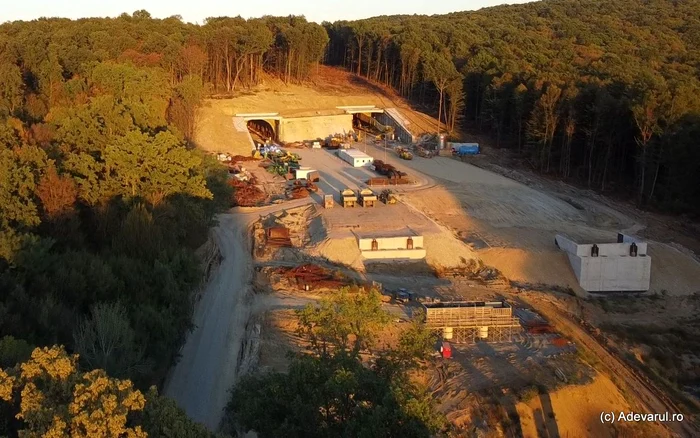
Works on the A1 motorway, at the tunnels on the Holdea – Margina section. Photo: Daniel Guță
The map of high -speed roads in Romania has been outlined since 2014, through Master the General Transport Plan, approved by the Government of Romania on February 25, 2015.
“The total value of the projects identified within the Master of the General Transport Plan is 45.451 billion euros, which includes investment projects in the transport infrastructure of Romania for the road, rail, air, naval and multimodal sector” inform the Government of Romania then.
About half of the value of the proposed investments to receive European funding through the large infrastructure Sectoral Program aimed at road transport projects: 1,300 kilometers of highways, over 1,825 kilometers of express roads, 2,874 kilometers of roads of regional importance (Transregio) and 343 kilometers of roads (trance).
The 16 reference segments, most in the yard
In 2021, the development plans in the road infrastructure were updated through the investment program for the development of the transport infrastructure 2021–2030. The document approved by the Romanian Government aimed at a prioritization of the proposed investments for European funding.
“The investment program concerns a paradigm change in the sense of concentrating the political, institutional and financial efforts of Romania on a clear set of priorities, in line with the national and European interests, which will lead to the end of decade 2021-2030 to the creation of a national transport network representing the spine of development of the national economy”, inform the Ministry of Transport.
The program included a list of 40 express highways and roads, with a total length of 3,257 kilometers. Of these, 16 segments, with a total length of over 700 kilometers, were included in a reference scenario, some being already in execution, and others in advanced stages of design or public auction, having the insured financing.
The 16 sections of highways and express roads, included in the reference scenario in the investment program for the development of the transport infrastructure 2021–2030, are:
The Bucharest (south) ring, the Pitești – Sibiu Highway (lots 1, 4 and 5), the A1 Holdea – Margina highway, the highway of Ploiești – Buzău (including the road to the Ocolatori Buzău Nord), Buzău – Focșani, Focșani – Bacău, Bacău – Pășcani, Târgui – Târgu Mureș – Târgu Neamț (Târgu Mureș section – Miercurea Nirajului), Chețani – Câmpia Turzii, Nădășelu – Gate Sălajului, the express road Pitești – Craiova, Brăila – Galați, the bridge over the Danube from Brăila, the connection road A3 – Tureni, and Tureni.
The current investment situation in the program
Five years after the approval of the Investment Program, the investment situation is presented as follows:
The Bucharest South Highway Ring, with a length of 51.2 kilometers, was completed in June 2025, with the completion of its last segment, 18 kilometers.
The A1 Sibiu – Pitești highway (lots 1, 4 and 5), in length of 53.4 kilometers, has Lot 1 Sibiu – Boița completed and open to traffic, and lots 4 and 5 are in execution, with estimated completion in 2027.
The A1 motorway, the Holdea – Margina section of nine kilometers, which comprises over two kilometers of tunnels, is in the yard since 2023, the estimated term of completion being the end of 2026.
The Highway A7 Ploiești – Buzău, 63.3 kilometers, is in advanced execution, with a physical stage of over 80 percent. The complete completion is estimated for the first half of 2026 or even earlier.
The A7 Buzau – Focșani highway, with a length of 82.4 kilometers, was completed, its last segment, 4.6 kilometers, being opened in July 2025.
The A7 Focșani-Bacău highway, 96 kilometers long, is in execution on all the lots, the works being in an advanced stage. Its segments could be inaugurated this year.
The A7 Bacău – Pașcani highway, 77.4 kilometers, is under construction on all three sections. And this could be completed in 2025.
The A8 Târgu Neamț – Iași – Ungheni Highway, the Leghin – Moțca section, of 34 kilometers, is in execution from 2024, and the completion term is 2026, with financing from the Transport Program 2021–2027.
The A8 Târgu Mureș – Târgu Neamț (Târgu Mureș – Miercurea Nirajului Highway), of 25 kilometers, is under construction from 2024, having the completion deadline in 2026.
The A3 motorway, on the Chețani-Câmpia Turzii segment, 15.7 kilometers, was completed and open to traffic in December 2023, thus completing the missing segment between Târgu Mureș and Cluj-Napoca.
A3 Highway Nădășelu – Gate Sălajului (video), of 42 kilometers, is in execution from 2023, the term of completion being the summer of 2026.
A completely completed road completely completed
The Express Road Pitesti – Craiova (DEX12), with a total length of 121 kilometers, was completed and opened in full to the traffic on July 31, 2025, with the inauguration of its last segment, 13 kilometers. It is the first completely functional express road in Romania.
The express road Braila – Galați, 11.1 kilometers, is in the final phase of execution, with a progress of about 95 percent. The opening of the traffic is scheduled for December 2025.
The bridge over the Danube from Brăila, two kilometers long, was completed in 2023 and fully opened in June 2025, together with the connecting roads, after the deficiencies found in 2024.
Also in the summer of this year, road traffic was opened on the first five kilometers of Dex4 in Cluj county (video), a connecting road between the A3 and DN1 highway, which can be considered a belt road for Turda.
The Express Road Satu Mare – OAR, 10.9 kilometers, has the auction completed, but the contract is challenged, and the works have not yet started. The financing is provided by the transport program 2021–2027.
27 high -speed roads
In the same investment program were mentioned 27 other road sectors, totaling over 2,500 kilometers. They were analyzed, and their development was prioritized according to the economic importance, the ecological impact and connectivity and the stage of their design.
“Following the prioritization process, a hierarchy of the 27 projects according to the score obtained. This prioritization and hierarchy do not establish the order of contracting, implementing or financing the projects. Their full financing will be made according to the physical progress registered during the eligibility period of the operational program”, “,” the Ministry of Transport said.
The analysis showed that the Pitești – Sibiu highway project (lots 2 and 3) obtained the highest score – 100 points, having a length of 68.8 km and an estimated cost of 1,847 million euros (excluding VAT). At the opposite pole, the Express Road project Focșani-Brăila obtained 26.29 points, being in the last place in the ranks list.
Currently, the two lots of the A1 Sibiu – Pitești highway, located on the Olt Valley and Valea Băiașului (video), at the head of the list of priorities, are in execution, having the completion term established for the year 2028.
On the same list are the express road Giurgiu – Bucharest (DX Transdanubium), with a length of approximately 55.2 kilometers, in the phase of feasibility study.
The sections of Ploiești – Comarnic (48.6 km) and Comarnic – Brașov (50.1 km) of the Zăpezii – A3 Highway, as well as the Express Road – Alexandria (Danubius Express), 70 kilometers, continued by Alexandria – Craiova, with a length of 125 kilometers.
Sibiu Highway – Făgăraș, in advanced stage
Also in this category of projects is the Transylvania Highway (the section of the Sălajului – Biharia section, 110 kilometers), the Bucharest (North) ring and the radial roads related to the A0 highway, totaling 145.7 kilometers, as well as the Carpathian Highway A13 (Sibiu – Brașov, 129.6 kilometers). From this highway the Sibiu – Făgăraș segment (video) is located in the site, having the deadline for the year 2027.
The list is completed by the Moțca – Ungheni section of the Unirii Highway (A8), part of the Târgu Neamț – Iași – Ungheni connection, with a length of 101 kilometers.
Express roads on hold
In the continuation of the list is the express road Arad – Oradea (Drum of Crișurii DEX16), which will ensure a quick connection between the west of the country and the border with Hungary, with 134 kilometers.
Next is the Moldovan Highway (A7), on the Pașcani – Suceava section, with a length of 60.5 kilometers, and the express road Suceava – Siret (Moldova Express), 41 kilometers, which will connect the internal network to the northern border.
Also in the east, the Târgu Mureș – Târgu Neamț (Miercurea Nirajului – Leghin) section of the Unirii A8 Highway has about 152 kilometers and is one of the most complex planned mountain sections.
In the south and southwest, the Express Road Craiova – Calafat (Thrace Express), of 78.7 kilometers, were prioritized, until the country exit on the Vidin – Calafat bridge (video) Express road Drobeta-Turnu Severin-Caransebeș-Lugoj (Danubius Express), 142 kilometers, and the express road Drobeta-Turnu Severin-Calafat (Thrace Express), 72.8 kilometers.
In the central area is the North Brașov Bypass, with a length of 19.7 kilometers, and the Brașov-Bacău section of the Carpathian Highway (A13), in length of 159.9 kilometers. In the west, the projects of Timișoara-Moravița (Banat Express, 88.1 km) and Craiova-Filiași-Drobeta-Turnu Severin (Danubius Express, 104 km) complete the transport corridors that will link Romania to Serbia.
The list of priority projects also includes the express road Buzău – Brăila (Muntenia Express), 98 kilometers, and the express road Măcin – Tulcea – Constanța (Dobrogea Express), with a total length of 187.7 kilometers, which also includes an accessibility to the Danube Delta. In the northwest, the network of Someșului road targets the sections: Cluj-Napoca (Apahida)-Dej, 75 kilometers, Dej-Baia Mare-Halmeu, 95.2 kilometers, and Baia Mare-Satu Mare, 55 kilometers.
The last project in the list is the Express Focșani – Brăila (Milcovia Express) road, with a length of 86.2 kilometers.