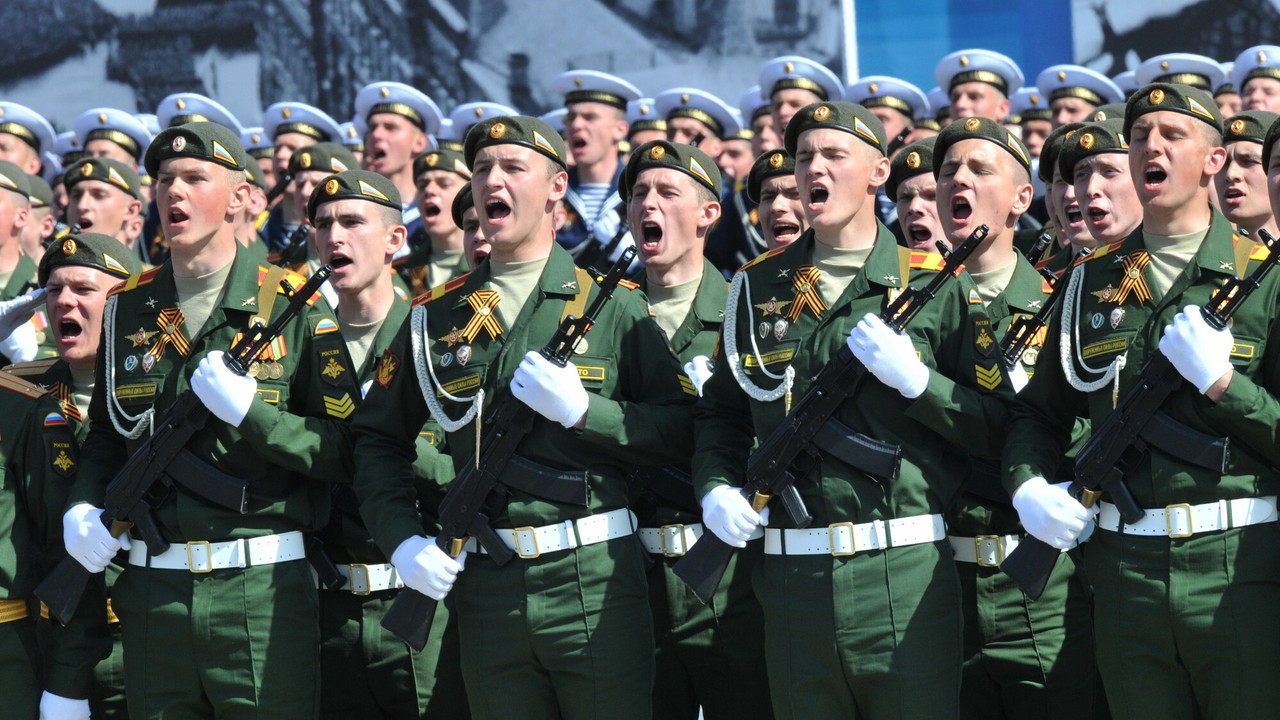
“Der Spiegel” goes back to 2008 and the war between Russia and Georgia, which, although won by the former, also revealed the “dire state” of the Russian armed forces. For this reason, on Vladimir Putin's orders after 2008, “extensive military modernization was to begin” and “the dream partner for this arms cooperation was to be Germany.”
The article continues below the video
The Russian military then showed particular interest in the solutions used at the training center in Altmark north of Magdeburg in Saxony-Anhalt, which the Bundeswehr calls “the most modern training center in Europe,” reports “Der Spiegel.”
According to the weekly's reports, the then government in Berlin reacted to Putin's ideas “with a more than positive attitude.” As proof of this, he quotes the words of retired general Josef Niebecker: “There was a political recommendation to accept Russian wishes for cooperation and to implement them whenever possible.”
One of the elements of this cooperation was to be a joint arms commission, which – as Niebecker estimates – should exist “only with allies and closely friendly countries.”
Russia wanted to follow German solutions as a model
The Russian army wanted to have eight training centers by 2020, modeled largely on the one in Altmark. The first one was to be built in Mulino in the Nizhny Novgorod region, and among others The German concern Rheinmetall was to be responsible for the simulators, writes the magazine.
“Der Spiegel” reveals that on June 17, 2011, Bundeswehr helicopters transported the Russian delegation to Unterluess near Celle. The then Russian Minister of Defense, Anatoly Serdyukov, was said to be on one of the decks. The parties in Unterluess signed a contract, the Germans were to help in the construction of Mulino, the value of the contract was approximately EUR 135 million.
“In the years after signing the contract, Bundeswehr soldiers and Rheinmetall technicians traveled to Mulino many times. Conversely, Russian experts and military officials were guests of the Bundeswehr and Rheinmetall. The Ministry of Defense in Berlin planned a permanent secondment of German soldiers. The first German soldiers came to Mulino to inspect the apartments,” we read in the German weekly.
Russia and Germany are planning joint maneuvers
At the turn of July and August 2013, joint German-Russian exercises were even planned at one of the training grounds north of St. Petersburg, “Der Spiegel” reveals. On the German side, 60 soldiers were to participate, along with six Boxer armored personnel carriers. Germany's allies from NATO's eastern flank expressed concern about these plans, and the exercises were postponed until 2014.
Ultimately, they did not happen, says “Der Spiegel”. Similarly, there was no sending of a German officer to the Russian general staff or cooperation in Mulino. Any closer military ties between Germany and Russia end when Putin military annexes Crimea in March 2014.
The weekly believes that the German military “is still tormented by the question of what a Russian attack on Ukraine in 2022 would look like if there was indeed broad German support for Russia in the field of technology and tactics.”
The text published in “Spiegel” is based on a chapter of a new book by journalists Katja Gloger and Georg Mascolo. Its title is “Das Versagen. Eine investigative Geschichte der deutschen Russlandpolitik” (Polish: “Failure. An investigative history of German policy towards Russia”).