“It's an extraordinary strategic mistake by Putin,” that's what John Lough, a fellow at the NEST Center, calls Russia's invasion of Ukraine. This had the opposite effect than expected. Miles Yu, a researcher and director of the China Center at the Hudson Institute, emphasizes that a new creation has appeared on the geopolitical map in the Far North – a “NATO fortress” – which the Russian leader did not take into account.
The war was to end immediately, and Putin in glory and glory was to show the democratic world his power and strength and arouse admiration in the Far East. The plan has fallen apart, and Moscow is constantly asking Beijing for help, becoming addicted to Xi Jinping's moods. The Chinese leader uses Moscow as his proxy to attack the US. This is what a “mafia gong” looks like. China's plan to lead the world.
There is no room for error here. Because every mistake will cost a lot not only to the USA, but also to the entire West.
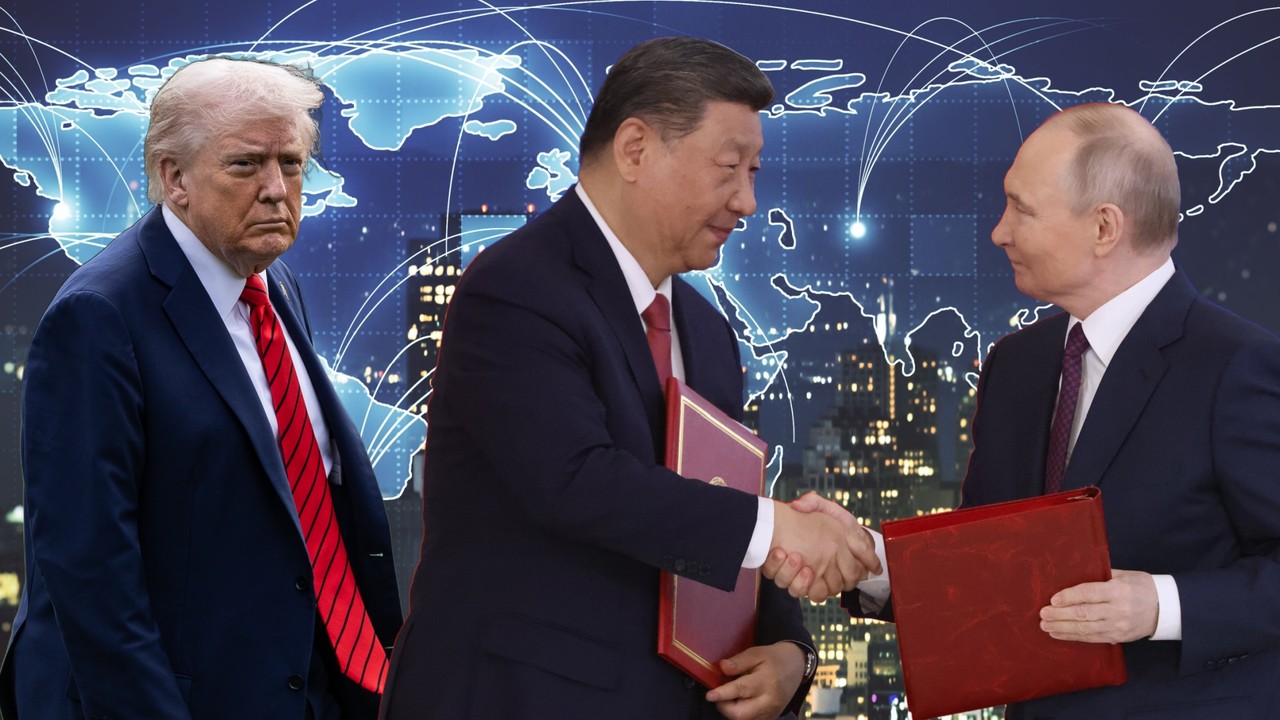
The Trump administration should stop trying to diplomatically separate Russia from China and instead focus on strengthening Western alliances and ensuring Ukraine's victory, policy experts warn during a panel at the Hudson Institute.
Analysts describe the deepening relationship between Moscow and Beijing not as an ideological alliance, but as a strategic partnership based on opportunism and a shared “anti-Western stance.”
Rebeccah Heinrichs, a research fellow at the Hudson Institute, warns that The United States faces an unprecedented security challenge.
“For the first time, the United States must stop two equal nuclear adversaries,” he emphasizes, noting that China and Russia “individually pose the greatest threat to the United States, but also pose an extremely difficult problem.”
The article continues below the video
The panelists unanimously reject the idea that Washington could convince Russian President Vladimir Putin to return to the West.
Heinrichs calls the idea that The United States could reset relations with the Russians to steer them away from the Chinese, a “foolish task.” He argues that “it makes much more sense to tighten solidarity with NATO.”
John Lough, a fellow at the NEST Center, called the idea “fantasy” and noted that Russia currently benefits “so much” from the relationship, adding that “distrust of the United States is much greater than of China.”
He calls on Trump to seize frozen Russian assets and target tankers, arguing that perceived U.S. weakness is what really “provokes” the Kremlin.
Heinrichs suggests that the right strategic approach is “an attempt to make China an unfavorable choice for Russians and Russia an unfavorable choice for China”.
China as a manipulator
Experts detail how the war in Ukraine strengthened the partnership and made China a key “power multiplier” for Moscow.
Miles Yu, a research fellow and director of the China Center at the Hudson Institute, describes China as a country of “opportunism” that “plays the role of mafia gong or puppeteer” using Moscow as its proxy.
In his opinion China is using the war as a “strategic distraction for the United States.”
Lough is firm on Beijing's influence. — I don't think Russia would be fighting like it is today if it weren't for China's support, he adds.
He points to the supply of “dual-use technologies”, saying that about “2,000 bulldozers” were delivered from China to Russia, which “then led to the construction of the so-called Surovikin line.”
Most importantly, “Beijing definitely doesn't want Russia to lose this war,” Lough notes, adding that “China certainly doesn't want to have a failing state” or “another North Korea” on its borders.
Putin's strategic mistake
However, the invasion was considered a serious strategic error by Putin, who Lough argues initially misled Beijing into expecting a quick victory.
He argues that China had to “get used to the fact that Putin's words in this case were not credible.” He calls the invasion an “extraordinary strategic mistake”.
This mistake had unintended consequences that benefited NATO. Yu noted that Putin's goal of “restricting NATO” by invading Ukraine backfired, causing Finland and Sweden to join the alliance.
Finland's membership is “one of the most significant consequences of the war in Ukraine, harmful to Russia”, making the country “a forward-forward NATO fortress”.
Mandate for the White House
The main message for the Trump administration was to secure a decisive outcome in Ukraine.
Heinrichs says the United States must “continue to support Ukraine and ensure its success as an independent, sovereign democracy, end Russia's war there” or enable it “to succeed on the battlefield” to “strengthen the eastern and central fronts of the NATO alliance.”
Lough argues that finally ending the conflict will be a powerful step in itself.
If we can end the war in Ukraine… I think it will reduce some of the short-term momentum in this relationship
– assesses.
Yu also suggests using economic leverage, calling on the United States to focus sanctions on “Western banks that are secretly doing really bad business with Russia,” naming British bank HSBC as “the world's leading rogue bank.”
I’m Ashley Davis as an editor, I’m committed to upholding the highest standards of integrity and accuracy in every piece we publish. My work is driven by curiosity, a passion for truth, and a belief that journalism plays a crucial role in shaping public discourse. I strive to tell stories that not only inform but also inspire action and conversation.