The testimony of a Tadjik war prisoner about the tactics used by the Russian army. The request addressed to the Ukrainian army


The Ukrainian army offered the television station of Jazeera rare access to Mohammed, one of the dozens of prisoners of Central Asia captured while fighting on Russia. Jazeera's journalists did not see indications that Mohammed would speak under coercion, but an observed that an officer was present at the interview, which took place in a prison, in a city close to the front line.
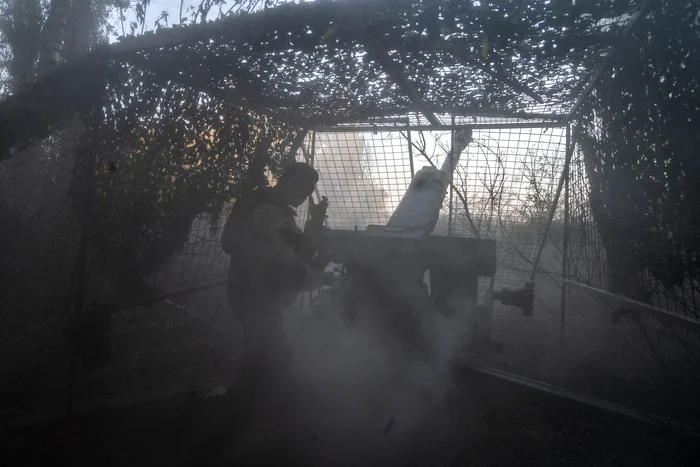
The Ukrainian army offered the television station of Jazeera rare access to Mohammed, one of the tens
Mohammed reported signed a one -year military contract, with a bonus of 1.6 million rubles ($ 19,644) and a monthly salary of 210,000 rubles ($ 2,580), but claims he was forced to enlist.
He was promised to be a guard and serve away from the front line, and instead he will receive a Russian passport in six months.
“They fooled me,” he said.
A few weeks trained in western Russia, but training was superficial, he said. His AK-47 assault rifle was old and was frequently blocked.
“My weapon was not worked, I swear, seriously,” he said.
Migrants recruited by force
“Behind all these things is the Kremlin policy of recruiting the labor force by any necessary means and avoiding the forced mobilization of the Russians,” said Alisher Ilkhamov, central head of Diligence, a Think Tank based in London.
In the training centers, where dozens of recruits slept in unheated barracks, there were other Muslims outside Russia – including citizens of Tadjikistan, Uzbekistan, Kyrgyzstan and Azerbaijan.
Some have been offered volunteers, but most were forced to enlist, Mohammed said.
He claimed that the Muslims were not allowed to pray and were subjected daily to a wave of racial and religious insults from the training officers, who would have forced them to laugh and clean the barracks in the barracks.
The number of Russians was small and limited to the convicts who were offered volunteers to serve in the army in exchange for presidential pardons, he said.
Moscow denies that it would create racial or religious profiles for potential recruits, but still spoke of the “duty” of economic migrants who have received or wish Russian citizenship to serve their new country.
In May 2023, Russia's chief prosecutor, Aleksander Bastrykin, said that “while the Russians are in the front line, the migrants attack their backs … If they are Russian citizens, they have citizenship, you go to the front line. If you do not meet your debt, return to your homeland.”
A year later, he said that forced recruitment is “a good feature that led to the situation in which the migrants began to gradually leave Russia.”
After training, Mohammed was taken to an eastern Ukraine region, an area with heavy fighting. An assault rifle, loaders and hand grenades were handed to him.
He was put in a team with another foreign fighter, who told him that he volunteered in exchange for a Russian passport.
Tactics of assault groups
The two have taken part in what analysts say it is Moscow's new strategy to send a handful of military to infiltrate Ukrainian positions, in order to gradually gather larger effectives and ammunition before clasping with Ukrainian forces.
“This is a tactic of extremely small attack groups; it has been used since spring, in certain locations, from the end of last year,” said Jazeera Nikolay Mitrokhin of the Bremen University of Germany, the author of numerous analytical reports on the Russian-Ukrainian war.
“It reduces losses, especially if there is vegetation” that hides the troops “and suddenly increases their means of destruction, about ten times,” he said.
On the front
The officers confiscated their phones, documents and debit cards, says Mohamed.
They received cheap smartphones that had a single application-Alpine Quest, a program that allows users to move using coded coordinates, without access to web and GPS.
They did not know the names of the villages and farms in which they had been pregnant to position themselves by their commander, who contacted him by radio and whose name or location they never learned.
Every day, they went for hours in small groups. One of the military wore a backpack with a portable jamming system that immobilizes Ukrainian drones.
He said he saw more Russian soldiers killed: “Some had no head, others had no arms.”
They went with great difficulty despite the hunger and thirst-the rations delivered with the drones consist of a small glass of water and two or three chocolate bars per day.
When Mohammed came across a seriously injured and bleeding soldier, his commander warned by radio not to help him.
For Mohammed, that was the time of revelation: his life did not mean anything and, in addition, it is very possible to be allowed to die.
In the midst of intense struggles, Mohammed and his partner were ordered to hide in an abandoned Ukrainian village, burned by fires.
Having no food delivered with the drone for days, they scoured through the kitchens and basements, where they found nothing but pasta, which they chewed raw.
Eventually they were discovered by Ukrainian drones.
“Mohammed expressed his desire to serve for Ukraine.”
Mohammed argued that during the time in the Russian army, he did not shoot and did not throw any grenade. Ukrainians look at such statements with much skepticism.
“In my years of service in the widespread invasion of Ukraine by Russia, no Russian prisoner has ever recognized that he had killed Ukrainian, civilian military,” none, “the Ukrainian officer who supervised Mohammed told Jazeera.
Mohammed “was an assault soldier. He was captured while attacking the Ukrainian positions in Donetk,” the officer said.
Mohammed said he was afraid of Ukrainian detention, after hearing rumors that Russian prisoners were tortured and mutilated.
He was treated better than expected, he said.
“I swear, I give everything I want-cigarettes, food, drink. I say,” Take them, brother, “he said.
He also called for the first time his father: “Dad cried a little and said,” It is only that you are alive. “
He is afraid of being inserted into an exchange group and thrown on the front again.
“They will bring me back to the war, 100%, until I die or lose a hand or a leg,” he said.
He cannot return to Tadjikistan, where he risks 12 years in prison because he enrolled in the army of another nation.
Hochu Jit (I want to live), a Ukrainian government group that monitors and helps the prisoners of war, said in April that it has checked the name of 931 citizens of Tadjici between the ages of 18 and 70 fighting for Russia. 196 of them died, and their life expectancy on the front line was 140 days.
Mohammed thinks that the only way to survive is to enlist in the Ukrainian army, in order to obtain Ukrainian citizenship and to bring their family from Tadjikistan here.
“When the war is over – if it ends – I will tell my father: come on, sell the house, come to Ukraine, buy a house here,” he said.
The officer who was watching Mohammed said his enrollment request is considered.
Dozens of Russian war prisoners were offered volunteers to fight for Ukraine in 2022, and many joined the two military units made up of Russian citizens.
“Seeing the attitude of the Ukrainian military towards him and comparing it to that of the Russians, Mohammed expressed his desire to serve in the Ukrainian forces, to avoid returning to Russia and to face racial and ethnic discrimination,” said the officer.