The trend of the images generated by AI with deceased people: relief or emotional trap? ANALYSIS

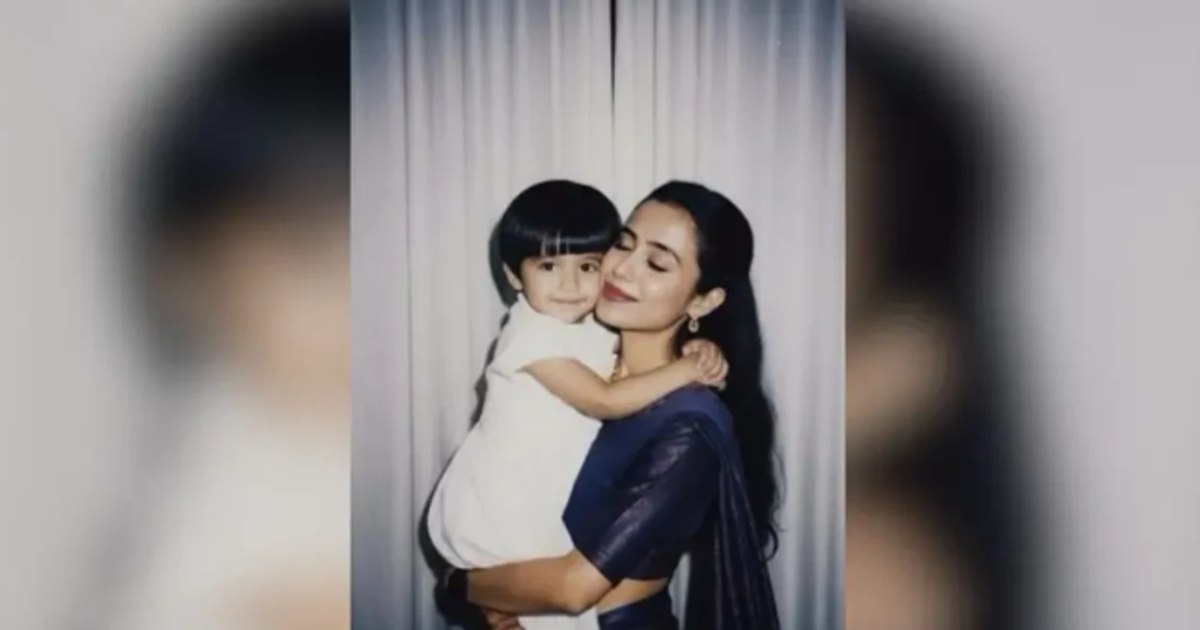
A picture in which the adult now embraces the child since then. Or an image in which a dear man who died is added next to us. Such things are now possible through artificial intelligence. The images can bring relief at the moment, but in the long term they can be dangerous, say psychologists, because the limits between fantasy and reality are no longer clear. The phenomenon raises question marks and about the ethics of you, especially when the virtually restored to life are people I admired, but I didn't know them.
Trend “Hug Your Younger Self” (hug your childhood version) Image generated by Gemini
What is the trend, “Hug Your Younger Self”
Through the artificial intelligence of Gemini, hundreds of thousands of people from all over the world have created in recent months unique images, which transpose into virtual reality a desire of many: to be able to embrace the child who were once. Everything in the form of a Polaroid photograph, minimalist, but full of emotional load.
Psychologist: Such images can maintain wounds
Also with the help of artificial intelligence, other users take pictures or video clips where they stand with loved ones who are no longer among us. An even more sensitive topic, with numerous emotional implications.
“For some people, to see an image in which they embrace themselves from childhood or a lost loved one can bring relief, a symbolic form of emotional conclusion. But at the same time, there is a real risk that these images will reactivate pain, create confusion and the fact that the limits between reality and fantasy are no longer clear to prolong the mourning process. ” explains the psychotherapist Dorina Stamate.
Possible effects go further: “Intense sadness, longing or even anxiety and insomnia may occur. When the image generated by AI becomes more “alive” or more idealized than the real memory, it may be lost with the true affective memory – with the real way that person or childhood was. There must be a clear limit. And that limit is not just about technology, but especially the emotional health of the users. If the image becomes a substitute for the lost relationship, a form of “keeping” someone who no longer exists or a way to avoid pain, then it is no longer healing – but maintains the wound. “

Dorina Stamate, psychotherapist
The good part of the images generated by AI
There are also situations in which the benefits of images generated by AI are greater than any risk. Through the tools offered by new technologies, photos can now add to wedding photos, for example, extremely important people who can no longer be physically present at the event: parents or grandparents who died.
“Obviously there is a good part. To add in a wedding photo to someone dear who is no longer among us is no attempt to “deceive reality”, but rather a form of commemoration, a way of saying:> it is a gesture of love and gratitude “, says the psychotherapist.
The Internet, full of clips you have with well -known people who died
On the social networks, especially on Tik Tok, another trend has spread: assemblies in which known and loved people appear who are no longer among us, in order to generate emotion.
At the death of Pope Francis, for example, clips were created in which a fictional meeting of the Pontiff with celebrities were presented that are no longer among us.
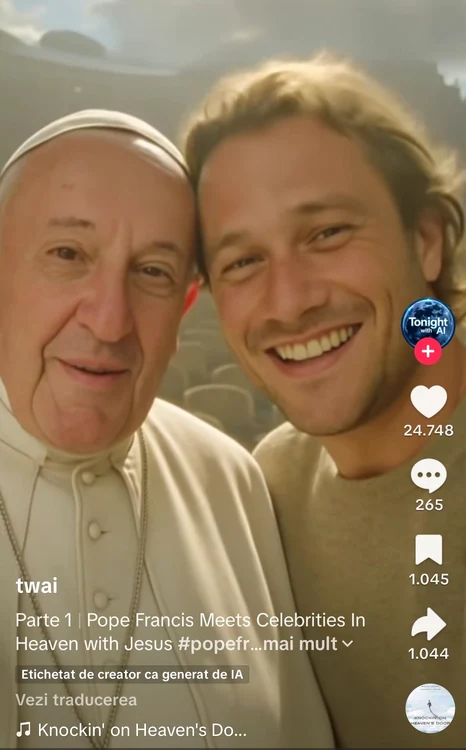
Capture from a clip generated by artificial intelligence, in which Pope Francis and Heath Ledger appear
And with the image of actor Robin Williams, deceased in 2014, numerous clips were generated. His daughter took an attitude.
“Please, don't send me to my father's clips anymore! (…) If you have a bit of decency, stop doing this to me. Or anyone. It is stupid, it is a waste of time and energy and, believe me, it is not what they would like “Zelda Williams wrote in an Instagram Story, according to BBC News.
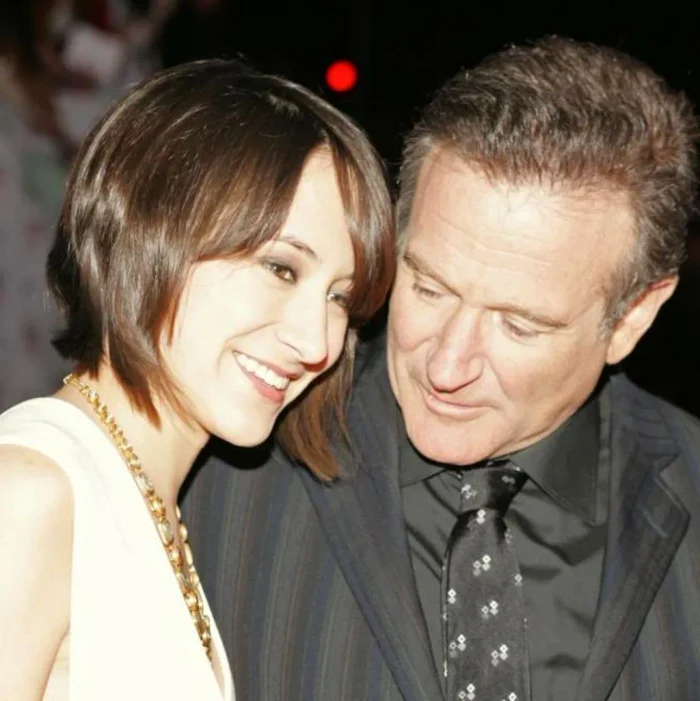
Zelda and her father, actor Robin Williams Photo Getty Images
The clips may seem like a tribute, but the main purpose is many or another.
“Somehow the trend comes due to the fact that the social networks work with emotions in particular. There are many mathematical signals that are based on emotion as a common element. That is, algorithms measure what the number of emotions and typology of emotion are for each individual in the reaction of a post. In fact, from here and these tactics to create these posts that go into a component of emotion, because they become viral. ” says digital content expert Cristian Bolocan.

Cristian Bolocan, digital communication expert
“Although the intention may seem artistic or nostalgic, in fact, these representations can deeply affect the families of the missing and can distort the public image of the respective person. If it is made for views, sensational or profit, without, then not only it becomes non -ethic, but also devoid of empathy. “ emphasizes the psychotherapist Dorina Stamate.
500% growth of the images generated by AI; What happens when we interact with artificial intelligence
The discussions also come in the context in which the images and videos generated by you know an amazing growth.
“In comparison of the last three months with 2024, there is a percentage increase of 500%, practically five times we have an increase in these visual elements, both in terms of images and videos. Which shows us that we are talking about an alarming element. Because it is very high growth and of course creates damage ”warns Cristian Bolocan.
And if most risks are related to the ease with which false information can be spread, there is another side that is worth considering.
“Artificial intelligence is individually trained, every conversation we have with artificial intelligence is a training element, learning to relationship with us as individuals. Of course there are some risks. There are some well -defined terms and conditions when we willingly choose to use artificial intelligence for various operations, we take these risks “emphasizes the digital content expert.
Ethics ai, a large topic
A regulation on artificial intelligence is essential. But this is not simple at all. Artificial intelligence evolves faster than we can keep up.
“The industry is waiting for regulation from governments, because there are different stages of regulating ethics in the use of artificial intelligence. I could mention that in the European Union, in particular, there is a much more advanced regulation than in the United States, for example. What gives us better protection on the misinformation elements, but we are at the beginning, there is no well -defined regulation, because artificial intelligence develops and this discussion is also on the table, that the level with which the regulation is not step on the level of artificial intelligence “says Cristian Bolocan.
And the psychologist identifies another type of risk: that of losing the human connection.
“As a psychologist, I see the acceleration of technology as a two -edged sword. On the one hand, it opens huge possibilities: access to education, tools that can help vulnerable people communicate or develop. On the other hand, the pace at which these technologies evolve often exceeds our emotional and ethical ability to manage them. I think our role is to help people remain anchored in reality, to use technology as a tool, not as a refuge and not to lose our human connections. ” warns Dorina Stamate.