The temperature at which the thermostat must be set to prevent moisture, mold and large invoices. Expert recommendations


Maintaining the thermostat at a constant temperature in winter, ideal between 20 and 22 ° C, is an effective way to combat the classic problems of the cold season, such as moisture, mold and condensation, without causing major invoices, say experts.
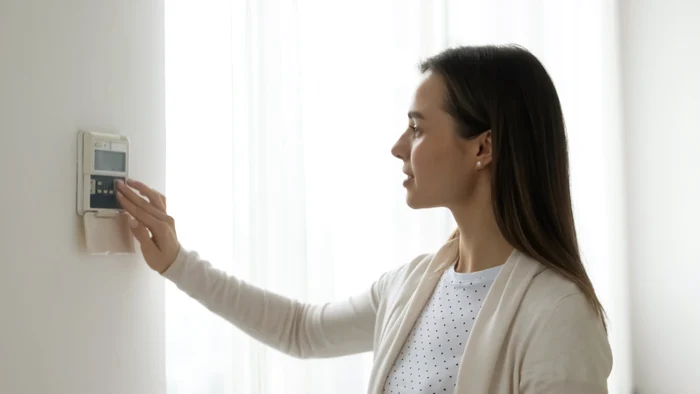
Ideal is to maintain the thermostat between 20 and 22 ° C, say photo shutterstock
Meteorologists estimate that we will have a cold winter in Romania, with a lot of snow. After, in recent years, winters have come with too high temperatures, and snow has been missing from most cities, this season could be one of the coldest in most Europe. Changes would be related to Nina, the climatic phenomenon that influences the circulation of air globally and can bring cold air masses from the north.
With the approach of the cold and possibly stormy weather, housing owners must be proactive in terms of the interior environment. A simple and efficient solution for one of the most common winter problems – mold – is to maintain the thermostat at a constant temperature.
“For most homes, setting the thermostat between 20 and 22 ° C is optimal to balance comfort, energy efficiency and to prevent moisture and mold,” Recommends Elizabeth Reilly, from Greensvers, a company awarded eight times with the title Energy Star Contractor of the Year, for Homes and Gardens magazine.
Josh Mitchell, the owner of Aironditionerlab, explains why maintaining the correct temperature inside is essential in the fight against moisture and mold, which develops in humidity areas. This humidity often occurs when the temperature fluctuates, generating condensation.
“The moisture and mold develops where there is water on surfaces such as windows or walls – and this usually happens when the temperature changes and causes condensation to form.”says Josh.
How we protect ourselves from mold
Untreated condensation leads to the appearance of mold and deterioration of windows. To prevent this, Josh emphasizes the importance of a stable interior environment: “Maintaining a constant temperature reduces the chances of condensation formation, helping to control humidity”he adds – an excellent method to prevent windows from steaming in winter.
However, if the home is poorly isolated or has an old heating system, its constant operation may not be the ideal solution, as the system can be overloaded. It is also important for the thermostat to be placed correctly, for precise readings.
If it is mounted too close to the entrance door or windows, it can record a lower temperature than in the rest of the house, making the system unnecessarily start – a heating mistake that increases the invoice and unevenly distributes the heat.
An exception from the ideal interval is when you go on vacation in winter. In this case, the temperature should be slightly low, at about 15-16 ° C. Thus, the house will keep part of its heat, and on the return it will be easier and faster to return to normal temperature.
Why a constant temperature helps save energy
In a period when each degree matters, for both budget and environment, we all look for effective ways to maintain healthy and comfortable homes.
Maintaining a constant temperature is a surprisingly effective way to save energy and reduce the risk of mold and condensation.
Josh Mitchell emphasizes that leaving the house to cool too much forces the heating system to work additionally to restore the temperature, “Especially in well isolated homes.”
Five signs it's time to start the heat
Bert Miskell, owner of BPM Heating, Cooling & Plumbing, says: “As a general rule, if you wake up with steamed windows or notice cold areas in the house, it's time to start heating.”
He mentions that in Frederick, Maryland, “I had a slightly milder transition from summer to autumn. The overnight temperatures did not reach the range of 4–10 ° C, but this seems to change the next week.“
Here are five clear signs that the heat should be started:
The temperature in the house decreases constantly below 18 ° C.
It is uncomfortable for cold and the blanket or thick clothes does not help – for example, you have joint pain because of the cold or you cannot sleep well.
Condens are formed daily on windows, walls or other surfaces.
You have noticed the appearance of mold in windows or in wet rooms (bathroom, kitchen).
A person in the household is vulnerable in the cold – either because of a disease, or because of the age (young child, baby or elderly).