
The Merz Chancellor promises that he will do “everything he can” so that the prohibition that gives the car manufacturers not to enter into force


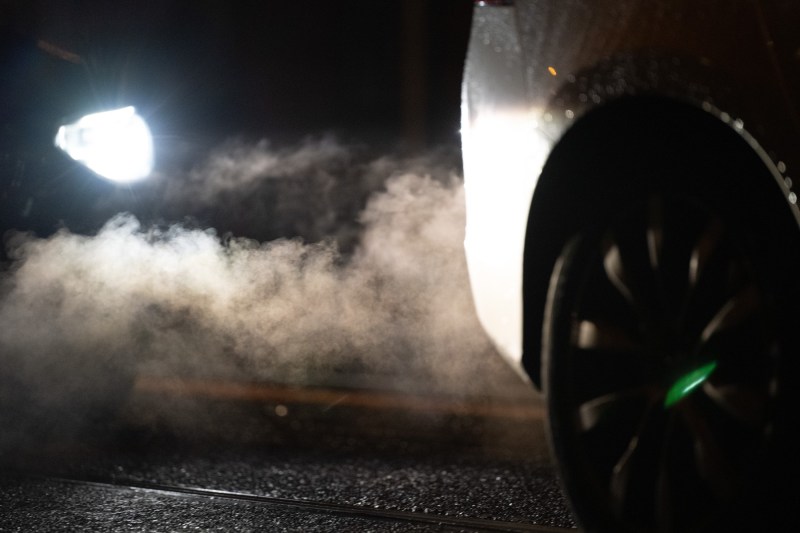
Smoke issued on the exhaust pipe of a car, Saxonia, Dresden, October 9, 2025. Photo: Sebastian Kahnert / DPA / Profimedia
Federal Chancellor Friedrich Merz has promised that he will do his best to ensure that he will not exist in the European Union starting in 2035 a total prohibition of cars that emit carbon dioxide, after meeting on Thursday with the executive directors of the largest German car producers, reports Reuters.
“If it is after me, and I will do everything I can to do, there will be no such strict prohibition in 2035,” Merz said in a press conference after the meeting.
The path to electrical mobility will continue and will probably be the central technology of the next few years, Merz said, but stressed that the industry needs time to discover paths to be followed in terms of alternative energy sources.
Hildegard Mueller, the head of the VDA car association in Germany, has supported the government's efforts to incorporate the sector's suggestions on how to reduce emissions and to maintain competitiveness.
“The technical options are useful now, contributing to providing jobs at present,” Mueller said.
Merz also announced on Thursday, additional subsidies worth 3 billion euros ($ 3.5 billion) to support the purchase of electric vehicles by medium and low incomes.
What does the auto industry want
The EU has set its goal to reduce the CO2 emissions of new cars and vehicles by 10035 by 2035, with intermediate objectives for 2030, which was interpreted as the end of the internal combustion engine for new vehicles.
But the European car producers, who face a fierce competition from China and the customs tariffs imposed by the US, claim that this calendar is unrealistic.
They ask Brussels to extend the deadlines and to extend the definition of acceptable technologies.
The German Minister of Finance, Lars Klingbeil, whose social-democratic party is divided on this topic, said that the formation could support the industry's efforts to expand the autonomy of vehicles, the production of plug-in hybrid cars and the mix of new fuels after 2035.
“For us, this is also a way we consider absolutely feasible,” he said at the press conference.
The head of Volkswagen (VW), Oliver Blume, told the German news agency DPA that it agrees that electric mobility represents the technology of the future, but that, from the current perspective, the deadline for 2035 for combustion engines is unrealistic.
The Mercedes-Benz CEO, Ola Kaellenius, also said that a certain proportion of high-efficiency electrified combustion engines should be allowed after 2035.
“We still need a few secondary paths,” he told the business publication Magazin, in an interview published on Thursday before the meeting.


