The head of the ECB transmits the EU a warning about Russia's frozen assets, “Given the power of the euro”


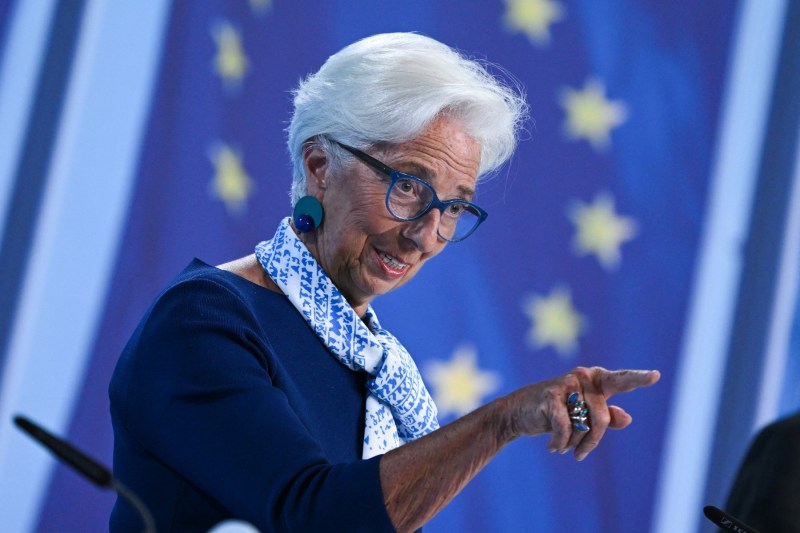
Christine Lagarde, the president of the European Central Bank, at a press conference, at Hesse, Frankfurt / Main, on July 24, 2025. Photo: ARNE DEDER / AFP / Profimedia
Any kind of decision of the European Union on the use of frozen assets of the Russian state, for the purpose of helping Ukraine, must respect international law, and the European Central Bank is “very careful” in this process, Christine Lagade said Monday, according to Reuters.
The EU has been seeking a way to finance the defense and reconstruction of Ukraine for a long time with some of the Russian sovereign assets worth 210 billion euros, immobilized in the West after the invasion of Moscow in Ukraine, which began in 2022.
Because the direct confiscation of the frozen amounts is illegal, the political leadership of the Community block works on an investment plan of Russian funds in zero coupon bonds issued by the European Commission, with guarantees from the Governments of the EU Member States.
And the EU could then use the money to grant Ukraine a “repair loan”.
“We expect any scheme that will be discussed and possibly introduced at one point to be made in accordance with international norms, with international law,” Lagarde told European legislators in Strasbourg.
Lagarde is worried that a legal controversial measure risks affecting the credibility of the euro and would discourage investors from having assets in euros, which could affect financial stability.
“From my point of view, given the financial stability and power of the euro, we will analyze very carefully to ensure that what is proposed is in accordance with international law and takes into account the financial stability,” Lagarde said in the parliamentary hearing.
When the Russian assets were frozen, at the beginning of the war, the money was invested in bonds. These bonds have now matured, and the money is blocked at the largest securities deposit in Europe – Euroclear in Belgium.
Lagarde also stressed that any decision must be agreed by all parties that have Russian assets.
Moscow has repeatedly accused that any kind of confiscation of its frozen assets in Europe is “a theft simply.”
Recently, Germany has changed its position and now supports the use of frozen Russian sovereign assets to finance the needs of Ukraine, Bloomberg wrote, citing sources familiar with this subject, whose identity has not revealed it.
According to the American publication, in Europe a tendency to expand the use of frozen Russian assets for financing Ukraine is outlined, following the new pressures exerted by US President Donald Trump and changing Germany's position.
The President of the European Commission, Ursula von der Leyen, said in a speech in early September that the EU has to find new ways to make Russia pay for its war.
“We must work urgently on a new solution to finance Ukraine's war effort based on immobilized Russian assets,” she said during her speech on EU. “With the cash balances associated with these Russian assets, we can offer Ukraine a repair loan,” added the head of the European Commission.
The change of position of Berlin has arisen against the background of concern that if the support of the US under the Trump administration will diminish, the burden of supporting Ukraine will largely fall to the greatest economy of Europe, which could further feed the extreme-right in Germany.