The Swedes make food supplies in case of war, as conflicts in Europe no longer seem to be a distant possibility, and authorities encourage measures to increase the degree of training.
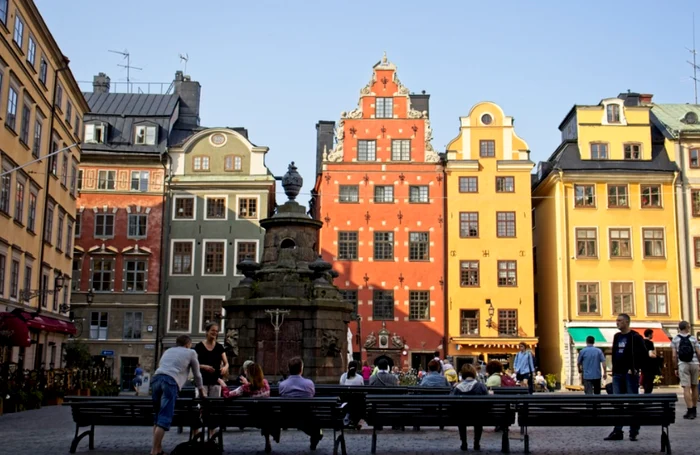
Sweden has not participated in a 210 -year war/photo: Archive
Although Sweden has not been involved in a war for over 200 years, the last military conflict attended was the one with Norway in 1814, when the Swedish army invaded the neighboring country to force a union between the two states, the perspective of an armed conflict no longer seems a distant possibility for many of its inhabitants. In the context of increasing tensions in Europe, the Swedish authorities urge the citizens to increase their degree of training, and many take this warning very seriously.
At a fair dedicated to civil training in Stockholm, Mrs. Sirkka Petrykowska, 71, told AFP that she had intensified her training efforts.
“I bought a campaign stove. I attended a traditional course, where you can preserve vegetables, meat and fruits that are 30 years without a fridge,” said Petrykowska. “I set aside blankets for heat, I bought a gas heater. I also made supplies at my country house.”
Sweden reactivated the country's “total defense” strategy
This proactive approach is in line with the governmental directive. At the end of September, Sweden organized the Annual Preparation Week, part of the country's “total defense” strategy. This strategy was reactivated in 2015, after the annexation of Crimea by Russia, and was reinforced after the full invasion of Ukraine of 2022, including by appointing a minister for civil defense.
The purpose is to mobilize the entire society – from authorities to citizens and companies – to collectively withstand armed aggression and to maintain the essential functions. The emphasis is placed, as is the custom in Sweden, on individual responsibility. Each citizen is encouraged to store enough supplies in order to live independently, without external help for at least seven days.
This means that “resources can be originally directed, for example, to the elderly and the sick,” writes the Swedish authority for food on its website. “Meanwhile, the society has time to rejust so that everyone can receive help.”
The Swedish authority for emergency situations (MSB) has published a list of recommended foods, which are high in fat and protein and easy to store. This includes pesto, meat or dry fish, sweetness, chocolate, powdered potato puree, powdered milk and biscuits.
“In a war scenario, people will be more physically active than in normal circumstances.” explained Oskar Qvarfort, emergency planning officer at the Swedish food authority, adding that, on average, the calorie requirement will increase by about 100 calories.
Martin Svennberg, a Stockholm entrepreneur, took these tips very seriously and accumulated extensive food reserves in his cellar for the whole family. Stacked in the boxes are 100 kilograms of flour, dozens of cans and a variety of lyophilized dishes, sufficient for three months.
For him, this food is not only a source of food, but also a moral support, essential in such situations.
“Have the food you like in the house that you like and eat in normal life. I think it is very important,” Svennberg said. “When you go to your parents and eat the food they made when you were a child, you feel a feeling of peace and nostalgia. The same is true for nitre crisis.”
Food transport would therefore be “a real challenge” in the event of an armed conflict
According to an MSB survey conducted on 2,000 people, 86% of the suede think that the country is worth defending in the case of a military attack, and 76% would be willing to defend it as part of the Swedish civil defense. The agency sent a brochure twice to all the households in Sweden, informing them how to proceed in a crisis: once in 2018 and then in 2024.
The survey, published in March, showed that 39% of people felt “worried” when they received the 2024 edition, compared to 24% in 2018.
Sweden also faces logistical challenges due to its large stretch and numerous poorly populated areas.
“Much of food production is concentrated in the south … and most imports also reach first in these regions,” said Qvarfort.
Food transport would therefore be “a real challenge” in the case of an armed conflict, he added, mentioning that Ukraine is currently facing the same problem.