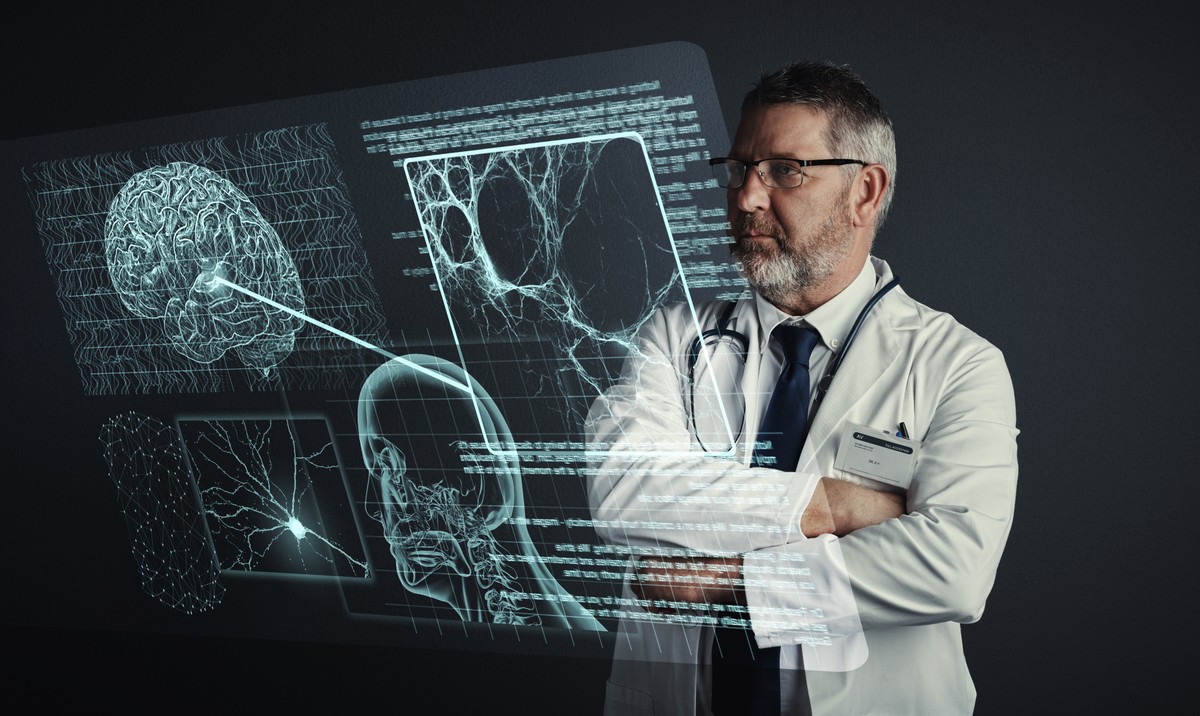
Previous experience with artificial intelligence indicate that it may reduce costs and improve the performance of administrative tasks. It is great at arranging patients, accounting and electronic management of medical documentation. It is helpful in automating and optimizing surgery. Thanks to this, healthcare employees can focus more on patient care.
Examples of the use of artificial intelligence in diagnostics or monitoring therapy are already common until they become common sometimes – By 2035, the artificial intelligence market in healthcare is to increase by 18.2 percent. annually. No wonder, since 93 percent Every year, companies from the healthcare and natural science sector are planning to significantly increase expenses for artificial intelligence.
What tasks are algorithms of artificial intelligence entrusted in medicine? Even if analysis of patients' symptoms and medical historyto help in selection and diagnostics. And can carry out Initial medical interview before visiting a doctorand systems based on artificial intelligence will help doctors detect Anomalies in paintings such as X -rays and magnetic resonance imaging.
For example, Massachusetts General Hospital in the United States, next to 47 other hospitals around the world, uses the AI algorithm called Mirai, developed by MIT, for predicting the risk of breast cancer based on mammography. Interestingly, The use of this system allowed to reduce the number of false positive results by 30 percent. and simultaneous maintenance of high sensitivity in detecting breast cancer.
In another part of the world – Australia – a network of public hospitals implemented Annaise technology. AI for analysis of chest x -rays. In turn, a retrospective examination conducted at the Washington University showed that AIDOC software used to identify intracranial hemorrhage based on computed tomography scans is characterized by high sensitivity (92.3 percent) and specificity (97.7 percent).
24 -hour monitoring and rapid reaction
In addition, applications based on artificial intelligence are able to Constantly monitor patients' life parameters and send real -time data to doctors or nurses. AI integration with portable medical devices, such as heart rate monitoring bands, blood pressure monitors or glucose meters, allows you to track the patient's health parameters ongoing and quick response to potential irregularities.
In Italy, at the University of Salerno, a group of researchers implements a Predhealth system, which is intended for patients with heart failure. The algorithm uses the risk assessment of the disease decompensation, analyzing data, among others with pulse oximeters and blood pressure monitors. In turn, in the United States, Alivecor has developed a cardiamobile device that uses artificial intelligence to analyze ECG data in real time. This system enables patients to monitor the heart rhythm at home, and the AI algorithm helps to detect arrhythmias. AI can help personalize treatment plans, calculate the doses of medicines and compare their interactions, helping doctors determine the best care options.
And will reduce mortality?
Experts innowise, an international company creating software, explain that machine learning models are able to analyze huge data sets, such as patient records and laboratory test results to identify patterns or predict results. The algorithm can assess the patient's health and predict the risk of reading, helping care teams to better manage the care and allocation of resources. Some predictive models can even help reduce mortality.
Medical imaging tools based on artificial intelligence interpret x -rays, magnetic resonance imaging or computed tomography by detecting anomalies that can be overlooked by human eyes
– explain Innowise experts.
– These systems use deep learning to identify tumors or fracturesaccelerating the diagnostic process and supporting the decision by radiologists. More and more companies are noticing the value of artificial intelligence in medical imaging, and the computer vision market reflects this enthusiasm – they add.
In short Artificial intelligence enables healthcare providers to switch from reactive to proactive care, which leads to better patients' results and reduce long -term health care costs. AI can also reduce medical errors indicators, and according to the study of the Johns Hopkins University, errors contribute to over 250,000. deaths in the USA per year.
Improving the quality of care, Artificial intelligence also reduces the expenses of healthcare providers. According to Harvard School of Public Health, it is expected that artificial intelligence regularly used in the diagnosis of patients will help reduce treatment costs by 50 percent.
According to McKinsey, over 70 percent He implements health care organization, plans to implement or has already implemented Genai, so this technology will develop. Artificial intelligence will facilitate research projects and personalize communication with patients and care plansleading to better patients' results and operational performance.
Artificial intelligence in medicine. The advantages are numerous, but the fears also
– The most important advantages of AI's presence in medicine include: early diagnostics and forecasting of diseases – AI helps to identify people at risk of various diseases, often before the first clinical symptoms, personalized treatment – algorithms allow the selection of therapy tailored to specific patients, relieving medical staff – Artificial intelligence can take over some of the administrative and analytical duties, saving the time of doctors and nursesfinally it will allow better self -control of patients, even thanks to applications and devices analyzing data, e.g. from smartwatches, glycemic measuring sensors or Holter apparatus, which support people with chronic diseases in everyday health management – says Margaret Mustecki from the University of Yale in his publications.
It is obvious that thanks to this the costs of treatment will decrease – early diagnostics and better selection of therapy will reduce the number of complications and costs of treatment of late disease
– he adds.
However, threats cannot be ruled out, among the most frequently raised fears are:
- risk of diagnostic errors – they may result from incorrectly selected data or algorithm errors,
- Problems with patient data protection – there is a risk of unauthorized access, leakage of sensitive medical information or their improper use,
- Lack of patients' trust – some people may be resisted before entrusting their health intelligence,
- Inequality in access to medical care – modern technologies are often implemented in large provincial centers, which can deepen the differences in the level of care between different regions of the country.
However, you can and should be counted on all these fears.