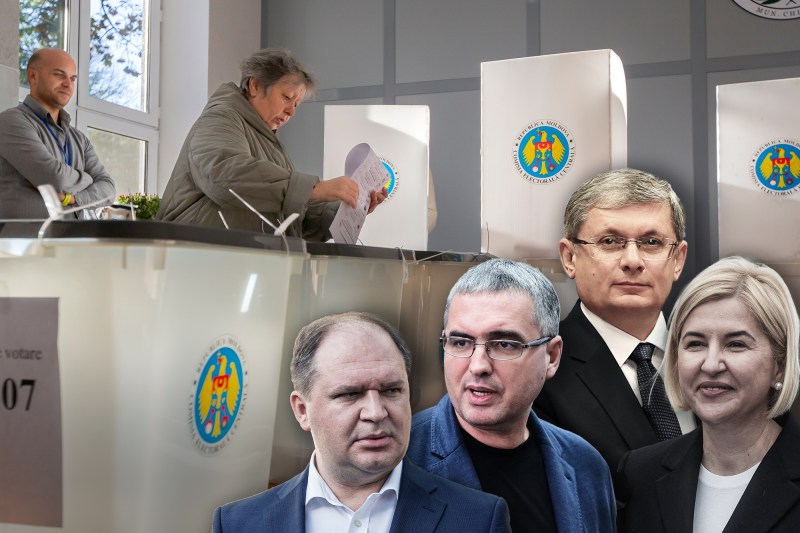
Left: Ion Ceban (National Alternative), Renato Usatîi (our party), Igor Grosu (PAS) and Irina Vlah (the Party of the Heart of Moldova). Collage: Ion Mateș / Hotnews. Photo: Profimedia
The elections in the Republic of Moldova have attracted the attention of several publications and international press agencies that relate to the election campaign and about the stakes of the election, seen as a decisive choice between the West and the re -entry into the Russian influence.
The pro-European PAS Party runs detached in the crucial elections of Moldova, which will determine if the country stays on the path of accession to the European Union or is again drawn to Moscow's orbit, writes politico.eu. The publication notes that PAS is driving with over 44% of the votes compared to the only 30% of the pro-Russian patriotic block.
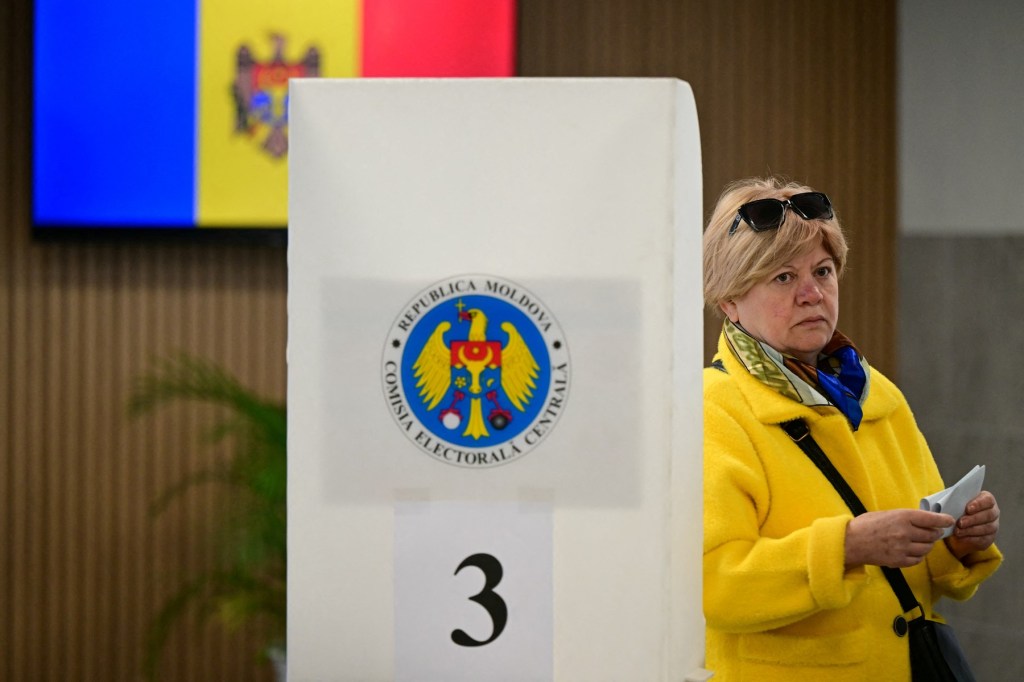 Live results parliamentary elections Republic of Moldova 2025. PAS, President Maia Sandu Party, leads detached in the partial count / Opposition announces protests in Chisinau
Elections in a difficult economic context
PAS hopes to get a new majority in Parliament, with the promise that Modova will take to the EU in the next five years, but this will only be certain during the day when the official count of votes will be completed.
It is also mentioned involvement in Russia in the electoral process and support for the block led by former President Igor Dodon. “Russia is pressing all over the levers to influence the elections. We see unprecedented efforts: more money for buying votes, more misinformation with means you have amplified by the networks and more resources for the preparation of street violence,” said Stanislav SECRIERU, counselor for national security.
The Reuters agency observes the advantage that PAS has in the partial results and emphasizes that the diaspora could have the decisive word again, given that the Moldovans abroad tend to support the pro-European parties. “If PAS fails to achieve the majority, he will have to try to form a coalition with smaller parties,” notes Reuters.
It is mentioned that, in the election campaign, the opposition marched on the economic problems of the country and on the slow pace of the reforms, amplified dissatisfaction, according to the authorities, by the large -scale misinformation, supported by Russia.
The level of inflation remains high, around 7%, and Moldovans must bear higher costs for imported energy.
Viorica Burlacu, fruit salesman in Chisinau, believes that the war in Ukraine has shown that Moldova needs the protection of Europe. “We are afraid of war, no one wants it, so we approach Europe for a little protection,” says the 46-year-old woman.
There is other perspective, notes the agency. In Balti, Maria Scotari (82 years old) remembers the happy days when she was a student in the Sovitic Union. “What was so bad? That was life. I was a student, everything was fine, everything was wonderful,” says the old woman.
Step, advantageous by the great presence
The BBC website observes the tensions that preceded the poll and the fears related to the day of voting. The statement made from the ballot box is evoked by President Maia Sandu who said that the future of the country is in danger, as well as the statement of President Pas Igor Grosu, who mentioned, in the intervention after the closing of the ballot boxes, the interference of the “criminal groups” supported by Russia.
The BBC also mentions the large number of bomb alarms that affected the voting process in the Moldovan diaspora in countries such as Italy, Romania, Spain and the USA.
CNN takes on an Associated Press analysis in which the confrontation between the pro-European step and the pro-Russian parties is underlined, in which the votes of the diaspora and attracting the undeclaim will be decisive.
Iulian Groza, the executive director of the Institute for European Policies and Reforms, said, who said that a greater presence benefits step, which can thus obtain most of the mandates in Parliament.
“Any party in power tends to erode, and in the last four years, Moldova has been through multiple crises. After four years, despite these crises, I think we can say very clearly that Moldova has resisted in the face of Russian aggression,” said Groza.