Romania's gas reserves are almost full before the coming of winter. How do other European states stand

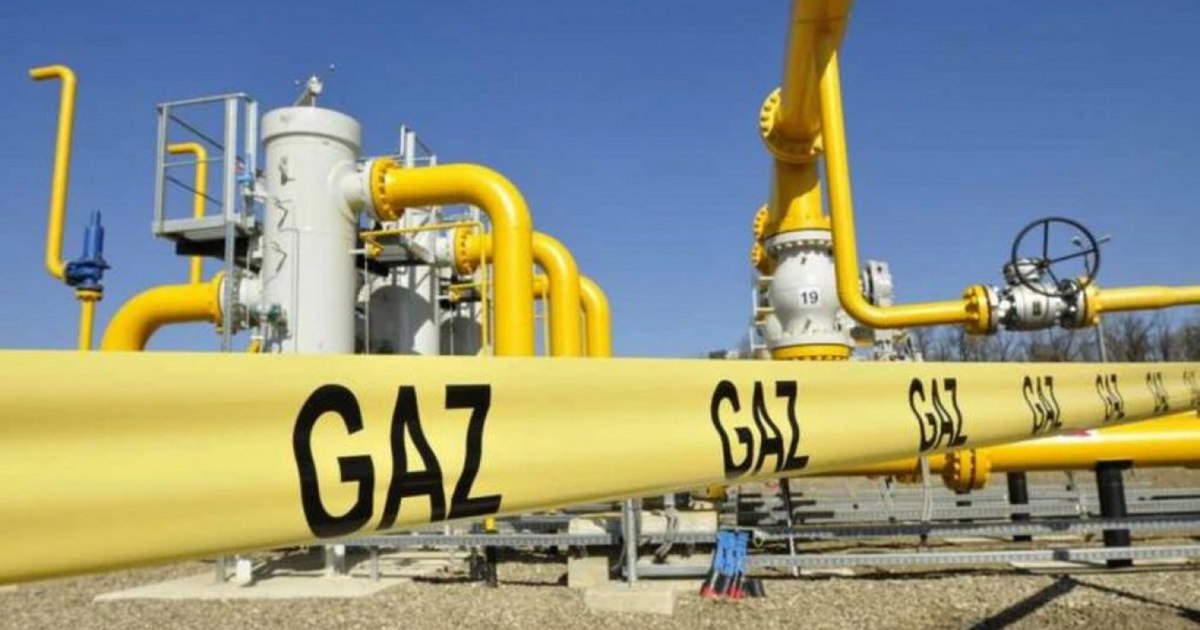
In Europe, the percentage of filling of natural gas reserves is one of the lowest in the last three years. However, it is expected that the prices of natural gas in Europe will register a moderate increase until the end of 2025, as a result of a complex mix of constraints in the field of supply, the dynamics of demand and geopolitical uncertainties.
Romania's natural gas reserves are almost full. Photo archive
The natural gas reserves of the European Union are at 82.3% of the capacity. In percentage terms, the stocks of Poland are full, those of Portugal are over 99% of capacity, those of Belgium are 94%, and Romania follows over 93% of filled capacity. According to Gie-Agsi, Depomures is 100% full, and Depogaz Ploiești is close to 93%.
The largest savings in Europe, France and Italy, are over 91%, and Germany at 76.6%. The smallest percentages are registered in Northern Europe, with Denmark little below 48%, Latvia at 55%and the Netherlands at almost 70%.
The European Futures contracts on natural gas were traded at about 31-33 euros per megawatt, with over 40% under the maximum of February, of 58 euros, registered in the last two years, the volatility returning to the levels before the crisis of 2022, because the strong injections in the storage capacity, although below the last three years, the concerns related to the winter.
“However, Europe is facing more and more restrictive supply conditions in the perspective of winter 2025/26. This storage deficiency, combined with the complete stop of Russian gas transit through Ukraine from January 2025, has created structural pressures on the supply,” points out the analyst Etoro Bogdan Maiooreanu.
Imports of GNL (natural liquefied gas) increased by 40% compared to the same period last year in the first half of 2025, reaching record levels of 75 billion cubic meters (billion cubic meters). But the decrease in the demand for GNL in Asia, due to lower cooling needs, issued the supply for Europe, supporting the lowering of prices. Stopping the Russian gas transported through pipes eliminated about 6.5 billion cubic meters from supply compared to 2024, forcing a greater dependence on more expensive GNL imports. In addition, the lower production of renewable energy in the winter months usually increases the demand for electricity produced from gas.
What could increase prices
Several factors could cause prices to increase by the end of the year. Geopolitical tensions continue to create risks of interruption of supply, while competition from GNL Asian buyers could limit Europe's access to flexible supply. But the weather can also play an important role. The weather conditions in winter remain the main source of uncertainty, the lower temperatures can significantly increase the heating demand. So far, meteorologists are attentive to a transition from the current -neutral situation (where none of the two climatic phenomena – El Nino and Nina – is not predominant) in La Niña, which could take place in the next two months. According to Noaa, there is a probability of 71% for Niña to manifest between October – December 2025, but the probability falls to 54% between December 2025 – February 2026. This means that in the northern part of Europe, it could be cooler and wetter, while in the southern part it could be warmer and drier. However, analyzing the long -term forecast of GWis for Europe, we can see that October will be colder than usual in Romania, but in winter it will be generally warmer.
According to the report on the natural gas market in the third quarter of the International Energy Agency, it is estimated that the global natural gas consumption will reach a new historical record in 2026, the increase of the demand being accelerated to about 2%. At the same time, it is expected that the global GNL offer will increase by 7% (or 40 billion cubic meters), mainly due to Canada, Qatar and United States. Overall, analysts believe that natural gas prices in Europe will follow a moderately upward trajectory until the end of 2025, the demand for winter heating and the reduced offer supporting 35-40 euros/MWh, before a potential relaxation in 2026, with the appearance of an additional global supply capacity.