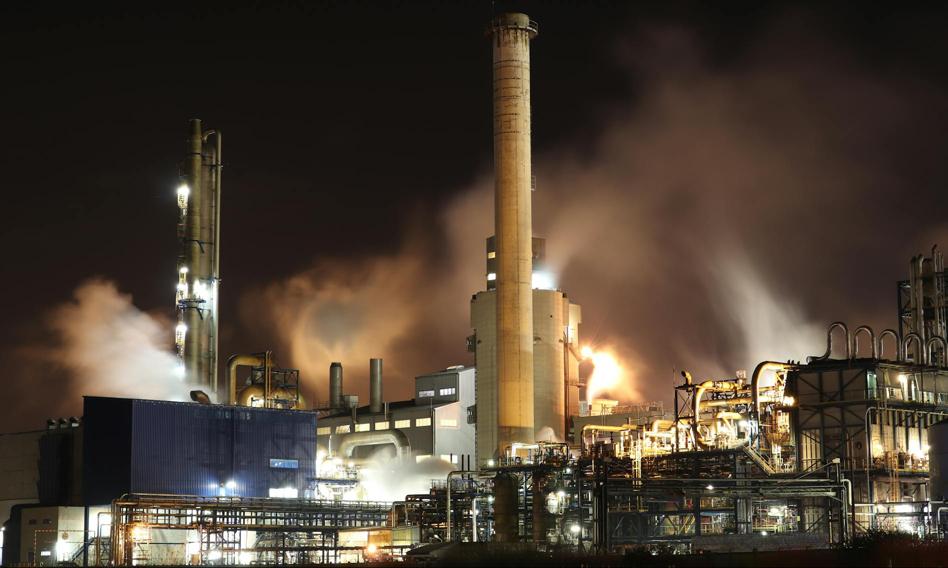
Slovakia and Hungary, obtaining energy from Russia, somewhat finance a war that Europe says “no” – told PAP prof. Jarosław Korpysa from the Institute of Management at the University of Szczecin and the headmaster of the US DOC school. These countries maintain the greatest dependence on Russian energy in the EU.
US President Donald Trump in recent days called all European countries to stop buying Russian energy raw materials.? On Thursday, during a meeting with Turkish leader, the Recep Tayyip Erdogan said that while Turkey can buy energy raw materials from other sources than from Russia, Hungary and Slovakia cannot do this due to the geographical location and addiction to delivery from one pipeline.
Slovakia and Hungary maintain the greatest dependence on Russian energy in the European Union. Most of the oil bought by these countries are imported with a friendship pipeline.
According to data from the International Monetary Fund in 2024, 74 percent came from Russia. Hungarian gas resources, in the case of oil it was 86 percent. Compared to 2018, there was a significant increase – then the gas imported from Russia accounted for 64 percent. Hungarian resources, and oil 66 percent
However, according to the publication of the Eastern Studies Center, the dependence of Slovakia on Russian gas in 2023 was 50 percent. In turn, the participation of Russian oil in its import was about 90 percent in 2023. (according to Eurostat) or about 75 percent (according to Slovnaft and Slovak government).
-Hungary and Slovakia are inland countries, which means that they have limited possibilities of diversifying the supply of energy raw materials, but this does not mean a lack of alternatives-Dr. Kumelska-Koniecko from the Institute of Political Sciences at the University of Warmia and Mazury in Olsztyn told PAP.
She noted that both countries can obtain oil, among others from Croatia through the Omisalij terminal and the Adria pipeline. – Hungary and Slovakia buy Russian oil because of the economic calculation, but also the political climate, which consists of specific ties connecting these countries with Russia and the personal relationships of Orban and Fico with Putin, which is extremely important in international policy – added the expert.
In turn, prof. Jarosław Korpysa drew attention to the economic dualism in this situation. – On the one hand, we impose sanctions in the form of a ban on importing energy raw materials, and on the other hand, two European countries somewhat finance a war that Europe says “no” – he said. He explained that the purchase of any energy raw materials from Russia translates into investments from funds obtained from energy into the military industry.
The May analysis prepared by the Center for Democracy Studies and the Center for Energy and Pure Air Research (Crea), described in Politico, shows that both Hungary and Slovakia have many alternatives to Russian energy. According to Martin Vladimirov, director of the energy and climate program in Crea, the continuous import of Russian oil and gas to Hungary and Slovakia is the result of a deeply rooted network of intermediaries and foreign trade structures. They were to enable Russian companies to maintain control over the Hungarian energy sector, making significant profits.
Prof. Jarosław Korpysa pointed out that In the case of Slovakia, oil could be sent from the Czech Republic, Germany and Poland.
– Infrastructure, which is now present for the Czech Republic, Germany and Poland, is not enough to provide smooth deliveries, but in the perspective of up to two years it could be cleared, which would also be in the interest of the European Union, so that Slovakia could have oil from these countries – emphasized the expert.
In turn, the strategic partner of Hungary – according to prof. Korpysa – Croatia could be.
On Wednesday – September 24, the European Commission announced that it would present a proposal to impose import duties to Russian oil. Only Hungary and Slovakia are currently importing Russian oil in the EU. In turn, the spokesman for the Hungarian government Zoltan Kovacs wrote on social networks – citing the data of the International Monetary Fund – that the Hungarian economy would shrink by over 4 percent if Russian deliveries were completely cut off in the EU.
After a Russian assault to Ukraine in 2022, the EU introduced a complete embargo on the import of Russian coal. On the other hand, the supplies of Russian oil were limited as a result of the EU format of the G7 price limit. However, Russia uses the so -called shadow fleets – old, unregistered ships.
In 2024, imports from Russia began to grow – 52 billion cubic meters of Russian gas went to the Union (32 billion with gas pipelines and 20 billion in condensed form). According to the EC, this year, Russian gas accounted for only 19 percent. all supplies of this raw material to the Union; In 2021 it was 45 percent.
According to the draft regulation of the European Commission presented in June, the Union will completely expire Russian gas, also LNG. The ban on imports will enter into force on January 1, 2026. The regulation concerns gas imported with gas pipelines and in a liquefied form. However, two exceptions will apply from him, which will make the completely termination of Russian gas imports take place on January 1, 2028.
Long -term contracts signed until June 17, 2025 will not cover countries surrounded by land; This exception will be interested in Slovakia and Hungary, which oppose the introduction of the ban.
From the perspective of Poland, the complete completion of the import of Russian oil should be completed by the end of 2026. On September 17, the Minister of Energy Miłosz Motyk sent a letter to the Ministers of Energy of EU Member States with an appeal to set a common goal in this matter.
The changes also occurred in the Orlen group, which on July 1, 2025 ended the last contract for the supply of oil from Russia. This means that the company and the entire region will not be associated with Russian entities with any contracts for the supply of oil. Ended on June 30, 2025, the contract with Rosneft was the last that Orlen associated with Russian oil. Earlier, other contracts for deliveries from Russia to Poland were completed with a friendship pipeline.
The concern also gave up bringing Russian raw material by sea. Thanks to this from April 2023, 100 percent The raw material processed in Orlen refineries in Poland and Lithuania comes from alternative directions. (PAP)
BCh/ WM/ BST/ JPN/