Parents know that WHO is reborn screens for children up to the age of two, but they still give them smartphones – Dr. Magdalena Rowicka told PAP. New research shows that there is no lack of knowledge, but stress means that preschoolers spend several hours a day in front of the screen.
The latest study “Toddler in the network 3.0”, conducted by a team under the direction of Dr. Magdalena Rowicka from the Special Education University of Maria Grzegorzewska in Warsaw, brings many answers to doubts bothering parents of preschool children, e.g. whether and how long young children can use screens, e.g. a tablet.
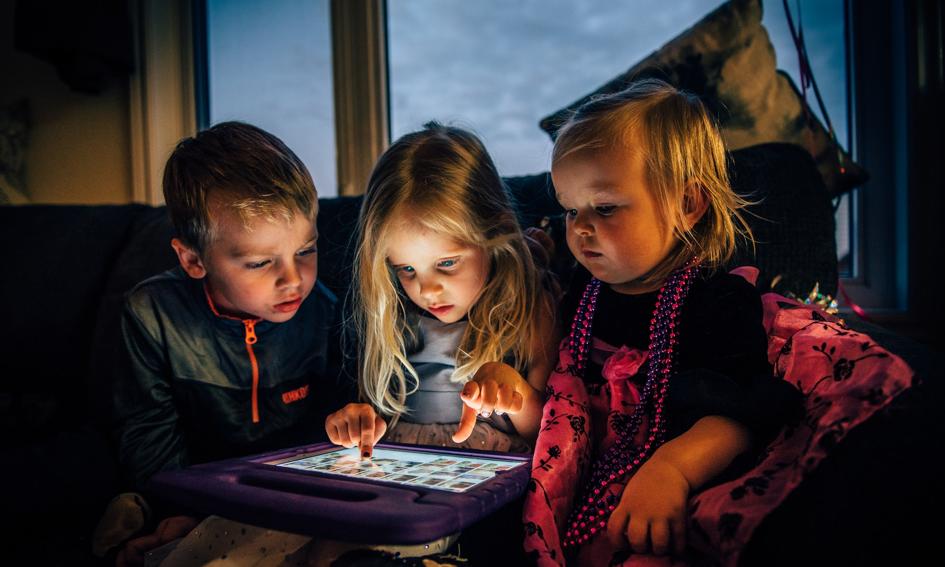
This is a continuation of two previous editions, which showed that already a third of children in Poland uses screen devices before the age of two. Children often use screens alone, passively, without the presence of a parent, as well as just before bedtime, which is particularly unfavorable for their development.
– We see very clearly that the contact of children with screens begins in Poland much earlier than experts recommend – emphasized Dr. Rowicka in an interview with PAP. – Even children under the age of two spend time with a smartphone or tablet. Parents often treat it as something completely natural, meanwhile the consequences for emotional and cognitive development can be serious – she added.
The World Health Organization and International Pediatric Society recommend that children up to the age of two do not have contact with screen devices at all. Preschool children can use them at most for one hour a day, and best together with their parent, in the context of an active conversation and interpretation of content.
However, the results of the research “Toddler on the network 1.0” and “Toddler on the web 2.0” showed that in practice these rules are commonly broken. The youngest use screens much longer, often in loneliness and in situations that particularly disturb the rhythm of the day, as just before bedtime. The latest edition of the project tries to answer the question why this is happening, since – as parents declare – they know what the recommendations are.
– Parents know what the recommendations say. The problem is not the lack of knowledge, but the lack of strength to implement it into everyday life – noted Dr. Rowicka. “When the child gets bored, screams, he argues with his siblings, when the parent is tired after work – the smartphone becomes a fast and easy solution,” she pointed out.
One of the main conclusions “toddler on the 3.0” is the great importance of parental stress and the resulting parent's frustration in making decisions on sharing screens to children. Researchers note that the higher the level of mental load in the parent, the more often the child gets the phone “to calm down” or “to take care of himself”.
– A parent who is overloaded is often no resources to enter into dialogue or propose alternative activities. Turning on the fairy tale seems to be the simplest output. It is understandable, but it's not safe – explained Dr. Rowicka. – This is how the mechanism of the vicious circle begins. The child learns to regulate emotions with a screen, and the parent strengthens the belief that this is an effective method – she added.
The study also looked at parents' beliefs about the educational potential of mobile applications. Many of them believe that applications advertised as educational develop a child faster and more effective than traditional forms of fun.
– This is one of the biggest myths. Analyzes show that the vast majority of popular applications have low educational value. Children click on flashing pictures, collect points and prizes, but they do not learn anything that would support their memory, concentration or creativity – pointed out Dr. Rowicka. – We even see that the excess of such stimuli weakens cognitive functions and can lead to learning difficulties – she assessed.
As in the case of application, the quality of the content viewed is of great importance. The research team indicates that many popular fairy tales, such as “Masha and the Bear” or “Lemmings”, can model negative emotions and behaviors, consolidating aggressive patterns or disrespect for adults. At the same time, there are positive examples, such as the Australian series “Bluey”, which promotes cooperation, empathy and dealing with emotions.
– The content matters. It is not just about how much a child spends time in front of the screen, but also about what he is watching and how. A fairy tale, which shows constructive ways of dealing with emotions, can support development. But a fairy tale, which promotes chaos and aggression, does exactly the opposite – noted Dr. Rowicka.
The research team noted that even seemingly innocent situations in which the child gets a phone to calm down, launch a chain of risk mechanisms. The child learns that only the screen allows him to deal with frustration, and the parent acquires that technology solves the problem faster than conversation or fun.
– If this pattern repeats many times, the risk of problem use in the future is growing. This may be the first step to addiction to school and teenage technology – Dr. Rowicka warned.
She noted, however, that it is not that the technology is bad. “A smartphone or tablet is just a tool that can be used wisely or in a risky way. The problem begins when the screen replaces the conversation, closeness and experience of emotions – summed up the researcher. – Our goal is not to scare, but showing parents that they have a real impact on how their children will use the media in the future – she added.
The research project “Toddler on the web” is a series of research initiated by dr Magdalena Rowicka. The project was co -financed from the gambling resolving fund at the request of the National Center for Counteracting Addictions.
The aim of the research is to expand knowledge about the impact of the use of digital devices by young children on their psychophysical development and analysis of the role of parents in shaping these habits.
The study was conducted on a representative sample of parents of children aged 3 to 6, i.e. in a kindergarten group. In total, over 1,600 parents were tested, of which 1000 were guardians of children using screen devices. The remaining part were parents of children who do not have contact with this type of technology. Thanks to this, it was possible to compare both groups and control the reliability of the results obtained.
The division of the surveyed children was even in terms of both age and sex, which ensures high representative representativeness. The project “Toddler in the network 3.0” is the third edition of research carried out by Dr. Rowicka and its team.
Mira Suchodolska (PAP)
mir/ jann/ mhr/