Document CIA declassified. Americans anticipated the ideological collapse of the USSR since 1982, before Gorbachev's arrival


A report by the Central Intelligence Agency of the United States (CIA), prepared in December 1982 and recently accessed by Transparency International – Russia, offers a detailed image of the state of Soviet society at the end of the period known as the “era of stagnation”.
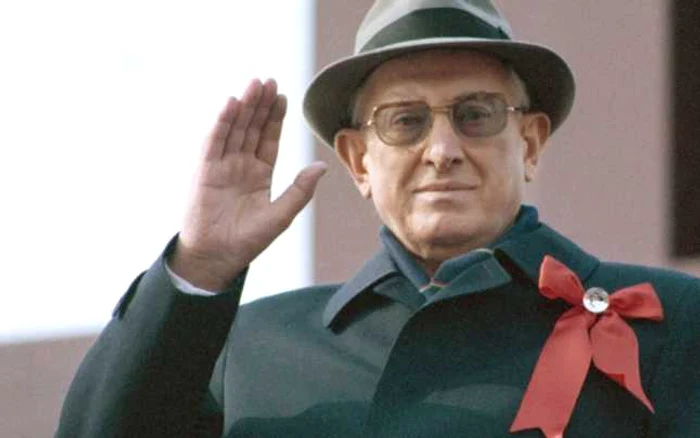
The arrival of power of former KGB chief Andropov, signals a generalized climate of anxiety/ F
The analysis, drafted shortly after the death of leader Leonid Brejnev and the arrival of the former KGB chief Andropov, signals a generalized climate of anxiety, apathy and loss of trust in the regime, writes Meduza.io.
Western observers: “a pressing atmosphere and gloomy presuppositions”
According to the report, in the first years of the 1980s, Western observers in Moscow noted a “pressing and full of gloomy” atmosphere “in Soviet society. They have identified a deep crisis of values, increasing cynicism and lower support for authorities, in the context of economic stagnation, accentuating social inequalities and limiting upward mobility among the population.
The report notes that in previous eras – Lenin, Stalin and Khrushchev – faith in communist ideals worked as a source of collective motivation. Under the leadership of Brejnev, however, the emphasis moved from ideology to material well -being, without this objective being achieved. The slowing of the economy since the mid -1970s, corroborated with a relative relaxation of information control, has allowed Soviet citizens to observe differences from Western lifestyle, further eroding loyalty to the system.
Morale crisis, consumerism and systemic corruption
The CIA identifies a combination of factors that fed the dissatisfaction of the population: the lack of basic products, alcoholism, decreased labor productivity, isolated strikes and proliferation of the black market. According to the report, the Soviet elite was increasingly worried about the declining of the discipline, especially among young people, and the potential for the outbreak of revolts powered by economic frustrations and ethnic tensions.
The statements of some Soviet officials – recorded in private discussions with American diplomats – talk about a young generation “without ideals”, attracted by religion and avoiding military service. At the same time, there were signals that dissatisfaction with the privileges of the elite had become a major communication problem between leaders and citizens.
Against the background of the internal crisis, some members of the state apparatus pleaded to strengthen the internal control and even to return to authoritarian methods. Certain sources said that Iuri Andropov was seen as a possible leader capable of restoring discipline, being perceived as an incorruptible and firm opponent of Western influence.
Russian nationalism as a possible substitute for ideological legitimacy
Another tendency observed by the CIA between 1981 and 1982 was the accentuation of the nationalist rhetoric, with an increasing emphasis placed on the central role of the Russian ethnic in leadership and maintaining the cohesion of the Soviet state. In the official speeches, references appeared in the “Slavic identity”, and some voices in the party leadership warned that the Russians could become a minority in their own state.
According to the report, the call to Russian nationalism was regarded as a social control instrument, in the absence of an authentic mobilizing ideology. However, a part of the elite – including the future leader Konstantin Cernenko – manifested reserves towards this orientation, advocating instead for a better understanding of public opinion and social realities.
Forecasts on Andropov's policy
The CIA report concludes that, in front of an increasingly skeptical and demanding society, the new leadership from Moscow was most likely to adopt a combined strategy: combating corruption, limited attempts of economic reform and a more conservative social policy, with disciplinary calls and, possibly, to nationalism.
Forecasts have been partially confirmed. Andropov has triggered a campaign against absenteeism in the workplace and initiated corruption investigations, of which the best known is the “cotton business” in Uzbekistan. He also tried to introduce moderate reforms into the economy, but did not get them to end because of his premature death. Russian nationalism, although present in speeches, has not become a central component of its policies.
However, his major contribution remains the promotion in the circle of power of Mihail Gorbachev, the leader who will mark the beginning of the end for the Soviet Union.