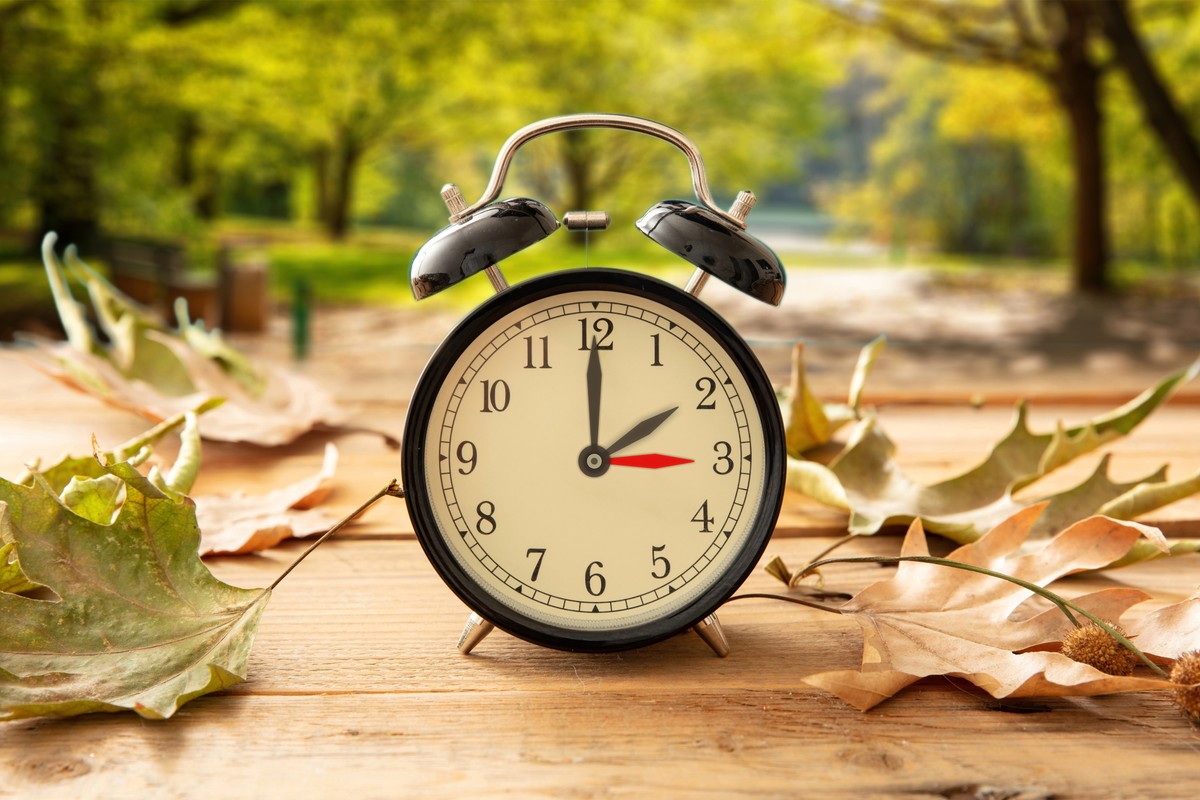
The European Union does not rule out, however, that this is one of the last such maneuvers with timers and we will permanently pass for summer time next or in 2027.
We do not need to convince anyone about how beneficial this solution would be – with the withdrawal of watches in autumn we lose longer afternoons with natural light for a hour, so we deprive ourselves of the possibility of longer staying in the open air, which promotes a healthier lifestyle. Not to mention the need to close various types of facilities earlier, including cultural, small gastronomy, outdoor trade (fairs, bazaars, stalls).
Experts indicate that the change of time can also negatively affect our well -being -In the period of sunlight deficiency, which is the autumn-winter period, because the risk of so-called photodepression. Yes, in the morning it gets bright in the morning and thanks to this we reach school and work safer, we also do not have to use artificial light, but it is a small extent to compensate for us afternoon relaxation on a bike or in the park, which we have to devote to the fact that when you leave work it is already dark.
Two -time change of time during the year also affects the well -being of the elderlywhich are more difficult to change their lifestyle to other tracks and is not insignificant to pets and breeding due to the change of feeding hours.
The economy also loses on the change of time
Specialists emphasize that Changing time affects not only our health – affects the dysregulation of the biological clock, Which has negative effects on mental and physical health, including an increased risk of cardiological and neurological problems – it also hinders the activity of enterprises and disorganizes the functioning of public and economic services. It means additional, unnecessary costs – for example for the energy and transport industries. Trains and aircraft are forced to adapt to the shift of time, which sometimes means an hour stop, or a special change in decomposition. Banks announce technical breaks to introduce a change in time during which electronic banking services are inaccessible. It is also necessary to change work schedules in enterprises or individual classes.
EU bureaucracy is an obstacle
Why then will we not leave this custom? The need to change time results from Directive 2000/84/EC of the European Parliament and of the Council of 19 January 2001 on the arrangements regarding summer time. In 2018, the European Commission, at the request of the European Parliament, decided to revise the findings regarding the use of summer time in EU EU Member States and related time changes. Public consultations were carried out at the time of 4.6 million EU citizens – 76 percent. respondents admitted that she had negative experiences related to the change of time, and 84 percent. The respondents were in favor of giving up changes in time.
In September 2018, a draft directive was prepared, assuming resignation from changes in time. The decision about which individual member states were to be made at which time. The problem is that a clear position has not been developed to this day as to the possible resignation of changes in time. To determine them – the draft directive on the abolition of seasonal time changes, would have to find support among the qualified majority of Member States. It is also needed to support the final text of the directive negotiated with the European Parliament.
In Poland, in a survey conducted a few years ago, nearly 80 percent of respondents were in favor of staying with the summer time. Also, the current government is opt for leaving summer time permanently – such a public declaration was made a year ago by the then deputy minister of climate and the community Miłosz Motyk – but the lack of consensus in Brussels binds our hands.
When change of time? It doesn't make sense today
Introduction of summer time, i.e. Benjamin Franklin was the first to move the clock guidelines for the spring and summer. In Europe, rearranging clocks in spring and autumn was used for the first time to save energy during World War I. This practice was re -introduced in many countries in the 70s.
For the first time, a change in time in Poland was introduced in the interwar period. The fashion for a change in time returned during World War II for the same reason, then in 1946-1949 and 1957-1964. It has been in force continuously since 1977. Until 1995, the transition from summer to winter time took place a month earlier – on the last Sunday of September. From winter to summer, the same was passed – on the last Sunday of March.
Today, savings from the change of time, according to EU calculations, are minimal -Recent studies show that 0.1-0.2 percent of the annual consumption of electricity.