Interview with writer Corina Diana Haiduc, Canada: Literature, memory and community between two worlds


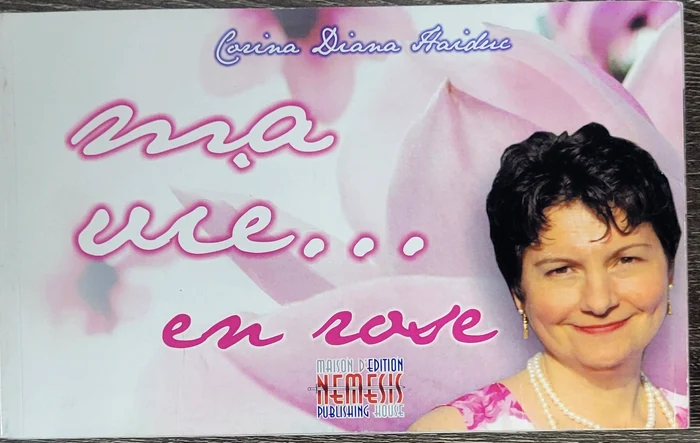
Corina Diana Haiduc is a writer, publicist and one of the active voices of the Romanian community in Montreal. Author of the volumes “Ma Vie en Rose” (2010, Romanian bilingual edition, poetry, prose and drawings) and “Trees sometimes cry” (2012, essays in Romanian), it explores in writing the fragility, identity and reconfiguration of the Self. In parallel with the professional career of pharmacist, continued in Canada, Corina Diana Haiduc was constantly involved in the Romanian cultural life, holding the position of president of the Romanian Cultural Association (ACR) of 2017 and at present, secretary of the Canadian Association of Romanian Writers (ACSR) between 2008-2024, active presence in Cenaclul Eminescu and Hundreds of Articles. “Candela de Montreal” and in other editorial appearances.
The present interview is part of my doctoral research dedicated to the theme “the identity of the one with several identities, reflected in the recent literature of the diaspora”. In this framework, the discussion with Corina Diana Haiduc follows some essential directions: how to articulate the identity of the diaspora writer between several worlds; What role does personal and collective memory play; How journalism and literature are interwoven in the cultural experience of exile; What bilingualism and reconfiguration of the self means; And, last but not least, what message the diaspora literature has for the public in Romania.
Ciprian Apetrei: What were the first stages of your integration in Canada? In what way the writing helps you find a place and build an identity between the worlds?
Corina Diana Haiduc: It was a beautiful and hot September in 2007, with an unreal blue sky and with divine colored maple leaves. I knew what to expect and I had the documents prepared to submit to the Pharmacists the application for the equivalence of the diploma. I knew it would take some time. Maybe Monday, maybe years. In fact, it was three years until I became a student again at 44. In the beginning, after two months after I had come, I was analyzed as a pharmacy assistant, leaving after 16 years of pharmacist in Romania and an owner associated with two pharmacies. After the diploma is equivalent, I started working as a pharmacist. The family has adapted, and the 12 -year -old followed the natural course of schools.
Regarding the passion of writing with which I was flirting since I knew without having the courage to publish, at first, I responded to the request of a friend, editor at the newspaper of the city where I came to publish my impressions. It was a kind of journal of the first emigrant days in Canada. I was fascinated by everything I saw and met. I had the desire and pleasure to share everything in Romania, this new in my life.
The articles written during the first year helped me to adapt and to answer my own questions: who I am, where I am and, especially, why.
How do you manage to reconcile professional life, with pharmacist responsibilities, with literary and cultural activity?
Cd h: I have been asked many times how the rigidity of the rules is interwoven, respecting the professional deontology with the freedom of expression in writing and painting. I confess that these universes are completed wonderfully, in which I find and fulfill myself.
In both I have contact with people and this gives me all the joy and energy to continue to marvel in the face of life and interaction with the people around me.
Your writings explore topics of fragility, identity and reconfiguration of the self. How did these texts be born and how were they received by the Romanian community, but also by the francophone public?
Cd h: I continued to publish various texts in the Joc of Montreal, in the magazine Destine literary, in the Candela de Montreal and in the Toronto Observatory. Those who knew me and read me encouraged me to gather them and put them in a book. And my francophone colleagues are just waiting to read. This is how my first Romanian-French bilingual volume, a pink jewel, a mirror of my way of seeing the world, was born. In the meantime, I had begun to paint, so here is the right opportunity to highlight them in the same books, where some poems in French have found.
Many have been found in my writings, especially those at the beginning of the road as emigrants, here they found life tips and experiences that were useful to them, as they confessed to me. The book was read on the breathless by both Romanian and francophones, saying all in a voice at the end of the reading: “Only so much? We want!” Which encouraged me to write the second volume “and the trees sometimes cry.”
Through this book my service colleagues understood me better, through me they met with another culture, mentality and traditions.
Then I dedicated to the cultural activities within the Romanian community as president. Currently, I have five books, which I work in parallel.
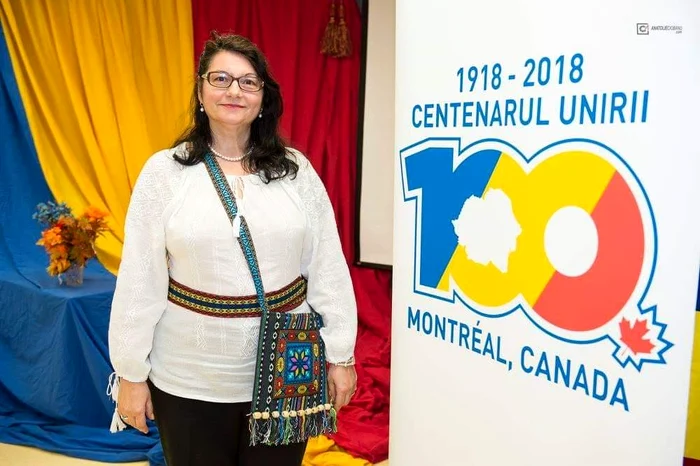
You are the president of the ACR (Romanian Cultural Association). How do you see the role of this cultural institution in preserving the Romanian identity across the ocean?
Cd h: First of all, I am pleased to talk to people, to know them, to value them, to give them confidence in what they do and to put them in touch with each other.
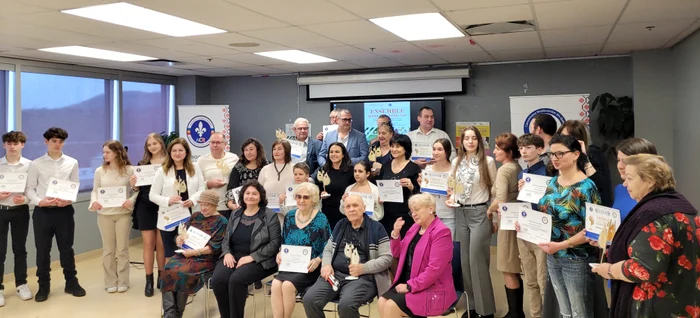
Secondly, I feel a great responsibility in carrying out the Romanianism between us and then our children. Here we talk about language, traditions and customs. This is why we have workshops to set the Easter eggs, to paint icons, Christmas parties with folk dances and traditional costumes and many more.
To what extent the life in Canada, contact with a multicultural society and a diverse Romanian community, model your homework and tone?
Cd h: Life in Canada gave me freedom. I speak of the freedom of writing, the expression of emotions, of experiences of any kind, without the fear of being judged, criticized, compared and restricted in templates.
Here I built an identity that I did not know, in fact I discovered. I could be, myself, devoid of prejudices and fears, a person that I no longer recognize in the beginning. Before publishing the first book, I wondered how I had the courage to write when before me were such great writers. And I did the courage to think of everyone who wrote less well. Then it was the comparison. Now it is no longer. Each one is unique by his own way of being and expressing himself. What would it be like to write all the poets like Eminescu or all the advinants like Rebreanu?
I learned a lot from this multiethnic society, from the people around, neighbors, service colleagues or friends. The source of inspiration was nature, people and their experiences, their life stories so interesting and, above all, their philosophy and how they perceive life and death so naturally, living deeply.
Do you think we can talk today about a “literature of the Romanian diaspora” or rather about a plurality of individual voices, united only by the experience of migration?
Cd h: Yes, it is a good question, there is a literature of the Romanian diaspora, we have literary magazines, cenacle, monthly meetings and, above all, we have readers and a Romanian school. It is the joy of giving in the Romanian language unique feelings, easy to understand by the Romanians, without having to explain at every row: “You know, it means …”.
It does not necessarily bind us that we are emigrants, we have not even thought about it, in fact it binds our origin, language and traditions.
What role does personal and collective memory play in your writing? Is there a risk that the nostalgia or idealization of “Romania from home” will distort this memory?
Cd h: My accommodation in Canada was easy and natural, I would say. It does not mean that I feel or think like a quebecoise. I am Canadian of Romanian origin, adapted to the rules of civilization of this country. I have no nostalgia for Romania.
At home for me it means here in the Montreal area, where I live, I go to work, I live every day, I have my own universe for 18 years. There are many Romanian churches, Romanian shops and restaurants, products that arrive monthly through the company where my husband works, so I have a “grandmother's goodness” room and I do not miss the Gerovital cream and neither the wine of Jidvei, Afinata or Eugenia Childhood.
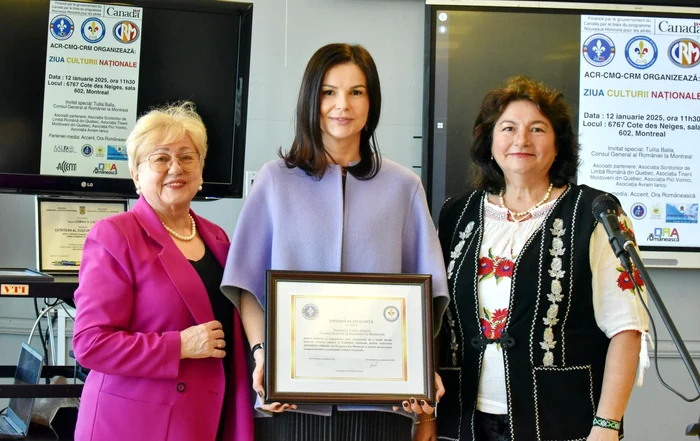
My little Romania is here with my Romanian friends, relatives and those who represent their native country at the General Consulate of Romania in Montreal, through the events they organize.
From your perspective, is the multiple identity of the writer in the Diaspora more a creative resource or difficulty in shaping a unitary literary voices?
Cd h: Canadian province where they live offers uniqueness through cultural and multi -ethnic richness. Montreal is the place of convergence of 125 cultural communities, each with his language, port and habits. It is acceptance, tolerance and adaptability. I do not need to travel in the wide world for exotic or unique culinary experiences. It is enough to travel only the street Côte-des-niges
And to choose every day to serve the meal in another restaurant, even Romanian in Cristina and Vali.
So, yes, everyone expresses their identity in their own way. It is a richness all my genetic and informational baggage I came with and that I share with those around me. As I am curious to listen to their stories, and the others, be they Arabs, Black, Hispanic or Quebecois, are fascinated by where I come from, my history and past. In my writings I refer to who I am and my origin, completing me with whom I have become in all these years.
What would you like to convey the written literature in the Romanian public diaspora? And, at the same time, what message would you offer to young Romanian authors who are looking for their literary voice in the diaspora?
Cd h: My message for the public in Romania is the unit through language and culture. No matter where we live, we are one, we are Romanian and it is all that matters. I never felt alienated by the country, I knew that here is my role to make the voice of a Romanian who is not ashamed of his origin, his country or nationals. I felt proud that I am Romanian, wherever the steps have carried me here, where I live, or during my holidays on almost all the continents.
The young writers wish them continuity, to carry on the legacy they are sure they are proud and makes them feel unique.