Eastern flank raises his head and the Germans soften their knees. They reacted completely differently to Putin's provocations than Poland. “It can't work”
The Tuesday meeting of the North Atlantic Council in Brussels was unusual. For the second time in two weeks, the most important NATO advisory body gathered on the basis of art. 4 of the Treaty. Estonia asked for a meeting, because three Russian fighters were in her airspace without permission for almost a quarter of an hour. Only 10 days earlier Poland convened a meeting of the council due to the invasion of about 20 Russian drones. Both countries see a threat to their territorial integrityand thus for your safety.
These consultations were unusual because art. 4 was not activated during the Cold War lasting a decade. It has only been relied on him since 2003, and since then NATO has used it nine times. Türkiye requested five times in connection with the threats from Iraq and Syria. Russia was the reason for the consultation four times, first in 2014 as a result of the annexation of Crimea, then in 2022 after the invasion of the whole of Ukraine, which worried Bulgaria, the Czech Republic, Estonia, Latvia, Lithuania, Poland, Romania and Slovakia. And now Poland and Estonia have spoken again.
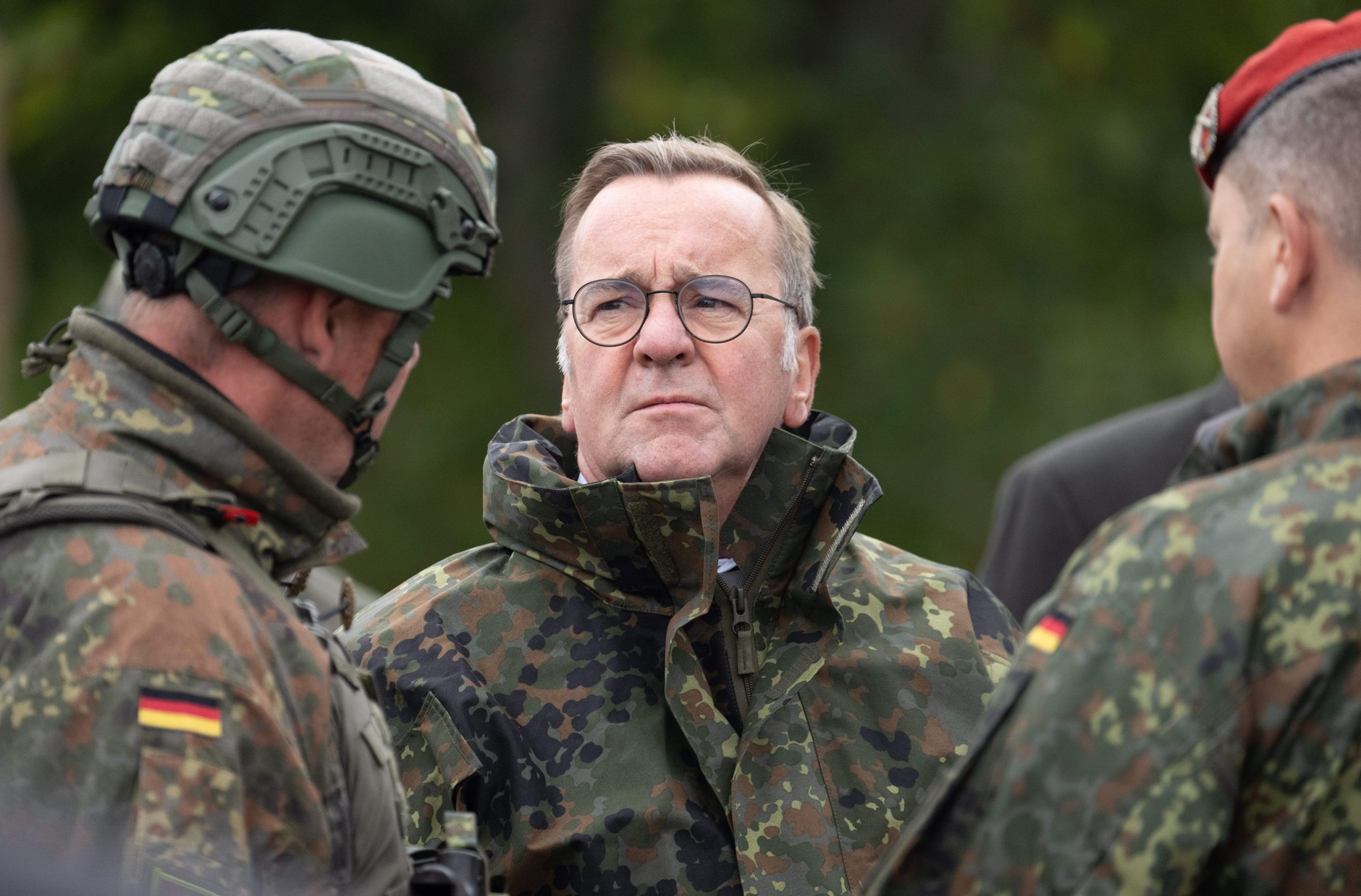
It seems clear what Moscow wants to achieve with her attacks. “He literally tests borders with increasing frequency and intensity,” said German defense minister Boris Pistorius on Wednesday at the Bundestag. – Putin wants to provoke us, Putin wants to provoke NATO Member States And he wants to identify, reveal and use the alleged weaknesses of the alliance.
Why, however, the eastern members of the Alliance react so often by reference to the North Atlantic Council? Unlike art. 5, clause with mutual assistance in the event of a military attack, art. 4 is a political mechanism of consultation and coordination in crisis situations. During the Cold War, there were also crisis situations, but they were discussed internally. People relied on reliable scapering and military readiness and did not need political signals through consultations under art. 4.
At that time, NATO “of course gave a great sense of security, even when a Soviet plane was flying,” explains Soenke Neitzel, a military historian from the Potsdam University. – Today it is different: states have doubts, but they are also tested in a different way than during the Cold War – adds the professor. Range hybrid instruments He expandedand digital jamming attacks and dangers associated with unmanned armaments systems, both of which are also targeted at civil infrastructure, joined the sabotage and espionage.
Continued article under video material
Carlo Masala, a political scientist from the Bundeswehr University in Munich, also claims that In Eastern Europe “people no longer believe in the deterrent effect of the alliance”. And the Western intelligence services, including the German Federal Intelligence Service (BND), are of the opinion that “in Moscow there are circles that no longer believe in the strength of Article 5”, said prof. Masala during the Tuesday lecture in Potsdam. Russia is following the motto attributed to Lenin: “If you hit with a bayonet in something soft, keep pushing. If you hit the bayonet in steel, go back it.” According to Masala, the current experiences of Russia with NATO show that “she came across something soft.” That is why Moscow works more and more “wicked and reckless”.
How to react to Russian provocations? Germany see it differently than Tusk
In fact, the statements of the NATO Council issued after consultations sounded determined, but revealed military and political deficits. After violating the airspace by the drones, the “Eastern Guard” program, which has already been agreed at the June peak in the Hague, was recalled “to strengthen NATO's presence on our eastern flank”, as secretary general Mark Rutte said. – We need to increase weapons production so that we have the means needed to deter and defense – He explained. The program is crucial for the credibility of deterrence. In other words, military skills are not sufficient currently.
It sounded similar this week after the incident in Estonia. The North Atlantic Council announced that NATO would “use all necessary military and non -military tools to defend itself.” Once again, however, the shortcomings were referred: “We will expand our abilities and strengthen our attitude of deterrence and defense, including through effective air defense.” In other words: air defense is still insufficient.
As for the threat of fighters, NATO is properly equipped. However, there is no political consensus as to how to deal with Russian provocations. While the Polish Prime Minister Donald Tusk announced that Russian aircraft over Poland will be immediately shot down in the future, Pistorius warned against the “trap of escalation”.
The German defense minister Boris Pistorius talks to soldiers during a visit to the Bundeswehr artillery school at Idar-Oberstein, September 16, 2024.Boris Roessler / DPA / PAP
When it comes to defense against Russian drones, NATO does not even have the right abilities. Although the F-35 fighters shot down some systems from heaven to Poland, this is only a temporary solution. “We must have profitable solutions instead of using expensive rockets against cheap drones,” Rutte warned. That is why the alliance is currently focusing on buying drones from defense.
The Germans promised more than they could fulfill
However, progress is achieved at a snail's pace. This can be seen in the example of Germany, which have accepted the main obligations as part of the Integrated NATO anti -aircraft and missile defense. During the open day at the beginning of September at the military training ground in Putlos, Schleswik-Holstein, the Bundeswehr presented a new Skyranger air defense system, which can capture drones from close distance
However, planned exercise must have been canceled due to software problems. Planned integration of Stinger missiles is also not working yet, and the chassis causes problems. A crisis meeting has already been held with the manufacturer Rheinmetall, and the whole project is threatened with many years of delay.
You also need to know: Bundeswehr has only one of the Skyranger test sample so far. Another 18 systems were ordered. However, the demand is for almost 500 systems, of which over 400 will be needed until 2029. The pace of orders does not fully reflect the threat.
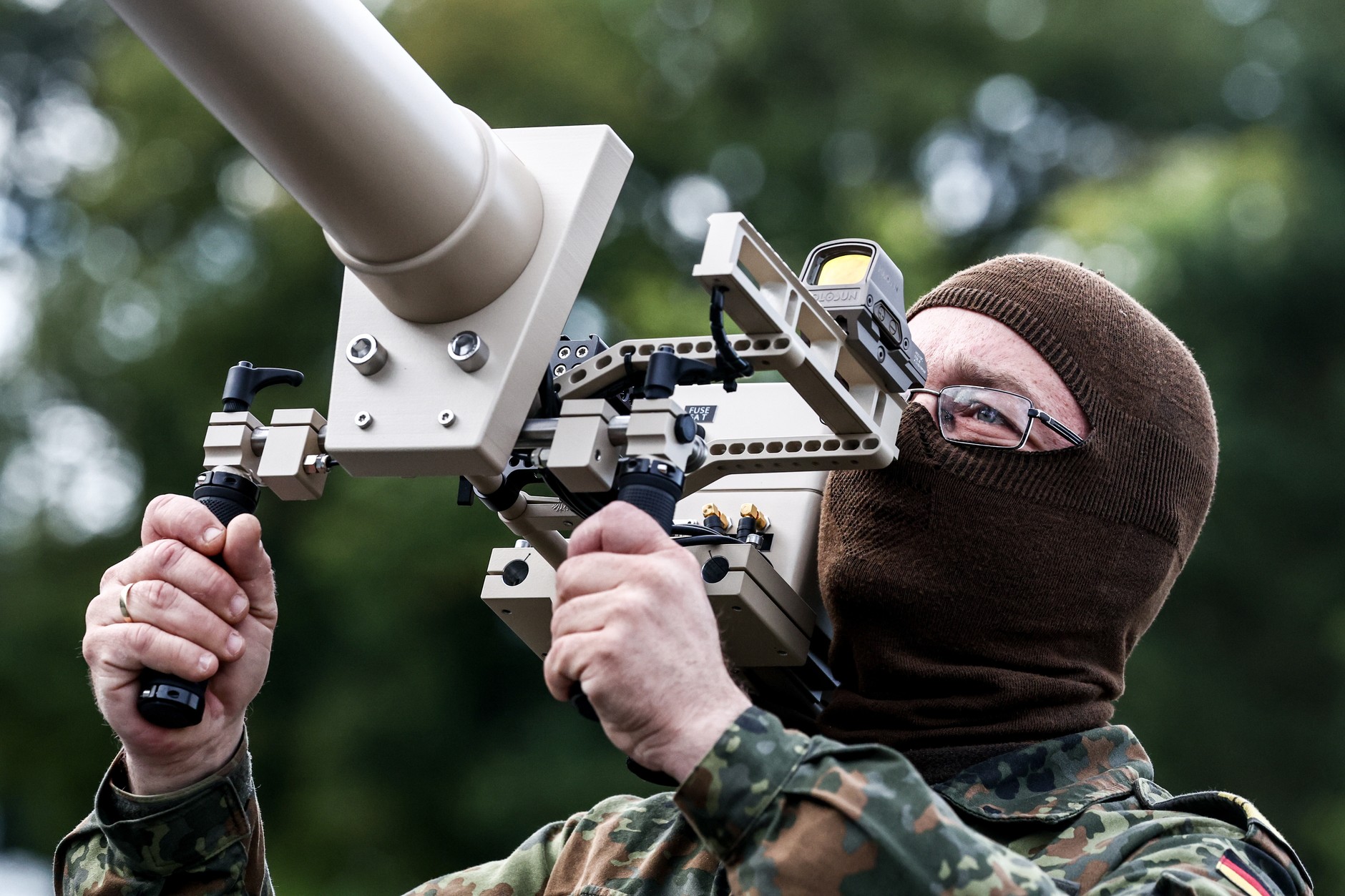
The Bundeswehr soldier uses a device that interferes with drones during exercise. Hamburg, September 26, 2025EPA / FILIP SINGER / PAP
There is a gap between talk and action. – In rhetorical terms, this federal government is extremely strong. When it comes to activities, I see a continuation – assessed prof. Masala in Potsdam. Although Germany is still talking about a turning point, they still rule in the old peace order mode. – It cannot work, the speed we need when a military threat dominates.
Another example of this is a debate on compulsory military service. The Minister of Defense was in favor of the so -called A Swedish model that predicted a modern form of compulsory service. The government has now decided to serve the volunteer: – From a political point of view it was everything that was possible – admits Masala. However, he doubts whether the number of 460 thousand. Soldiers and reservists whom Pistorius considered necessary can be achieved in this way.
When it comes to detailed planning, some in the ministry already realize that these preliminary estimates will not cover the demand for staff. According to General Alfons Mais, who recently wrote a letter to Carsten Breuer, General Inspector Bundeswehr, The field army itself will need approx. 154 thousand. soldiers and reserviststo achieve the goals agreed under NATO. In addition, almost 140 thousand Additional forces are needed to defend the country. If we add a navy, air force, cyberspace, and above all, nowaday The total demand for staff will probably exceed 500 thousand.
In the end, as General Mais writes, it is about the possibility “Victory over the armed forces of the Russian Federation experienced in the war and strong quantitatively” in a crisis. It seems that not everyone in the German government has yet understood this.
I’m Ashley Davis as an editor, I’m committed to upholding the highest standards of integrity and accuracy in every piece we publish. My work is driven by curiosity, a passion for truth, and a belief that journalism plays a crucial role in shaping public discourse. I strive to tell stories that not only inform but also inspire action and conversation.