Germany's plan to finance Ukraine, using Russia's money, presenting by Merz. Why is it practically equivalent to a confiscation


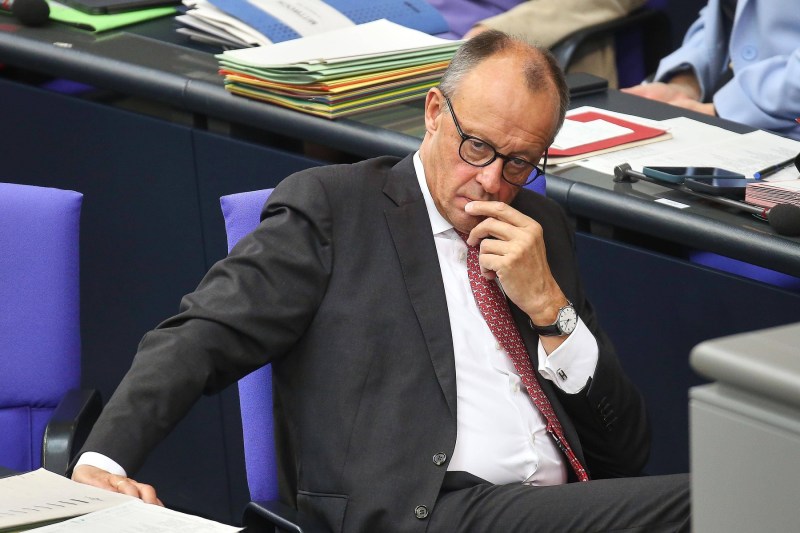
German Chancellor Friedrich Merz, in Bundestag, Berlin, on September 17, 2025. PHOTO: DTS Nachrichtenagentur / Imago Stock and People / Profimedia
German Chancellor Friedrich Merz proposed a mechanism on Thursday to borrow 140 billion euros from frozen Russian assets in the West, but without their confiscation, at least not directly, according to an editorial signed by Merz in the Financial Times and taken over by AFP and Reuters.
According to the mechanism suggested by Merz and which he will present next week to European leaders at a summit, “a viable solution” would be such an interest-free loan that Kiev to repay “only after Russia is compensated for the damages caused by the war.”
The loan, financed from frozen Russian assets, would follow according to this proposal to be initially guaranteed by the EU states and then through the EU multiannual budget since 2028.
The idea of the German Chancellor does not differ much from a plan of the European Commission, which envisages a loan of 200 billion euros for Ukraine funded from frozen Russian assets and which would be replaced with bonds guaranteed by the EU states, until Russia pays Ukraine repairs and will be released.
Both Merz and the Commission's plan claim that it would not be a confiscation of Russian assets and leaves the conviction that Russia will pay Ukraine repairs. But as it is difficult to assume that Russia, at least under the leadership of Vladimir Putin, will ever accept to pay Ukraine such compensations, both plans in practice would be equivalent to confiscating these assets, even if not in a direct form, notes Agerpres.
Following the Russian invasion in Ukraine, the EU states together with G7 blocked Russia's access to about 300 billion euros from its foreign or gold reserves. Of this amount, the EU froze the Active Bank of the Russian Central Bank worth about 200 billion euros, most of this amount, about 185 billion euros, being stored in Belgium in the form of securities and cash amounts, and the EuroClear compensation house deals with the management of these assets.
The interests generated by these assets have already been used to finance military aid for Ukraine. But their confiscation, although desired by many Western politicians, has been at least avoided, given the numerous obstacles of legal, geopolitical and financial nature, such as the risk of disturbing international financial markets and weakening of the euro, plus Moscow, which described its freezing as a ” put into practice.