Hungary justifies themselves, claiming that they do not have physical infrastructure that would allow to replace Russian hydrocarbons. The Hungarian Foreign Minister Peter Szijjarto called “fanatics”, European officials who have been demanding the diversification of raw materials from Hungary for three years.
“It is completely impossible to conduct a rational dialogue based on facts and common sense,” he said in an interview with the British newspaper “The Guardian”. On this, however, the head of Hungarian diplomacy did not end his tyrada. Orban, one of Trump's greatest supporters, goes to a short circuit with Washington.
In Budapest, they “understand” Trump's approach, but they are unable to “provide safe deliveries [nośników energii] Without Russian sources of oil or gas, “Szyjjarto continued in an interview with” The Guardian “.
“For us, the supply of energy carriers is a purely physical matter,” added Szijarto. “Maybe it's good to dream of buying oil and gas elsewhere [poza Rosją]… but we can buy only with infrastructure. And if you look at physical infrastructure, it is obvious that without supplies from Russia it is impossible to ensure safe supply of the country. “
Hungary and Slovakia are the only EU countries that still buy Russian oil. They also receive Russian gas, which is sent by pipelines. Meanwhile, Hungary is able to receive hydrocarbons from other countries via pipelines.
What's more, according to the Think Tank Data, the Center for Energy and Pure Air before the invasion of Ukraine, the participation of Russian oil in Hungarian consumption was 61 percent. – In 2024 it was already 86 percent. The dependence of Slovakia remains at a similar level.
An experienced diplomat Mark Gitenstein, who until recently served as the US ambassador at the EU, stated in an interview with Politico that if Trump wants the EU to completely stop buying Russian oil, it is enough that he would raise the phone and call the Prime Minister of Hungary Viktor Orban and the premiere of Slovakia Robert Ficy. “It's his friends, he can just call them.”
Continued article under video material
A close advisor of Trump, a republican senator Lindsey Graham, who is trying to introduce sanctions against Russia, also recently attacked Budapest and Bratislava.
Shortly after Trump called NATO countries to stop buying raw materials from the aggressor, Graham said that only Hungary and Slovakia buy Russian oil in the EU. “I hope and I expect that they will soon take a step towards us to help us put an end to this bloody slaughter. If not, then the consequences must and will be.”
“Overcoming the willingness of some countries to cooperate with Russia is a difficult task”
Finland President Alexander Stubb found Trump's request to the request of “The Guardian”. Also in his opinion, pressure should be given to Hungary and Slovakia.
Foreign Minister Radosław Sikorski, in turn, expressed the hope that “Orban in Budapest would hear it and take appropriate actions … Hungary can receive oil from a different direction than a Russian direction.”
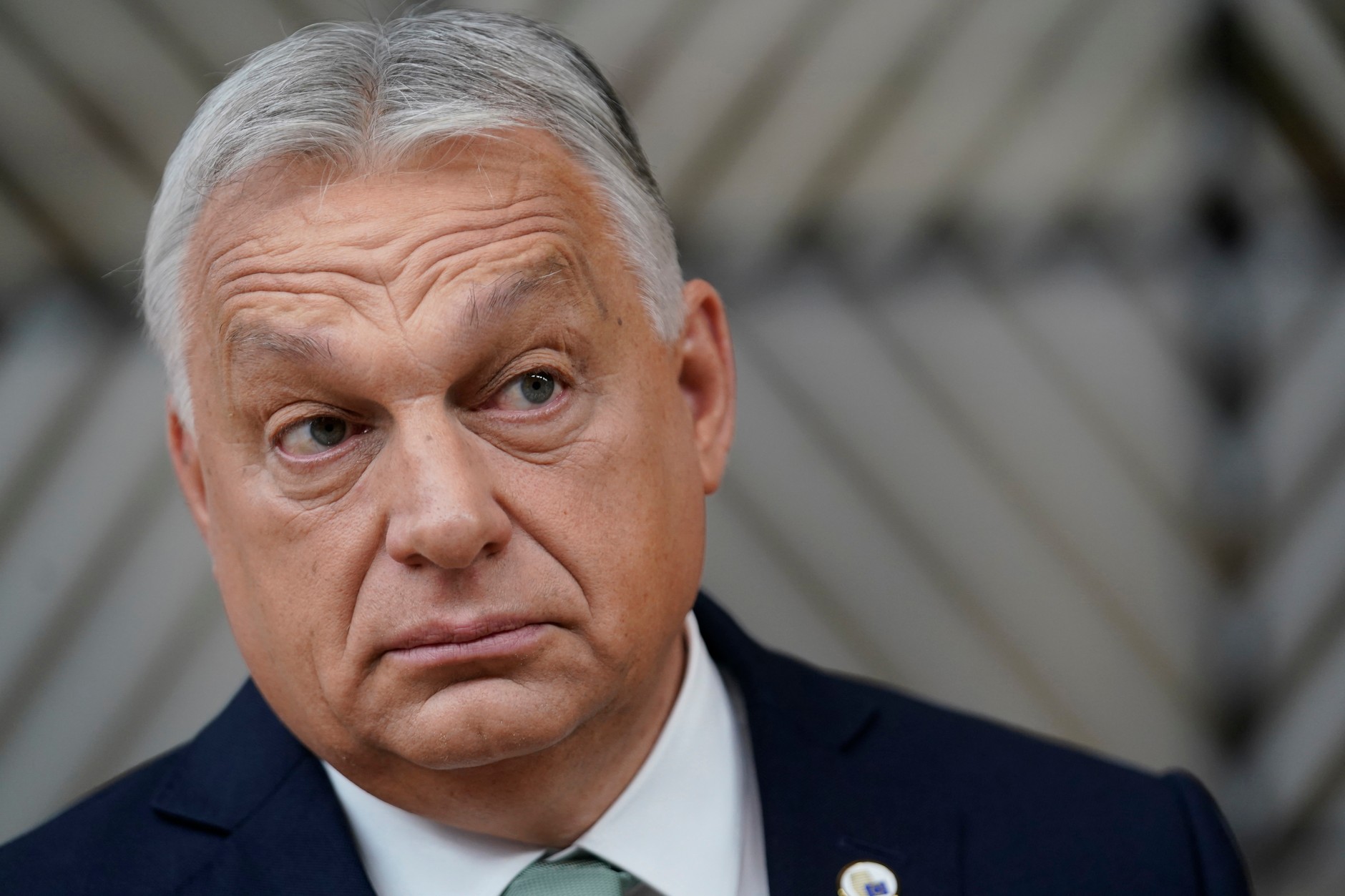
Hungarian Prime Minister Viktor OrbanPier Marco Tacca / Contributor / Getty Images
The columnist of the “The Moscow Times” website Tatiana Rybakowa notes that the persistent desire to buy Russian oil through Hungary and Slovakia can be seen as surprising, because nowadays this raw material is not so cheap compared to oil from other countries.
– Overcoming the willingness of some countries to cooperate with Russia is a difficult task. The same applies to gas. Currently, its price on the global market is quite competitive compared to the Russian offer. And if the Hungarian opposition is right, claiming that Viktor Orban derives personal benefits from working with Gazprom, it is clear that European officials do not have too many arguments to counteract it – writes Rybakowa.
I’m Ashley Davis as an editor, I’m committed to upholding the highest standards of integrity and accuracy in every piece we publish. My work is driven by curiosity, a passion for truth, and a belief that journalism plays a crucial role in shaping public discourse. I strive to tell stories that not only inform but also inspire action and conversation.