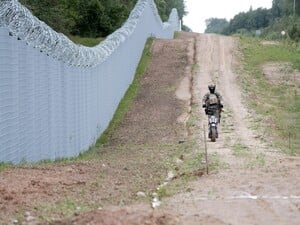
They noted that the revival of swamps can be a significant contribution to the strengthening of Latvia’s defense capabilities.
“This provides for the restoration of swamps, ponds and forests in historical degraded peat production places,” the report said.
Priority is planned to be given to those places for the extraction of peat, where “the restoration of swamp ecosystems most directly contributes to the construction of the Baltic defense line on the eastern border,” the Ministry of Defense of Latvia emphasized.
Context
Rolitico wrote at the end of August that the EU countries decided to defend themselves from a possible invasion of the Russian aggressor country, creating a water belt along the eastern borders by restoring swamps. At the beginning of the full -scale invasion of the Russian Federation to Ukraine, the idea of creating a water obstacle around Kyiv was proposed by the adviser to the commander of the Ground Forces, the author of the Ochi project Alexander Dmitriev with the call sign of the Tikhokhod, this helped stop the attack on the capital, the article says.
Rolitico noted that most of the EU peats are concentrated precisely on the NATO border with Russia and the ally of the Kremlin – Belarus. They stretch from the Finnish Arctic through the Baltic countries, past the Suvalka passage of Lithuania and to the east of Poland.