Russia's war for Moldova: “The risk is high, only 55% support the European road. The confiscations for votes, on the order of the day”

Rufin Zamfir, an expert in misinformation that has been active from 2023 in the Republic of Moldova as a strategic communication specialist, analyzes the stage of hybrid war taken by Russia in the neighboring country less than a week after the parliamentary elections.
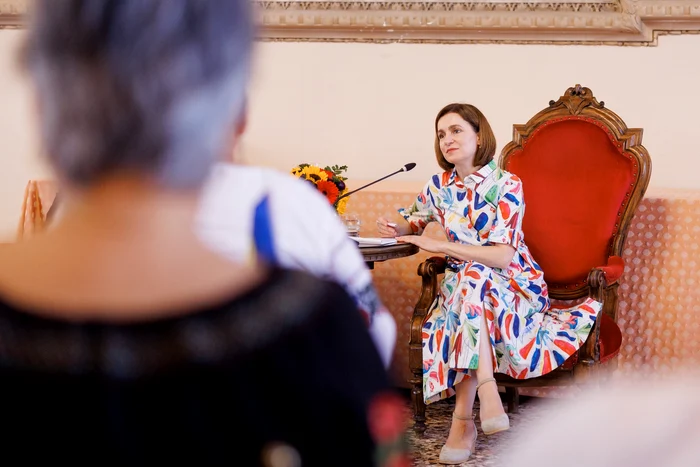
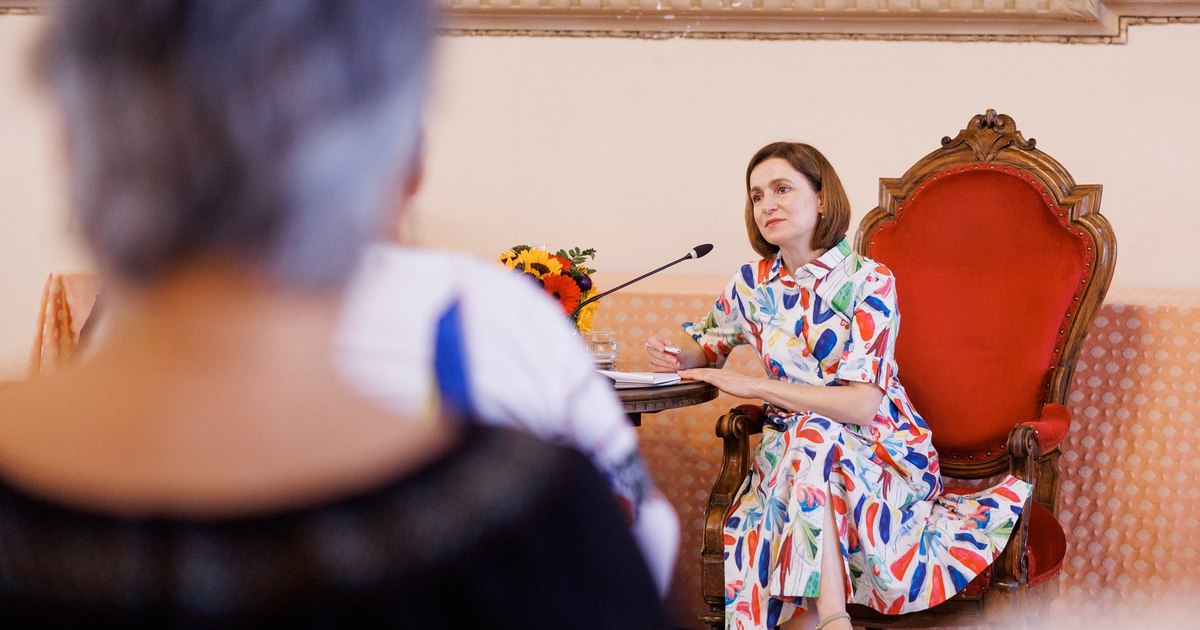
On September 28, parliamentary elections take place in Rep. Moldova. Photo: Facebook
The parliamentary elections of September 28, 2025 in the Republic of Moldova are considered a turning point in a difficult context, marked by the hybrid war carried by Russia to divert the European course.
Moscow is accused of using propaganda, misinformation, cyber attacks and illegal funding to support the pro -trial parties and to weaken democratic institutions. The President Maia Sandu warned that if these forces had to gain control in the Parliament, Moldova risks becoming a basis for the hybrid war against the European Union.
The stakes of these elections is the strategic direction of the country: the continuation of the road to European integration or the slip in an area of influence of Moscow. At the same time, the poll is accompanied by serious challenges, from electoral manipulations and discourage the diaspora to the risk of artificially generated energy and economic crises.
The “truth” discussed, before the elections, about how prepared the Republic of Moldova is to cope with the hybrid war machine, how pro-Kremlin propaganda tries to manipulate Moldovans and what Romania can learn from the experience of the neighboring country with Rufin Zamfir, an expert in misinformation that has been active in the 2023 in the Republic of Moldova. The expert is specialized in the analysis of Russian propaganda and how it influences European societies. He collaborates with media organizations and research institutions, explaining the mechanisms by which the Kremlin narratives are propagated and how to affect public opinion.
“Maia Sandu has never easily treated this type of threats”
Truth: How does the Republic of Moldova manage the hybrid war carried by Russia and how does this Romania do?
RUFIN ZAMFIR: First and foremost, let's talk about efficiency. It does not include that the Republic of Moldova manages the hybrid war much better than it manages it at this time. The efficiency that the Republic of Moldova records, not only is obvious by the comparison of the magnitude of problems they encounter, is to evaluate and from the perspective of the experience they have accumulated in a very short time and the courage to call the enemy, enemy. That's on the one hand.
On the other hand, it is about the decision of some essential institutional actors in the response architecture, the decision of these actors to reach a positive result. This is a president, Maia Sandu, who understands, understood from the beginning, the importance of opposition to this type of hybrid threats. From the beginning he understood the major risk they project. He never treated this type of threats easily as, unfortunately for us, happened at the Cotroceni Palace. He understood them and was determined to resist them.
Then we have this center for strategic communication and combating the misinformation that the Moldovan state set up in 2023 and which succeeded with a flexible team and with a kind of institutional architecture, which someone could qualify as fluid, but in fact it is, as I said earlier, only flexible. With few people have managed to quickly put into operation not only a response matrix, but also a response matrix that is proactive and which is based primarily on strategic communication, which is missing in Bucharest. Not only strategic communication is missing, but sometimes, unfortunately, even communication is simply lacking.
You have probably seen this recent incident with the drone entered in the Romanian air space. In addition to these two important actors, in Chisinau, unlike what we saw in Romania, we have a level that has the punitive decision willing to act in accordance with the laws in force. If in the Republic of Moldova we saw the sanction according to the laws in force of some activities meant to undermine the democratic processes, in Romania we have unfortunately seen to avoid sanctioning this type of actions, although they were obvious and contravened the laws of the state.
I am referring here in particular to everything that is in Romania of this extremely neo-legionary right current that we still see in the ascent. There were some obvious signs, if we just give an example, people who wore legionary t -shirts, people who supported legionary ideas, people who cultured the personality. The authorities found, but did not sanction.
In Chisinau … Things did not have this triangle, if you want, this multi -diactor of response worked very well. That is, they did not stop at finding some things, they went on in the essential step, they sanctioned these things.
Compared to last year's elections, how do the Republic of Moldova now meet the parliamentary elections?
Extremely important steps were taken. After all, it is the type of experience that the soldier who actually participates on the front in the battle compared to the type of experience he can accumulate when he is just in the barracks and work.
All the institutions I was referring to earlier, including their intelligence level, including the Ministry of Interior through the police and … carabinieri, the equivalent of the gendarmes from us, including them, all came out of last year's elections and much more able to identify the threats.
That being said, and I think it is extremely important for your audience to know these things, the level of threat is, at this moment if we refer to the figures we know that Russia is spending to the democratic route of the Republic of Moldova, several times higher than the previous presidential elections and the European referendum. So, from this point of view, they today have to deal with a threat that is 5-6 times greater than it has been in the past. Why? Because the parliamentary elections represent a much greater stake for Russia even than the presidential elections. The Chisinau Parliament is the one that is essential in hijacking the European route of the Republic of Moldova.
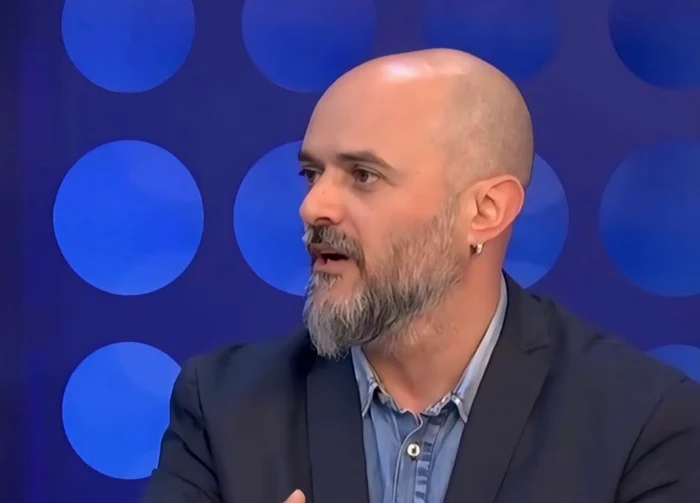
Rufin Zamfir is an expert in misinformation. Photo: TV capture
“The main narratives that Russia is pedaling today in the Republic of Moldova are the anti -European ones”
What can Romania learn from the experience of Moldova?
I would say that there are so many things to learn that it is quite difficult to make a list of priorities. I would start by saying that it is extremely important to learn the actual interinstitutional dialogue.
I would also add here that it is essential to attract in this type of response mechanism to hybrid threats in civil society who have tested their relevance in identifying, counteracting and preventing such threats, especially on the level of misinformation. It is extremely important to learn from the Republic of Moldova this reflex of the evaluation in perspective, so the mechanisms of earlwry that Moldova has developed. I think I am at this time a very good example for the Romanian response scaffold. There are many things that I think could be learned and then introduced into a simple exchange of experience with the Moldovan state.
What themes, what topics are they now targeting by the Russian propaganda machine in the Republic of Moldova?
Let's start this way from a kind of whole and start with defining the final political purpose that Russia has when it comes to the Republic of Moldova. And this final goal is to restore the Republic of Moldova to its sphere of influence. In order for Russia to be able to do this, of course the short and medium -term goal, is the imposition in Chisinau of a Prous government, which can thoroughly strive all the nearby plans of the Republic of Moldova. This is aimed at Russia regarding the Republic of Moldova. Well, in order to be able to achieve this goal, the main narratives that Russia is pedaling today in the Republic of Moldova are anti -European ones. From the classic paintings of painting of the European Union as a dictatorial actor who tries to impose his will, who tries to transform the traditional Moldovan society into one made up of gay or I also know what, to the most palpable, most immediate, which are under the undermining of the help that the European states provide to a state.
All these things are exacerbated, they are fed with all kinds of lies and halves. This is in the context of support for a Moldovan in the European Union, today is 55%. So, only 55% are the ones who support this route, the remaining 45% oppose in one form or another. By addressing to these 45% Russia and the actors who support their interests in Chisinau, they try to divert the Republic of Moldova on its European route.
“The risk is high”
How big do you think is the risk that misinformation will somehow change this result of these 55% pro-European?
The risk is very high because, as it happens not only in the Republic of Moldova, but throughout this part of Europe, there are some social discrepancies, there are categories that are extremely vulnerable to misinformation and to understand that if you manage to change the opinion of 4-5%, then things are redirected to the European way. So, yes, the risk of the negative fingerprint that misinformation projects in society is a big one.
It is not just about misinformation, but all kinds of actions are put to beating, rather to analyze in a kinetic plan: directed protests, the challenge of exacerbated reactions from the force authorities, all these are put today to be beaten by Russia …
Including buying votes?
Definitely, yes. The confiscations of illicit money arrived in the Republic of Moldova to pay votes are the order of the day.