How the disappeared billion influenced the economic policy of the Republic of Moldova. The head of the investment agency: “Today's, extremely resilient banking system” | INTERVIEW


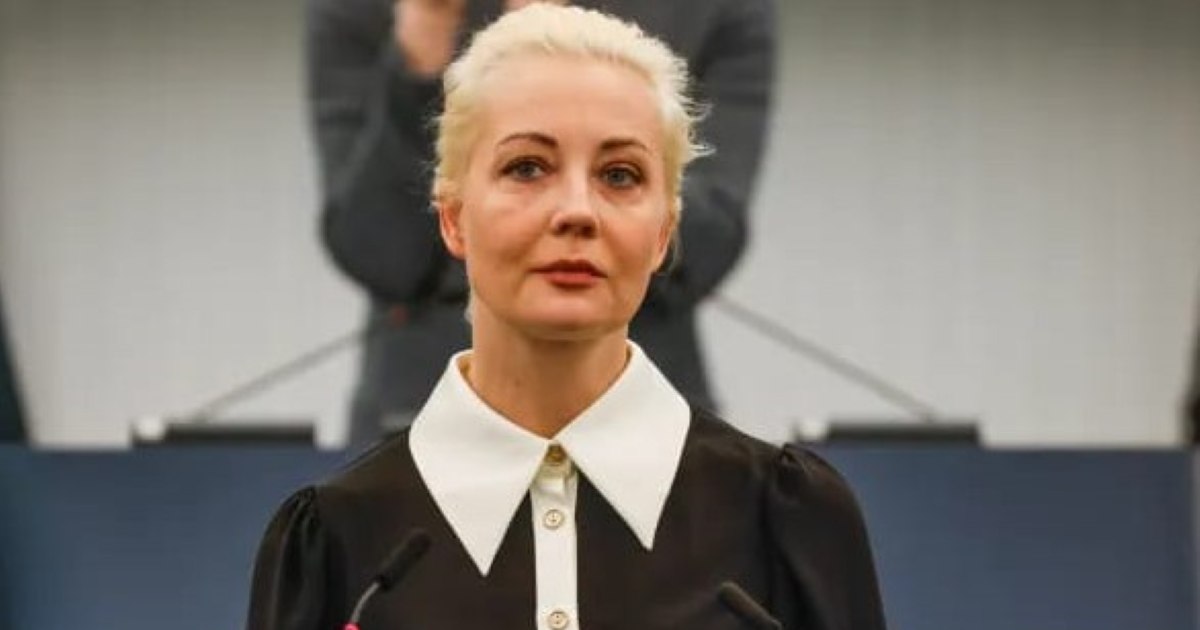
Natalia Bejan, the director of the investment agency of the Republic of Moldova, has been leading the institution responsible for attracting foreign capital from January 2024 and promoting the country's economic image. In an interview with the truth, the specialist speaks of the current economic situation of the Republic of Moldova.
Natalia Bejan, the director of the investment agency of the Republic of Moldova, has been leading the institution responsible for attracting foreign capital from January 2024 and promoting the country's economic image. With professional experience in over 15 countries, including Asia, where he has developed projects of over $ 14 million, and with a key role in supporting the startups ecosystem through the Startup Moldova Foundation, Bejan is now at the center of the government strategy to strengthen the investment climate.
In the interview with Adevărul, it addresses the current attractiveness of the Republic of Moldova for foreign investors, priority economic sectors, obstacles and legislative and fiscal advantages, the impact of war and corruption on business decisions, but also the directions by which the authorities rely on the European to provide stability and predictability.
The truth: How would you currently characterize the attractiveness of the Republic of Moldova for foreign investors? Are they attracted to Moldova?
Natalia Bejan: I think we manage to attract more. For example, in 2025 I now see more optimism in the eyes of investors, messages and our preparation to become, or this course of becoming a member of the European Union is a promise and an encouraging and optimistic future viewed by many investors, especially those who are already in the EU. We also see this in the figures of investments in the EU countries. Of course, first of all in Romania, which in the last even 10 years has not ceased to increase the volume of investments from Romania. That's why we look at it with optimism, of course the war in the region, the Ukraine war hit us and hits us very harshly. To what about the investor's optimism to invest in the region, because a few hundred kilometers are in the war, but on the other hand there are other investors who are attracted to the idea of involving Ukraine. So absolutely every disadvantage can be seen from this perspective.
What are the main economic sectors in which you see interest from foreign capital?
Natalia Bejan: As a number of companies that open in the Republic of Moldova, surely the IT field is one that remains of interest and I am sure that it will continue the same, grow and remain of interest in the coming years, this happens thanks to the Moldova IT Park platform, which has been functional in the Republic of Moldova for 8 years. And, here, for 8 years, I had an absolutely spectacular and very beautiful growth of the sector, an even organic one, from under 3,000 employees to now under 30,000 employees and in the number of companies, we have over 500 new companies in the field that is registered every year, the previous year we had a record, it was 680 companies, so there is a 280 IT There are several priority industries that have been reported by the Government and for which we have a state aid scheme for which the Government has allocated 100 million euros to provide support to strategic investments in the industry. These include agri -food processing, building materials, pharmaceutical industry and drugs. We have the textile industry, car and electronic builders. So the industries in which we see added value, in which we know we have talents, and try to bring more investments. But by the way, the investments we facilitate are not only those towards me, and not only those who have not yet entered the Republic of Moldova. Now, more than ever, we are also focused on local capital, because we have entrepreneurs with significant capital, but also foreigners who already have businesses in the Republic of Moldova and who for about 3-4 years are choosing to reinvest a significant amount of income. They here, also in the Republic of Moldova, because we have zero fee for reinvested profit.
What are the biggest obstacles that investors welcome when taking into account Moldova?
Natalia Bejan: I think that the disadvantages or problems that investors face are very specific, depend on the sector in which they intend to invest, as long as it is the most important obstacle, which is one of perception or one of public addition of the Republic of Moldova, in general, in their map of analysis in which they aim to make the investment, including from the risk, which I am, The war in the region, by the situation that is in Ukraine. For the other problems there are solutions that the government works. It is certainly necessary to work on the legislative chapter, in terms of ensuring investors that they are protected here, in the Republic of Moldova, and again our European course to align the legislation of the Republic of Moldova to the European one helps us a lot in this regard, because we have the same rights, but also obligations for investors, as well as in the European Union.
How are the fiscal and legal regulations in Moldova compared to other emerging markets in the region?
Natalia Bejan: In a study that was conducted a few months ago by the Moldovan-American Chamber of Commerce, which created a new metric of analysis of the economy, it called it a metic, so it is totally made by the private sector, the tax aspects of the Republic of Moldova were placed on the 2nd place, after the highest score offered by the entrepreneurs. So we have as consumption in the fiscal chapter of the Republic of Moldova. We have no tax changes from one month to another or from one year to another. We are quite stable in this chapter. And we know that we are also quite competitive, because in IT we have a fixed rate, a fixed tax of only 7% on the company's income, so, nothing more. We have a 12%corporate income tax fee, which is lower than the one in the region. We have a tax for tax, again, for dividends of only 6%, which is quite small. We have one of the lowest value added taxes of 20%. So in this chapter we are pretty good and I think we are competitive.
To what extent do geopolitical corruption or instability affect investment decisions?
Natalia Bejan: Of course it affects enormously. And in this chapter it is necessary to work, not only on a system that is incorruptible, but also on its image. Because if they had certain corruption actions in the past, obviously they endanger the credibility of the system in the future, even if they have significant changes. I would give an example in this sense: it is the banking system, so the bank fraud, which, unfortunately, made us known throughout the world, that billion who was stolen from banks catalyzed that today's banking system in the Republic of Moldova, after years, become an extremely resilient and one in which we certainly trust. By the way, the banking system and the financial sector is also the number 1 as a direct foreign investment sector coming to the Republic of Moldova and, from the total foreign investment stock we have in Moldova, of $ 5.5 billion, a little more than 30% are attributed to the banking sector, which is extremely important to us, because it shows the confidence of the investors, but on the other way With an international, strong, good experience and we trust the resilience of this sector.
Are there concrete examples of successful foreign investments in Moldova that you consider models for the future?
Natalia Bejan: Of course, of course. I would like to hope that they will happen more, in larger quantity and larger volume, but even some of the investments that have been reported today. Bolt's market entry is not only an investment from the perspective of huge capital, but it is a huge investment in the image of the Republic of Moldova and for other investors. Of course, it is the creation of jobs, of course, it is a competitiveness and raising the standard, the level of quality of the services provided in the taxi sector, so that would be an example, but we also have another example, such as Porobelo, who today announced on the stage of 15 million euros in a new pot for pig and a potential for pigs. What enjoys this investment, in particular, is the fact that it is local capital. Of course we need and work for foreign capital, but local investments are also extremely important.
What strategic plans exist to increase the attractiveness of Moldova in front of international investors?
Natalia Bejan: I think an extremely important plan is to keep ourselves very focused on our vision and our actions plan that is about accession to a European world. Because this dream, promise, but also, again, very concrete plan leads us to the correct direction of transparency of the way things are done in the Republic of Moldova and we see an increasing opening from investors. And we feel that the processes, the procedures improve, that our entrepreneurs, our exporters gain access to a larger market, to which the consumer is a little more elevated, a little more demanding, they ask for a better product, of better quality, but it is ready and to pay for a higher price, which happened, for example, for example, for example, for example, for example, for example, for example. The apples that we, once, 10 years ago, export to the ton, together, in trucks. Now we can sell a separate apple, because we know that each of them is worth very much, but it is increased under special conditions. So let's hold on to this European direction, which we have chosen, and as a whole country, which is now recorded in the Constitution, because this is a promise of stability for entrepreneurs and investors.
How collaborates the local authorities and the government with investors to create a more stable and predictable environment?
Natalia Bejan: We are in permanent contact with investors, even through your internet. Once again I could reitue the fact that at the investment agency, we, for the most part, are waiting to knock on the door, the exporters, investors to tell us about the problems they encounter or help, to ask us the help they need, namely this was created the investment agency. We also launched the concept of One Stop Shop this year, so that investors, especially, know that it can be addressed to us, in order to receive both information assistance, if I do not know where to go to, I do not know, perfect the electronic signature or how to start looking for, to find a service or to find a job. For all these questions they can be addressed to us, and we, through the Government, received a significantly greater support than in previous years, because I saw the real need to give more support to business.
Do you have emotions about next week's choices?
Natalia Bejan: As a citizen, yes, I certainly have emotions, but I trust the fact that, building in the Republic of Moldova, a democracy, I hope that every citizen who will vote, and that they will come out, will give themselves in which they truly believe, because it is really reflected in our desire, the direction we have. I believe that we will reconfirm the European Directorate, this is the most important and, otherwise, we will hear what the voice of the people is.
Brief history
The “theft of the billion” is a large bank fraud scandal, which broke out in the Republic of Moldova in 2014. Specifically, according to public data, 13.3 billion Moldovan lei would have been fraudulently extracted from three banks of the country, through a carousel type scheme, the business being orchestrated by Ilan Sor, Vladimir Plahotniuc.