

The energy crisis of Europe is alleviated, but it is planning the threat of Trump's sanctions for Russian gas buyers. Without transit through Ukraine this winter, can the EU afford to breathe easy?
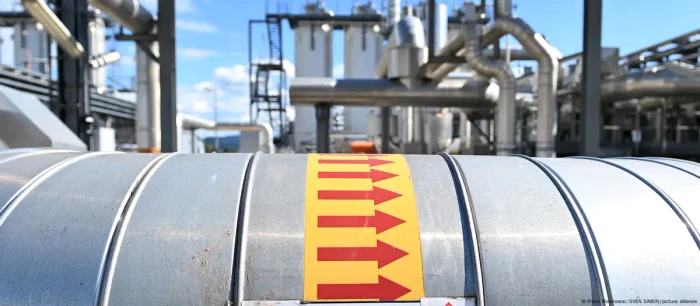
Hungary, Slovakia and Austria have the greatest difficulties to quit Russian gas
The coolness of autumn creeps over much of Europe, as an anticipation of the following winter. Fortunately, Gas Infrastructure Europe, the Association of Gas Operators, reports that the gas reserves of the European Union were on September 15, 2025 at almost 80%. The share is below the level of the “pillow” of 90% of recent years, but over 2021. Will this winter be hot or uncertain?
After detaching Russia following the large -scale invasion of Ukraine in 2022 and the diversification of energy sources, the EU states focused on liquefied natural gas (GNL) in Norway, the United States and Qatar, continuing to accelerate the development of renewable – solar and wind energies.
In the last two years, due to this additional capacity, Europe has managed to completely fill its gas reserves until September, ensuring an additional buffer for the coldest months. The reserves should remain solid this winter.
Reserves, a less dramatic perspective
As the EU no longer face an acute energy crisis, Brussels leaves a margin of flexibility, allowing Member States to reach 90% of the storage capacity until December 1, if necessary. However, Europe has consumed more of its reserves last winter, leaving fewer surpluses than usual.
Petras Katinas, energy analyst at Center for Research on Energy and Clean Air, evaluates current storage levels and alternative sources as a “solid buffer” in the event of supply disturbances. “But the rapid withdrawals and the volatility of the time could still cause temporary increases in prices or punctual streams,” Katinas explained for DW.
In completing the internal resilience of Europe, the global supply conditions and stable prices also support the energy training of the Community Bloc for winter. According to Tom Marzec-Manzer, from the global consulting company Wood Mackenzie, the global energy offer has increased this year, while demand, especially gas, is probably weaker.
“This has helped significantly in refill the reserves of Europe this summer, which continues at a good pace,” pointed out for DW the consultant who leads the Directorate for Europe, Gaz and GNL of the aforementioned company.
However, the EU remains vulnerable to geopolitical shocks, especially those generated by the tariffs imposed by Trump.
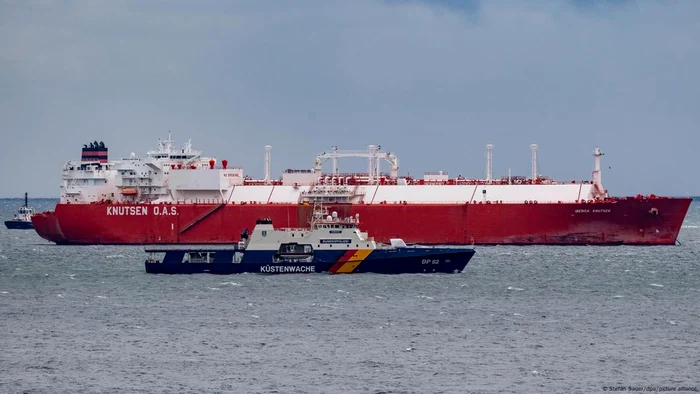
EU states imported more liquefied gas by maritime
American rates on Russian energy bring new uncertainties
The President of the United States, Donald Trump, presses Brussels to impose sanctions to Russian energy buyers, arguing that they will increase the financial pressure on Moscow to end the conflict that lasts for three and a half years.
Last week, the Secretary of the US Treasury, Scott Besent, sent the EU to the 7 -industrialized state group (G7) that they should join Washington in imposing “significant” rates to China and India for their energy agreements with Moscow.
Trump told Brussels that the US would “mirror” such rates, taking into account a 100%share. The US president has already imposed 50% rates, 25% of the basic plus 25% additional because it signed an agreement with Moscow in 2022 for the purchase of low -price hydrocarbons.
In contrast, China, which in turn intensified Russian energy purchases, has a significantly stronger negotiation position in front of Washington. As a result, the US president has not yet announced plans for energy taxes applied to the second world economy. The negotiations are in progress.
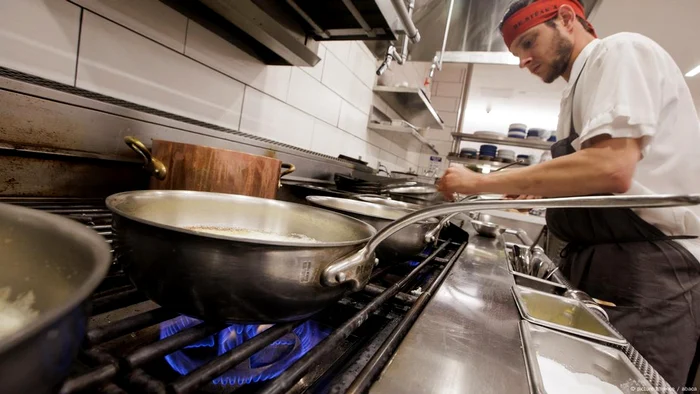
Gas prices exploded in 2022 causing a major energy crisis in Europe
Transit agreement through Ukraine with limited impact
The expiration, on January 1, of the Gas Transit Agreement between Ukraine and Russia added a new geopolitical pressure on the energy supply of Europe. The decision of Kiev not to renew the contract was to stop a flow of income that financed Russia's war effort.
The agreement that allowed, for five years, the flow of Russian gases to the west through the Ukrainian pipes, has practically closed one of the last major EU supply routes.
Initially, fears related to price increases and disturbances have been spread, especially in countries such as Austria, Slovakia and Hungary, which were more dependent on Russian gas transported through these pipes. Gas reference prices increased by almost 50% at certain times last year, against the backdrop of heavy winter and low flows.
However, the real impact on the market has been limited. Western Europe had already diversified its energy sources, and underground storage levels were solid before winter.
“The decrease of volumes (through Ukraine-n.red.) It was not great, although some countries, especially Slovakia, had to reorient their acquisitions,” explained Tom Marzec-Manzer. “Because it was an early event, the cessation of the transit agreement through Ukraine did not have a major impact on prices or supply.”
Two -year -olds for energy independence from Russia
After exceeding the energy crisis, the EU is now in a better position to diversify the latest deliveries of Russian hydrocarbons. Gas imports from Russia were reduced from 45% to 19%, and Russian oil ones fell from 27% to the beginning of the war to only 3% last year, according to the European Commission.
In May, the Community Executive published a detailed roadmap to completely prohibit all remaining gas and GNL imports from Russia by 2027. The plan asks for Member States to present until the end of national strategies for the gradual elimination of Russian gas, which could be difficult for some countries.
“Baltic countries have done an excellent job in giving up Russian fossil fuels, and Poland has largely eliminated Russian gas,” says Katinas. In the interview for DW, the expert noted that the “unequal” progress in other states in the Vișegrád group was caused by the lack of diversification efforts and investments in renewable.
The consistent gas stocks and the diversification of the supply lines increase the training of Europe for winter, but the tariffs imposed by Trump and the unpredictable weather cast shadows of uncertainty. Natural gas prices will probably not reach the extremes of 2022, almost 340 €/MWh, but isolated penalties could cause temporary increases.
Nik Martin – DW


