
The price of basic foods will be set, next month, without taking into account the ceiling of the commercial addition. Will the price of these products increase, increase inflation? These are the questions the economist Radu Nechita answered.
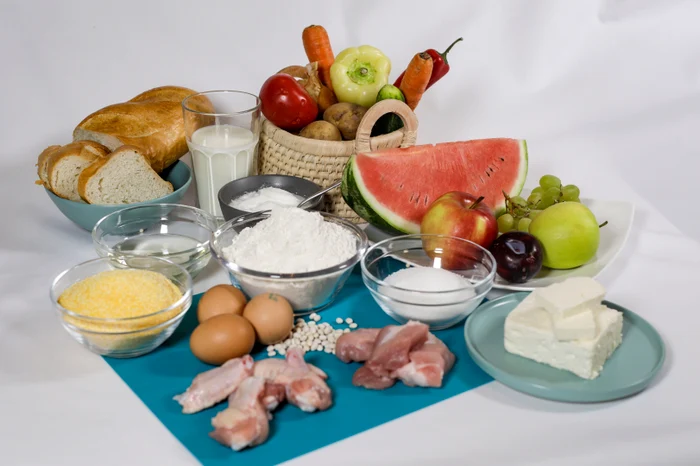
Prices for basic foods will be able to be set without capping the addition. Photo: Inquam Photo
The government has announced that the ceiling of the commercial addition to the basic foods will not be extended after October 1, 2025. The measure was adopted, in July 2023, and provided for the commercial addition to the basic foods to a maximum of 20%, compared to the production cost of the product.
The PSD firmly challenges the decision, claiming that it has not been discussed in the coalition and that it cannot agree with the ceiling. This while, the government spokesman, Ioana Ene Dogioiu, states that the decision was made by coalition “without any contrary”.
Sorin Grindeanu, the interim president of the PSD, requests urgent clarifications to the governance partners, declaring that the PSD has not been informed and does not agree with the elimination of the ceiling. “The specialists say that lifting the ceiling would immediately increase inflation by 2-3 percentage points, the consumption would decrease, and the buying power of Romanians will collapse!“, Grindeanu said. From the PSD, the deputy Marius Budăi says that if the measure is not prolonged, the party has a” plan B “to protect the citizens with low incomes.
USR believes that capping is a social intervention that must be applied very restrictively, and expresses mistrust in its long -term efficiency. The Minister of Agriculture, Florin Barbu, argues instead that the ceiling had positive effects, with price decreases confirmed by the Competition Council, but warns that the sudden elimination could intensify inflation.
The government argues that the measure causes economic distortions for producers and traders and that the extension is no longer sustainable. From the PSD, the government is accused of making statements that “nourish vanity” and that the information on the decision is presented as if they were clear decisions, although they have not been officially made in all the structures of the coalition.
The most affected products if the lifting of the ceiling would intervene steep: flour, corn, oil, sugar, butter and other processed basic foods, which depend on commercial addition (tea, milk, bread).
The conflict risks affecting government stability, as divergences on this topic are publicly manifested, with accusations of lack of transparency and inadequate negotiation between coalition parties.
“The capping of prices does not solve any problem, but it aggravates it”
“Adevărul” discussed with the economist Radu Nechita, professor at Babeș-Bolyai University in relation to the impact of this measure announced by the Bolojan Government.
The truth: Leaving aside the political dispute, how do you look at this elimination of the ceiling of the addition to the basic products?
Radu Nechita: Any economist knows that the capping of prices does not solve any problem, but aggravates it. There is no such serious problem that by controlling the price you can not aggravate it.
Price control is not an economic solution, it is a political solution, we do. We show that we care. It is a very good political solution, it does not cost us anything, we attack the entrepreneurs, we attack the companies, so it is a perfect political solution because the politicians give the impression that they care about the money of others and if the story does not come out, the politicians already know who to blame. Next, the entrepreneurs, that is, those who produce riches, will be shown with their finger by those who live from the redistribution of wealth, that is, politicians.
What fects did the adoption of the ceiling measure have the commercial addition to the basic products?
When I am the small producer and I am capable of the addition to the products on the respective list, I practically have serious difficulties in living on the market. But if I shake my head and I want to want to bypass this legislation, with a little effort I can bypass. I make three companies and everyone puts the cap capped to 1% or 5% or as much as it is.
Of course, this is worth it if I have some sales of a certain level to deserve the headaches. There is no point in making a company if I sell 100 kilograms of products. Instead, if I am a big producer, then it is worth the headache.
This is a method, by multiplying the number of hands that the products go through. Or I make an intermediation company and I buy from one and sell to the other and you as retail, as a retail man you will have an insignificant addition. It is just a cosmetization of the problem and possibly an additional barrier that hits the small trader rather than the big trader. And he is not very sure that she has an effect on the price of the shelf.
“The most hit are the small producers”
How can the big store chains avoid the effects of this ceiling?
If the big producers would like to limit their competition, they would do it as follows. Let's bring people to us, coming up with what in the marketing technique is called an appeal product. I mean, I put the bread, the sugar, the milk, the butter, the oil, the rice, the pasta and a few that are frequently consumed, by chance exactly those on the list. We can put them at some very low prices, artificially small, may even be sold at a loss. Then the man will come to take his butter pack at 5 lei instead of being at 12 or 15 lei and comes to us, but if he takes his butter pack, he also bought other things.
And then I, as a great distributor, can do what is called a cross subsidy. I allow myself to lose money for a product, to earn from the turnover and from the additional addition to the others.
Normally, they cannot do this because there are laws that prevent this. I mean, as a great distributor I cannot come and sell at a loss or understand with others to sell the basic products very cheap to bring people to us and indirectly to confuse the other little traders who are confusing us. We cannot do this, because the Competition Council comes and fines, if we understand each other.
Instead, the state comes and says, “None of you has the right to sell to the addition of so much.” This means the state makes the cartel police. We do not even have to understand to cease our additions to the small products so that together we can push the small traders in the ditch, the state makes our work. And we don't risk fines.
So, what I mean is that this measure can be bypassed … First, it should not exist, it is a counterproductive measure, from an economic point of view.
It is taken only for the same reasons why a lot of stupid economic policies are taken and adopted, because they bring advantages from a political point. People do not have the level of economic education enough to realize that this is stupid. And politicians come with this because it is what is good in the eyes of the voters. If the voters were more economically educated, they would be annoyed when they saw such measures.
This measure should not exist.
Two, it does not solve the problem, it aggravates it. It is a barrier to those who want to produce wealth in this country, those who make productive efforts. This barrier confuses everyone, but not everyone the same. The most hit are the small producers who cannot juggle with the compensation of smaller earnings or even losses on certain products through sales and higher rolling products.
“Most will hesitate to increase the prices, at least in a first stage.”
What effect do you think will have the ceiling to eliminate the market? Will prices increase?
Some traders will say, “we do not increase prices” and will transform this into a kind of marketing tool for them. Because, however, the retail market, so distribution, is a competitive market. It is not as if we are in electricity or others where there are very few producers and it is difficult to change the supplier. Most will hesitate to increase the prices, at least in a first stage. So great changes will not exist, but if there was a different signal that the state will no longer come to play and intervene and distort the market, this will also encourage productive activities to those activities that run according to privileges and redistributive activities.
It is possible that some distributors increase the prices, but given the level, the degree of competition that exists, there will be a reluctance among them in doing so immediately. They will make it so unintended, so to speak, when there will be other measures that trigger that somewhat simultaneous reaction of all. Basically, every big distribution commercial chain will try to let others go on the bulb for the first time. For them it is important not to lose their customers, because it is difficult to bring them back.
“Politicians do inflation through the budget deficit”
Do you think that giving up this measure will have an effect on inflation?
Inflation does not result from the price policy of the producers. Inflation is caused by the monetary policy of the National Bank in association with what happens to the state budgetary policy. In short, if the Romanian state is in deficit, which has happened for decades, that deficit must be funded. The respective financing is done in a very large proportion through government securities. Those state securities allow to be brought under warranty and commercial banks will grant loans further to other companies or … maybe even the state. So it is a mechanism by which, ultimately, the monetization of the budget deficit takes place.
That is, the transformation into additional monetary mass through the banking system of the state budget deficit. So the cause of the causes is the budget deficit. The state creates a “purchasing power” by distributing salaries, making investments that it finances through loans, distributes in the economy an additional purchasing power that compete with the purchasing power of those who have produced goods. This inevitably leads, everywhere and always, to the increase of the price.
The cause of inflation is to them. Politicians do inflation through the budget deficit, indirectly. If there was no additional monetary mass, prices would not have a reason to rise. Prices can increase if there is an additional monetary mass injection in the economy. As long as we see that the deficit exists, persists, even deepens, we have no reason to be surprised that the prices will increase.
Yes, these prices will probably increase, if there is no fear of losing their customers. The fact that some prices increase faster than others will be, in fact, a consequence of the fact that we have lived in a lie. So this ceiling was the injecting of lie and distorted signals in the economy. So the entrepreneurs are hard enough to make decisions because any entrepreneurial initiative is oriented towards the future. The bread we buy today, the donut we buy today is made with wheat that was sown a year ago. No one knew for sure I would buy my donut today. So, the activity of the entrepreneur is a bet in the future, we are in a fog of the uncertainty that the politicians, instead of dissipating and introducing some jackets, some fluorescent markings or something, they also come and add the smoke curtain over the fog.