Change of position of Germany in terms of frozen Russian funds. Berlin is afraid of a Trump administration movement


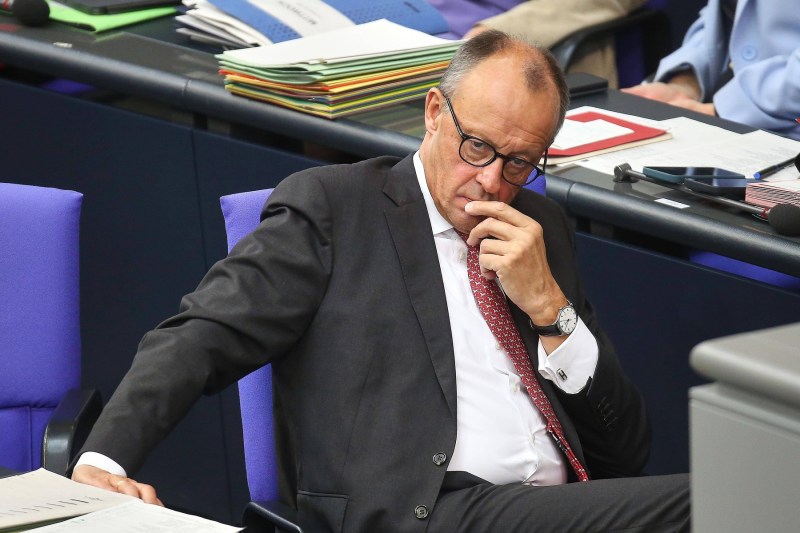
German Chancellor Friedrich Merz, in Bundestag, Berlin, on September 17, 2025. PHOTO: DTS Nachrichtenagentur / Imago Stock and People / Profimedia
Germany has changed its position and now supports the use of frozen Russian sovereign assets to finance the needs of Ukraine, writes Bloomberg on Wednesday, September 17, citing sources familiar with this subject, whose identity has not revealed it.
According to the American publication, in Europe a tendency to expand the use of frozen Russian assets for financing Ukraine is outlined, following the new pressures exerted by US President Donald Trump and changing Germany's position.
The European governments and their allies in the group of seven (G7) seek ways to continue to use frozen assets to generate additional income to support Kiev's defense against Moscow War, according to people familiar with this issue.
The vast majority of the immobilized assets of Moscow, worth about $ 300 billion, are in Europe.
The President of the European Commission, Ursula von der Leyen, said in a speech earlier this month that the EU has to find new ways to make Russia pay for its war.
“We must work urgently on a new solution to finance Ukraine's war effort based on immobilized Russian assets,” she said during her speech on EU. “With the cash balances associated with these Russian assets, we can offer Ukraine a repair loan,” added the head of the European Commission.
Germany – which has long been cautious about the protection of the Financial Center of Europe and the respect of state immunity – has been shown to be a strong supporter of the maximization of funds, people who spoke under the protection of anonymity said.
Berlin's position change occurs against the background of concern that if US support under the Trump administration will diminish, the burden of supporting Ukraine will largely fall on the greatest economy of Europe, which could further feed the extreme-right in Germany.
However, the movement would not reach the direct confiscation, which the US and some countries in Eastern Europe continue to request. The EU, G7 and Australia have frozen the assets of the central bank of Russia, after invasion, and agreed to channel interest income to Ukraine last year.
The subject is expected to be raised by some EU finance ministers at the Copenhagen meeting that will take place this week and EU leaders in October, officials said.
A decision should be completed, ideally, at the summit of EU leaders on October 23-24.
Ukraine is currently receiving funds from frozen Russian assets in the extraordinary mechanism of accelerating G7 revenues, which has given Ukraine a loan of $ 50 billion funded from the profits generated by these assets.
Merz: Putin “tests the limits” for a long time
Previously on Wednesday, German Chancellor Friedrich Merz urged Europe not to establish Russia to establish the terms of a peace agreement in Ukraine, warning that this would only encourage Russian President Vladimir Putin “to look for his next target.”
“Putin tests for a long time. He sabotages, spies, kills, tries to destabilize the population,” Merz said in the Berlin Parliament.
Merz said this was obvious in Poland last week, when Russian drones entered the country's airspace and were for the first time above the Polish territory.
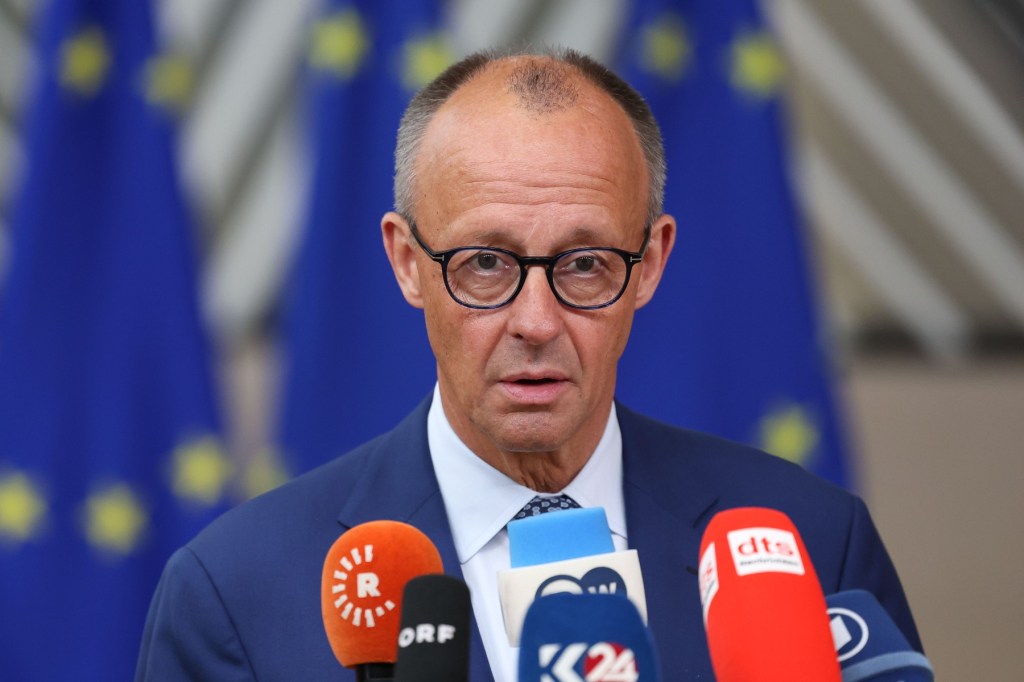 The Merz Chancellor accuses the “violation of the Polish and Romanian air space by Russia” and announces what is behind these incidents
Putin also aims to destabilize the German society, warned the Merz chancellor.
“We will not allow this to happen,” he stressed, adding that Germany strengthens its resistance and defense capabilities even for this reason.
“We must discourage opponents to commit new aggressions and, at the same time, bring together allies and partners,” said the head of the Berlin government, quoted by DPA and Agerpres.
Germany was one of Ukraine's most powerful supporters following the Russian invasion of 2022.
The German Defense Minister Boris Pistorius said last week that Germany has now become the largest military aid provider to Ukraine, surpassing the United States.