The Castle of the Convente Contect, reborn from the ruin. The secrets of the luxurious palace at the foot of Retezat


Nopcsa Castle at the foot of Retezat was reopened after the restoration started in 2019 and promises to be a new tourist landmark. The emblematic building regained its appearance from the 19th century, when one of the most eccentric noble families lived here.
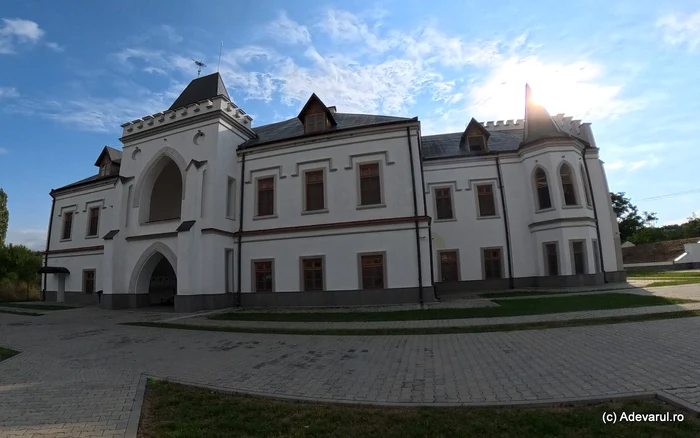
Nightcsa Castle. Photo: Daniel Guță
The roads starting from the “Country of Hațegului” (the historical name of the Hațegoara region) to the Retezat Mountains through history loaded, which have retained their archaic appearance, undisturbed by the industry or by the brutalistic constructions specific to the communist era.
From place to place, the patriarchal settlements with old houses and river stone fences, dominated in the background by the prominent ridges of the Retezat, are adorned historical monuments. Tourists find here the noble castles from the past centuries, with a pretentious architecture for the time of their building, fortresses in unknown times on the corners of rocks, medieval stone churches with walls adorned by saints painted in bright colors, built from ancient ruins and many other monuments.
The “pearls” of the last villages crossed by tourists, before entering the steep and wild valleys of the rivers in Retezat are places such as the former Roman city Sarmizegetusa, the Corner and Mălăiești fortresses, the cnesia courts from Râu de Mori and Sășu de Sus, the medieval Tower from Răchitova, Castele, The medieval churches from Pesteana, Densuș, Sântamaria Orlea, Râu de Mori and Ostrov. Each has its own legends told by generations of locals.
A new castle was rendered to Hațeg's country
Recently, a new tourist objective was rendered to the land at the foot of the Retezat, after two decades in which he had been abandoned in the ruin and another five years in which he was in the site.
Nopcsa Castle in Săcel village, ten kilometers from the city of Hațeg, on one of the roads leading to the Nușoara Valley (stones) of Retezat, was restored and regained its appearance from the 19th century, when it was inhabited by the legendary family (Nopcea).
The restoration works, worth over 11.5 million lei, were financed from government funds and the budget of the Hunedoara County Council, and the castle in Hațegului Country has entered the administration of the Dacian and Roman Civilization Museum. The reopening of the castle attracted both Romanian tourists, but also many Hungarian visitors.
“Hungarian tourists are especially interested in visiting the places where the noble families in the area lived, but with Romanian roots, such as Nopcsa and Kendffy, the churches and palaces they have erected many centuries ago,” says a local guide from Sântamaria Orlea, the village neighboring Săcel, where is the Kendeffy Castle and the medieval church founded by the Cândea family (Hungarian under the name of Kendeffy).
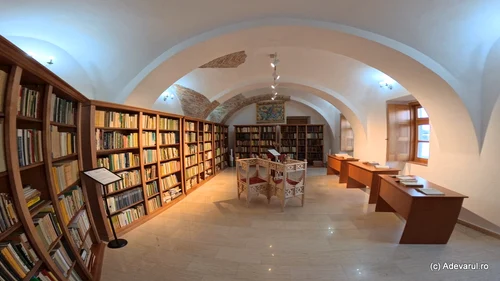
Image 1/18:
Castle Nightcsa Photo Daniel Guță Adevărul (20) JPG
Nopcsa Castle, the new attraction of the country of Hațeg, was erected two centuries ago by the noble family, related to that of the Huniazi, according to the coat of arms, which keeps, at both families, the ring in the beak.
Nopcsa nobles from the Vienna Imperial Court
In the nineteenth century the Nopcsa family had become one of the most influential in Transylvania, keeping close ties with the Vienna Imperial Family. In Transylvania, the nobles Nopcsa held numerous estates and castles in the lands of Hațeg at the foot of Retezat and on the Mureș Valley in Hunedoara and Arad.
Vasile (Laszlo) Nopcsa (1794-1884) was committed supreme of Hunedoara in the middle of the 19th century and was among the few nobles who joined the Assembly of Blaj, in which the Romanians asked for their rights and freedoms as a distinct nation in Transylvania.
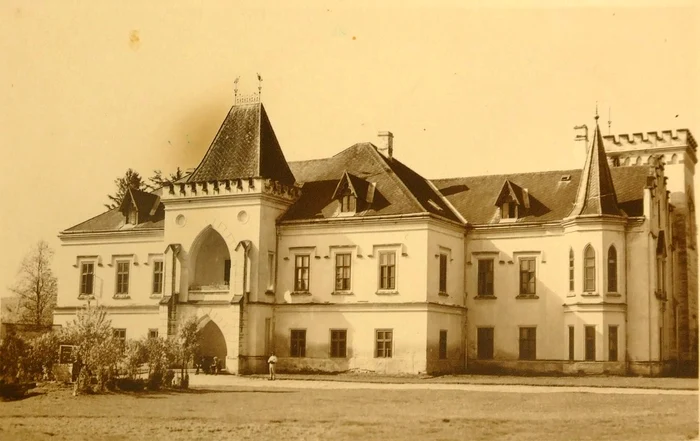
Nightcsa Castle. Photo: Illustrated by the time
Following his gesture of solidarity with the Romanians, the Hungarian elites marginalized him, and during the revolution, his castle in Zam was set on fire by the Hungarian troops and then devastated by the locals. Then he became the hero of local folklore and a famous novel at the era “Rich Poor”, published in 1860 by the writer Jokai die.
The author of the volume said the story of an extremely rich count, with features similar to Nightcsa, who secretly leads a band of robbers and counterfeiters, who acted at the foot of the Apuseni, in the land of Zarand.
Francisc Nopcsa (1815 – 1904) The eldest son of Laszlo Nightcsa was committed of Hunedoara between 1851 and 1867 and then, until 1894, Chancellor of Queen Elizabeth (Sisi) and the empress of Austria. The baron was the confidant of the Empress and the man who brought her the tragic news of the death of his son, Prince Rudolf, in 1899.
In 1882, the prince had been a guest at the Castle in Săcel and the neighbor of Sântamaria Orlea during a hunting expedition in Retezat. It is said that, to Rudolf's surprise, Baron Nopcsa ate at his usual milk mulberry dinner and did not touch the royal table, noted the newspapers of the time.
Born in the same castle, Elek Nopcsa (1848 – 1918), the second son of Laszlo Nopcea, became a parliamentarian and, from 1897, head of the Hungarian Opera in Budapest, a position he had to give up after a scandal that held the first page of the newspapers. He was accused of organizing private parties with his ballerinas and of being abused by his dancers.
“There is no young woman in the National Theater that she would not have seen naked”, Write the newspapers in Budapest.
The family nopcsa in the 20th century
Elek and his wife Countess Matilda Zelenk -Zenski had three children – the most famous being Franz Nopcsa, the scientist who discovered the fossils of the Hațeg Country.
Franz Nopcsa (1877 – 1933) had a brilliant career as a scientist, but at the same time he was a controversial character, with a long activity in the Austro -Hungarian and German spy services, on the territories of Romania and in the Balkans.
After the First World War, Baron Franz Nopcsa returned for a short time to his family's estate in Săcel village, where the locals made a reception that would affect him for the rest of his life.
“The inhabitants of Haţeg could not be reconciled with the old owner of the Castle in Săcel. They put him, and when he was walking alone, they attacked him. Men equipped with forks and sticks tied over him and slammed him to the ground.”, Related his former close Andras Tasnadi Kubacska, citing the baron's testimonies.
Baron Franz Nopcsa died in a hotel in Vienna, in 1933, in controversial circumstances. The official investigation showed that, on the night of the tragedy, before he committed suicide, he shot the assistant Bajazid Elmas Doda, while he was sleeping.
“Baron Ferenc Nopcsa was a prominent personality of the Hungarian scientific life, who has gained a European renowned as a geologist, paleontologist and geographer, and in the Balkan matter was an internationally recognized authority. It belonged to an old aristocratic family, among the oldest in Hunedoara County.” Note the press of the time, at his death.
Born in Săcel, Elek Nopcsa (1879 – 1920), Franz Nopcsa's little brother was a career military, but after the First World War he was accused of involving the crimes committed by civilians by the armies close to Admiral Miklos Horthy, former regent of Hungary.
Ilona Nopcsa (1883 – 1963), Franz Nopcsa's little sister was married to an Italian mangraph, Alfred Pallavicini, together with whom he lived in Hungary and then, after World War II, in Italy, in Rome.