Poland has one of the most dynamic growth rates in the EU and becomes a strategic economic pillar of the Union


Poland, despite Russia's aggressive politics and constant threats from the Kremlin, demonstrates one of the most dynamic growth rates in the European Union and becomes a strategic EU economic pillar.
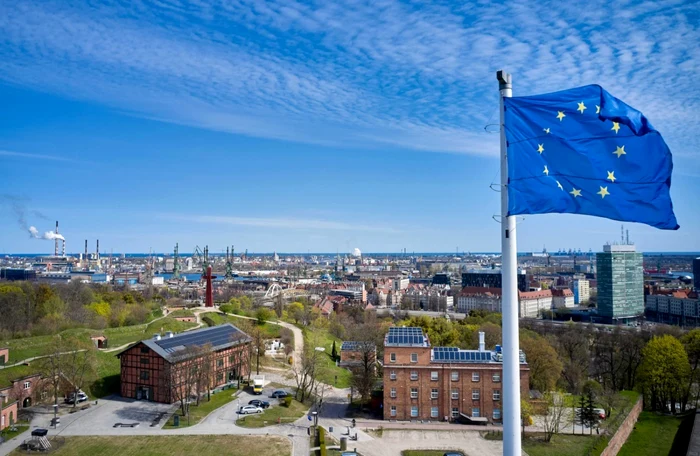
Poloin, among the EU/PHOTO economic growth leaders: Archive
As Bloomberg notes, the country, which is bordering on Ukraine, is one of the economic growth on the continent for the first time since accession to the EU in 2004.
According to savings forecasts, the gross domestic product of Poland ($ 915 billion) will increase by 3.3% in 2026 and 3.2% in 2027. For comparison, the EU average will be 1.4% and 1.7%, and in Russia – of 1.4% and 1.5% respectively.
Analysts say that Poland's success confirms the effectiveness of the European single market, with the free movement of goods, capital, services and labor. It is also an argument for the opponents of integration – from the supporters of Brexit in the UK to the American politicians who have criticized immigration and customs tariffs. The symbol of this dispute became the so-called “Polish installer”, which has been mentioned for many years in British and European media as a personification of cheap labor, despite the contribution of migrants to the economies of these countries.
Bloomberg notes that Poland GDP has grown steadily since 2016 and will continue to grow for at least three years. According to the Agency, this is unprecedented for the country since the statistics began to be registered in 1986: since 2017, the Polish economy has increased by 93%, exceeding the rhythm of Great Britain by 58%.
The agency also notes a record increase in consumption expenses: from the Brexit referendum of 2016, they increased by 125%, which represents three times the average of the euro area (40%) and significantly exceeds the rhythm of the top economies – the United Kingdom (30%), Germany (40%), France (34%), Italy (26%), Spain (45%), 45%) Holland (57%).
In the last 15 years, Poland has significantly reduced the historical gap to the more developed European countries: the GDP per capita has increased by about 50%, while in the United Kingdom this figure has just changed. After Russia's invasion in Ukraine, this tendency only intensified: Poland climbed the 16th in terms of GDP growth rates in 2023 on 2nd place this year.
Strong growth is supported by financial markets
According to the agency, strong growth is supported by financial markets. Zlotul appreciated with the dollar with 14% of February 24, 2022, becoming the best performance of the 23 most traded emerging markets. Polish government bonds generated 31%, exceeding 30 European governments, while the United Kingdom, Germany and France had negative returns (-22%, -11%and -12%respectively). Among the 50 countries that have issued fixed income bonds in the last three years, Poland has registered a yield of 24%, exceeding the reference index, which decreased by 6%.
Bloomberg emphasizes that the country market market also has solid results. The profitability index of large and medium -sized companies increased by 49% in dollars and ranked sixth in the top 46 countries. Over 40% of the Polish market consists of 35 financial companies, which demonstrate a profitability of 73%. Of the 459 companies in Bloomberg Global Financial Index, five Polish banks and an insurance company increased by 36% this year, exceeding the global average (23%). At the same time, Polish banks remain relatively undervalued: investors pay only 1.7 times for their net assets, compared to 4.7 times for the reference index.
All this, Bloomberg concludes, explains why Ukraine can feel a certain peace with a reliable ally, which becomes one of Europe's key economic pillars.