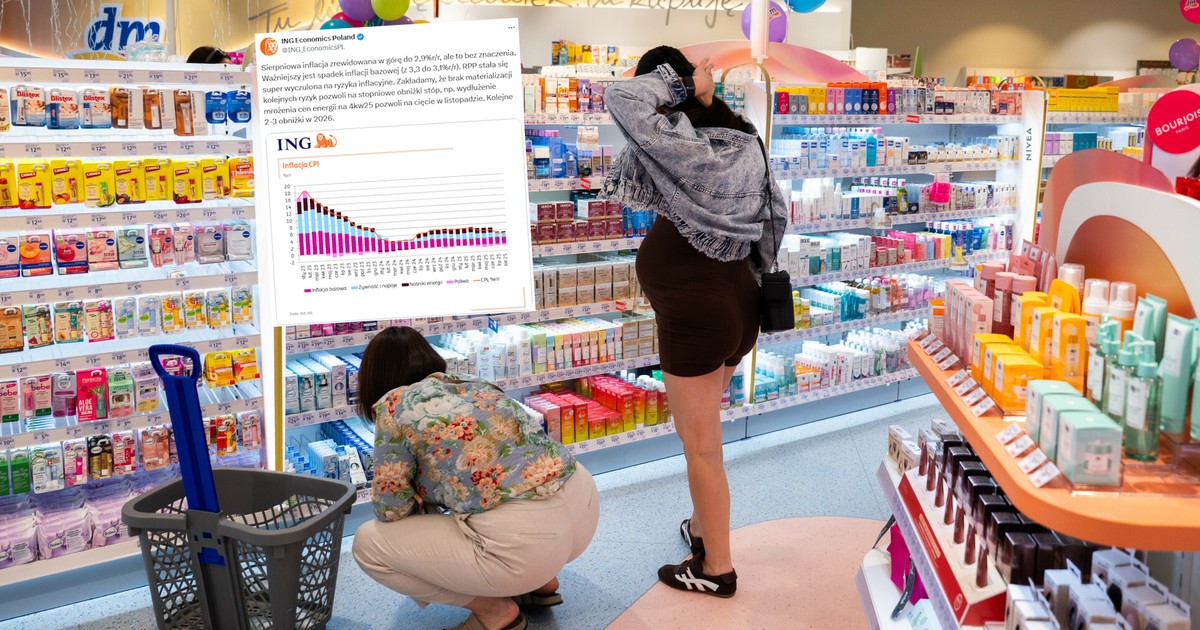

Inflation in Poland decreases, but slower than it resulted from the preliminary calculations of the Central Statistical Office two weeks ago. On Monday, it turned out that the average price increase in August, however, was 2.9 percent. How to evaluate this result? It's good because inflation gives up, or maybe it happens too slowly?
“The data slightly higher than the preliminary respect does not change him positive pronunciation – inflation is near the target and will remain there in the coming quarters” – Comment on the economists of the PKO BP.
Basic inflation is the lowest from the beginning of 2020.
PKO BP experts estimate that Basic inflation decreased to 3.1 percent. from 3.3 in Julywhich would mean A decrease to the lowest level from the beginning of 2020.
Bank Pekao's experts speak in a similar tone. “The inflation image remains unchanged. Base inflation with a slight decrease to 3.1-3.2 percent. Inflation of services decreases at a snail's pace, freight inflation low. For a long time CPI will be in the range of 2.5-3 percent. ” – they forecast.
See also: Negative duties effect in the USA. Inflation accelerated
In turn, ING Bank Śląski economists in a commentary on GUS data indicate that “MPC has become super sensitive to inflationary risks”.
Inflation in Poland. What about interest rates?
“We assume that the lack of materialization of subsequent risks will allow for gradual reduction of interest rates, e.g. extending the freezing of energy prices to the fourth quarter of 2025 will allow for Cutting in November. Another 2-3 discounts in 2026.” – they assess.
“The inflation structure indicates the starting period of low price dynamics, and the decreasing base inflation indicates the weakening of internal cost pressure. This is a positive change after previous higher readings in this category ” – we read in the analysis of Andrzej Gwiżdż, an analyst of the port's investment platform.
Indicates that disinflary factors are present both global and national. The decrease in the prices of energy resources and the earlier strengthening of the zloty strengthened the disinflation trend, and cheaper fuels and lower import prices reduce costs for companies and consumers. Wage pressure is also weakening, which means that fewer and fewer enterprises translate the increase in labor costs to the final prices.
“Real interest rates are currently positive and are almost 2 percent, which still means restrictive financial conditions and gives the council space for careful loosening of monetary policy,” comments Andrzej Gwiździe.